Skin concern · Dryness, Sensitivity & Redness

Dry, Dehydrated, Tight-Feeling Skin

For dry, tight-feeling skin, Skinholic in Surrey and Aldergrove offers hydrating Anti-Aging Facials focused on moisture, Brightening Facials as the exfoliating step when dullness comes with it, and the Zena Algae Peel, a non-acid option for flaky, rough texture, chosen to suit your skin's sensitivity.
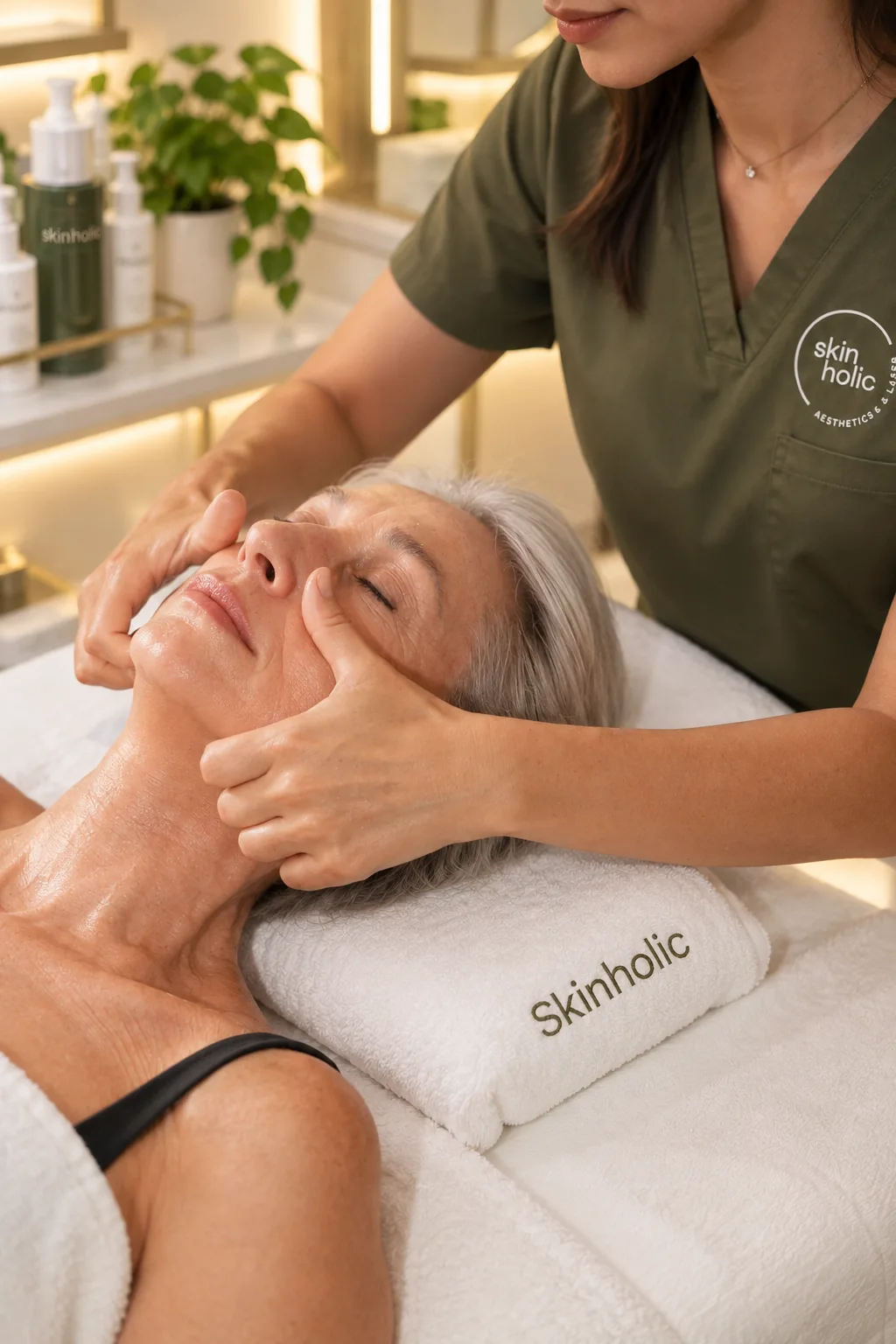
Practitioner massages the cheeks of a silver-haired woman lying on a treatment bed during an anti-aging facial

Dry, dehydrated, tight-feeling skin is skin that feels stiff and uncomfortable when a cold wind catches it on the walk in from the parking lot and seems to drink up moisturizer without ever feeling settled. It is something you stop mentioning to anyone because there is nothing dramatic to point at, just a face that never lets go of the tightness, and you would like it to feel like yours again. Skinholic Aesthetics & Laser works with this concern at its Surrey and Aldergrove clinics, with aestheticians who consider 'my face just feels tight' reason enough to book.

Does this sound like your skin?

Chances are you have already tried the obvious things: a richer night cream, a hydrating serum, a facial oil layered over both. Some days it helps a little. Most days you catch your reflection in the elevator mirror and your skin looks papery, or you find yourself reaching for the travel-size moisturizer in your bag more often than you would like.

One thing product labels rarely explain is that dry and dehydrated are not the same thing. Dry skin is short on oil. Dehydrated skin is short on water and can happen to anyone, including people with oily or combination skin, which is why a face can feel tight and shiny at the same time. Skin can show a mix of both. Dehydration in particular is hard to stay ahead of when the Fraser Valley swings from damp, cold winters to hot, dry summer stretches. Every skin is different, too: the routine that works for a friend may leave yours feeling exactly as it did before.

Working out which of the two you are dealing with, and how much of each, is the part that matters before anything goes on your face, and it is the question Skinholic starts with rather than the last one it gets around to.

What does dry, dehydrated skin typically look and feel like?

These are common cosmetic appearances of dry, dehydrated skin, described the way clients tend to notice them. Yours may show one or several.

  • Cheeks and forehead that feel stretched when you smile or laugh, as if the skin were a size too small
  • Fine horizontal lines under the eyes and across the cheeks that may look deeper by evening, often with foundation or powder settling into them or turning patchy
  • Skin that can look flat, dull or slightly grey in daylight rather than fresh and dewy
  • Some people notice light, powdery flaking along the brows, beside the nose or on the chin
  • A surface that may feel rough or catch slightly under your fingertips, and can look crepey under a harsh bathroom light

See a physician first. If you notice a mole or spot that is changing, bleeding or new, dry patches that are cracked, weeping or intensely itchy, or persistent inflammation, pain or swelling, please see your family doctor or a dermatologist first. Those are things a physician assesses, and they sit outside what a cosmetic facial is for. If anything looks atypical during your assessment, Skinholic will tell you and refer you on.

Why does your skin feel so dry and tight?

Dryness and dehydration rarely come down to a single cause. Several everyday factors can contribute, often in combination.

  • Over-cleansing, hot water or foaming cleansers can strip the skin's natural oils and leave it feeling tight
  • Over-exfoliating with acids, scrubs or too many active products at once is often associated with a strained surface barrier
  • Low indoor humidity from forced-air heating or air conditioning can draw water out of the skin's surface
  • A build-up of dead surface cells can stop moisturizer from absorbing evenly
  • Natural changes with age often reduce oil production and slow cell turnover
  • Low water intake, caffeine, alcohol and frequent air travel may all contribute to skin that feels dehydrated
  • Sun exposure without daily broad-spectrum protection can contribute to a rougher, drier surface over time

Your Skinholic practitioner works through which of these apply to you, and the guide at Ultimate Winter Skincare Guide: Prepping Skin with Facials goes into these causes in more depth.

Treatments that may help

Which Skinholic treatments may help with dry, dehydrated, tight-feeling skin?

Three Skinholic treatments are relevant to tight, dehydrated skin. Each card explains what the treatment is designed to do and when a practitioner is likely to bring it up.

Not sure which option fits?

A free in-person assessment is where every plan starts.

These approaches can be combined over time, starting with hydration and adding gentle resurfacing later, and your practitioner sets the order so the skin is never asked to do too much at once. The complete treatment menu lives at the treatment menu.

Free consultation • Surrey & Aldergrove

What can you expect when you come in for dry, dehydrated, tight-feeling skin?

Everything begins with a free consultation at either the Surrey clinic on 120 Street or the Aldergrove clinic on Aldergrove Town Centre Drive in Langley Township. Your practitioner checks your skin under good light, asks how it behaves through the day and reviews what you currently use at home; if you are new, you can read how to prepare in the first-visit guide at first-visit guide before you come in.

The personalized plan that follows depends on what that assessment shows. Depending on your skin, the area and your goals, your practitioner may recommend a single hydrating treatment, a short series, or a simple maintenance rhythm. If your skin has reacted to products or treatments before, a patch test or a gentler first step may be suggested before anything more active. Most cosmetic treatments work over a series of sessions with time between them, and results tend to build gradually rather than arrive all at once.

Downtime varies with what is chosen, and your practitioner walks you through prep and aftercare for whatever is planned. For a sense of the kinds of changes clients have noticed, there are examples at results gallery, keeping in mind that individual results vary.

Is a consultation the right next step for you?

The first step is a free in-person consultation at whichever of the Surrey or Aldergrove clinics is easier for you to reach. Your practitioner talks through your history, goals and lifestyle, explains which options may suit you, and leaves plenty of room for questions. There is no obligation to book a treatment on the day; many clients go home to think it over first.

Skinholic supports cosmetic concerns and does not diagnose or treat medical skin conditions. If anything about your skin needs a medical opinion, please see your doctor first and bring their advice with you.

What your plan would cost is confirmed at the consultation itself, once treatment, area and number of sessions are settled. If a question comes up before you visit, reach us through contact us, or Start Your Skinholic Journey at book a free consultation.

What to bring or think about before your visit

  • The cleanser, moisturizer and any active products you use now
  • Previous facials or peels and how your skin responded
  • What bothers you most: tightness, flaking, dullness or how makeup wears
  • Medications, allergies or conditions your practitioner should know about
  • Photos of your skin on a day it felt at its worst, if you have them

Good to know

Frequently asked questions about dry, dehydrated, tight-feeling skin.

Tightness straight after cleansing is one of the most common things clients describe, and the first thing a practitioner tends to change is timing rather than product: moisturizer applied while the skin is still damp holds water in better than the same cream on a dry face. If the tightness still comes back before lunch, say so at your consultation, since it changes the plan, and if it burns, cracks or never lets up, ask your family doctor before any facial is planned.

A hydrating facial layers humectant serums, a mask and a moisturizer to seal it in onto freshly cleansed skin, with each step chosen for how your skin is doing that day, and it is designed to leave the surface feeling softer and less tight than it arrived. Where it stops is between visits: it cannot change what happens at home, so it is meant to work alongside a simpler routine rather than replace one.

Timing decides it more than the peel does. The first check is whether the surface is calm: skin that flakes but does not sting when product goes on is usually ready for gentle resurfacing, while skin that is raw or visibly inflamed is kept on hydration alone for a while, because resurfacing it too early tends to add to the tightness. Recent acids or retinoids at home push the timing back as well. How the non-acid and acid routes differ is set out at our article “Zena algae peel or a chemical peel?”.

On deeper skin tones your practitioner is likely to keep any exfoliation very light and see how the skin takes it before adding more, since irritation is the thing to avoid, and hydration itself suits every tone. Skin type changes the texture of what goes on rather than whether a facial is suitable: lighter, water-based layers for skin prone to oil, more cushioning ones for skin that never is.

Usually very little after a hydrating facial, which is planned as a no-downtime appointment; some clients notice a brief flush that tends to settle quickly. The Zena Algae Peel is a resurfacing step, so warmth and pinkness may follow for a day or two, and light flaking can appear for a short while as the surface renews. Your practitioner goes over the specifics for your plan.

A mild tightness that appeared recently and skin that has felt tight for years are different projects, so the number is set from how dry or dehydrated the skin is, how it responds to the first appointment and what you are hoping for. Your practitioner maps out the number and spacing with you and revisits it as you go, so the plan can shorten as well as lengthen.

Cost depends on the treatment chosen, the area, the number of sessions, the level of customization and your individual goals, so there is no single figure for this concern. Everything is confirmed at your free consultation before you commit to anything, and the ways to pay are set out on the financing page at our financing page.

A useful rule of thumb is duration and pattern. Dryness that comes and goes with your routine is the kind of thing an aesthetician may be able to help with. Discomfort that has lasted for weeks without changing, keeps returning in the same spot or arrived alongside a rash belongs with your family physician first. If you are already under a doctor's care for your skin, say so at the outset so your practitioner can plan around it.

Ready when you are

Ready to find out whether your skin is dry, dehydrated or both?

Free consultation, in person, personalized plan, no obligation, at either clinic.

Start Your Skinholic Journey

First visit? See what to expect on our new-client page.

Call now Start Your Skinholic Journey