Skin concern · Acne & Congestion

Dark Spots After Breakouts

Dark spots after breakouts are flat brown, red or purplish marks left where a pimple healed and can linger for months. Chemical peels, acne facials, brightening facials and pico laser rejuvenation may help them look lighter; Skinholic confirms a plan at a free consultation in Surrey or Aldergrove.
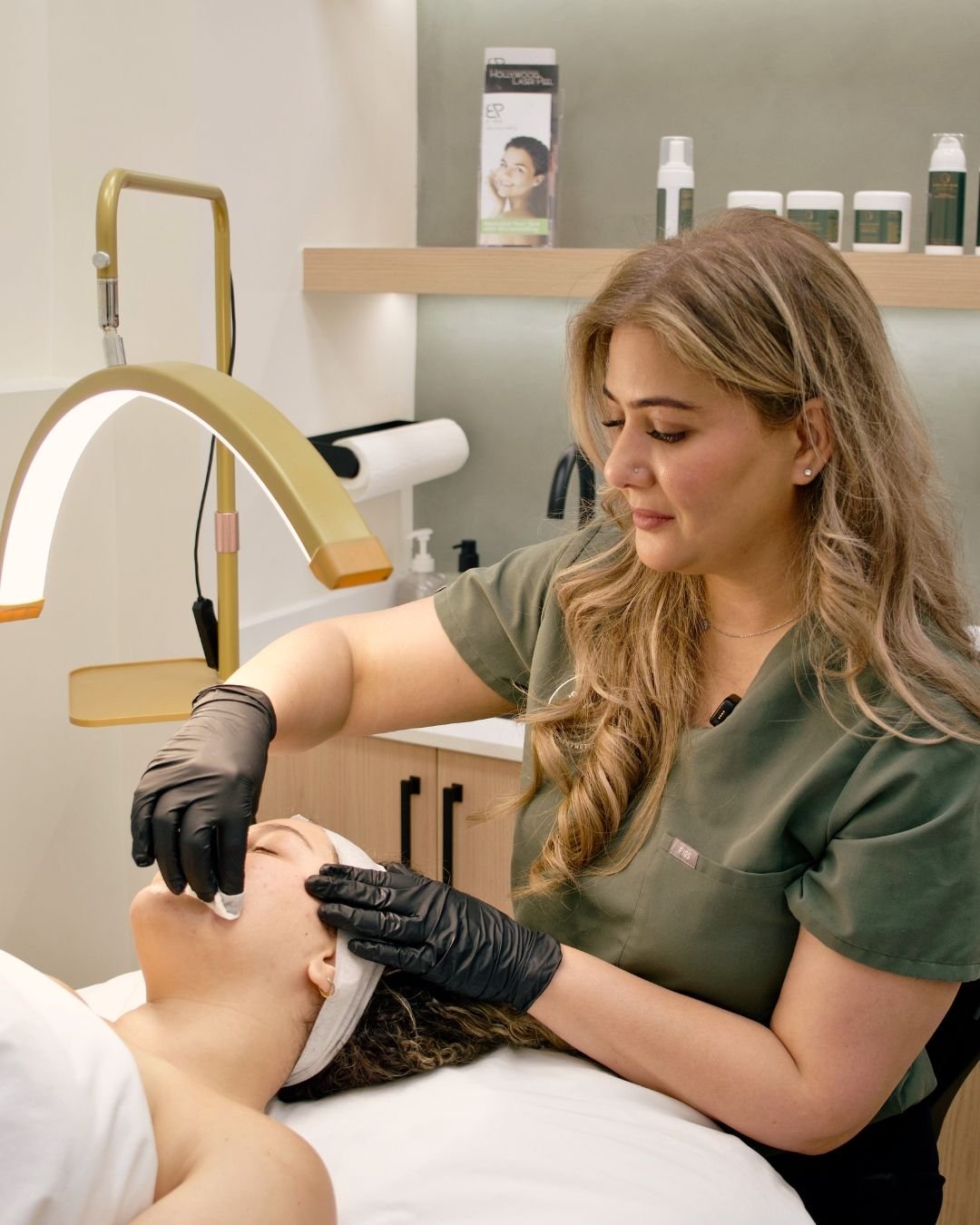
Dark Spots After Breakouts, assessed in person at Skinholic

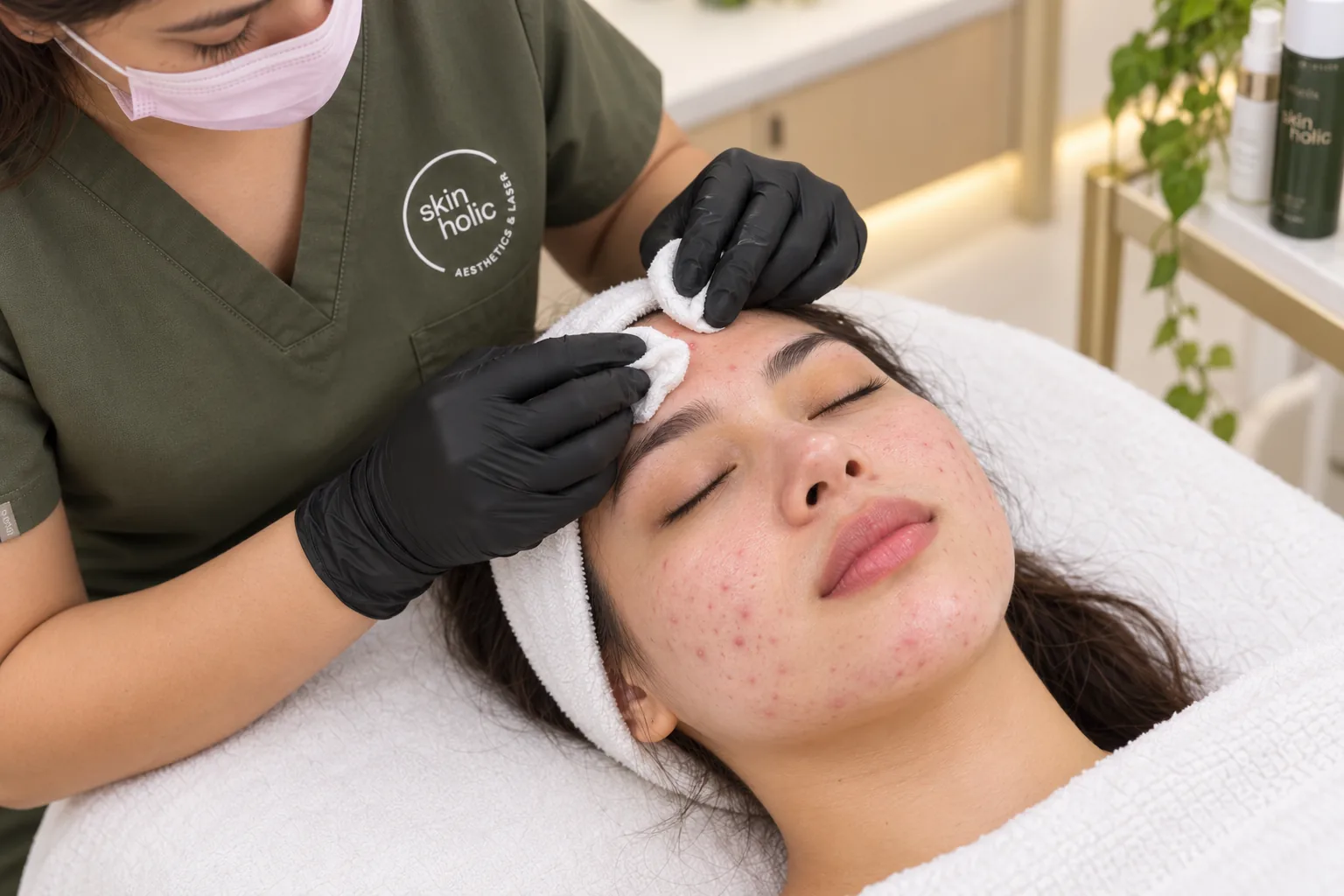
A pimple clears, but the mark it leaves behind does not. Dark spots after breakouts are the flat brown, red or purplish marks that sit where a blemish healed, and on some skin they can linger for months after the breakout itself is long gone. If you find yourself layering concealer over marks from breakouts that cleared long ago, or checking whether last month's spot has finally faded, that frustration is usually what brings people to this page.

This page is about how these marks look and what may help them appear lighter cosmetically; it is not a medical diagnosis. At Skinholic Aesthetics & Laser, an aesthetician assesses your marks in person at a free consultation at either our Surrey or Aldergrove (Langley Township) clinic before suggesting anything.

Why do post-breakout marks feel so hard to fade on your own?

Perhaps you have used an exfoliating toner, a brightening serum or a drugstore spot corrector faithfully for weeks, only to find the marks looked exactly the same when you compared photos a month apart. Perhaps a video call or the front-facing camera showed a scatter of dots across your cheeks or jaw that you had stopped noticing in the mirror. Or perhaps you have been putting off booking anything at all, unsure whether a clinic in Surrey could actually help with marks like these or whether they are simply something to wait out.

Part of what makes this hard to manage alone is that not every mark behaves the same way. Some soften on their own within a few weeks; others settle in and seem not to budge, and the products that suit one can be too much for skin that is still prone to breaking out. Every skin is different, and the routine that faded a friend's marks may do very little for yours.

That is why the first step at Skinholic is an in-person look rather than a product recommendation. An aesthetician examines your skin, asks about your history and goals, and only then suggests a personalized plan. Cosmetic treatments aim for gradual improvement over a series of sessions, supported by the care you keep up at home in between, rather than an overnight change.

What do dark spots after breakouts typically look like?

These describe how the concern commonly looks; they are not a diagnostic checklist. Marks left after a breakout often show up as:

  • Flat brown, tan or greyish-brown dots sitting exactly where a pimple used to be, most often on the cheeks, jawline or forehead
  • Pink, red or purplish marks that sit flush with the skin and may look more noticeable after a hot shower or workout
  • A scattered, freckle-like pattern across the areas that break out most, so calm skin can still read as blemished from a distance
  • Marks that look darker in bright daylight or under vanity lights than in softer indoor light
  • Marks that are smooth and level with the surrounding skin, with no dip or raised edge, unlike pitted or raised scarring
  • Older marks faded to a faint shadow while newer ones still look fresh and defined

See a physician first. If a spot is raised, growing, bleeding, itchy or changing in shape or colour, if there is persistent inflammation, pain or swelling, or if anything worries you medically, please see your family doctor or a dermatologist first. Skinholic does not diagnose medical skin conditions and will refer you to a physician if something looks atypical during your assessment.

Why do some breakouts leave a dark spot behind?

Everyone's mix is different, but a few things are commonly associated with marks that linger after a blemish heals:

  • Inflammation during the breakout: the redder, deeper and longer a spot lasted, the more likely it is to leave a mark
  • Picking, squeezing or scratching, which can prolong healing and is often associated with darker, longer-lasting marks
  • Sun exposure while a mark is still settling, which can deepen its colour and slow its fading; daily broad-spectrum sunscreen is the habit most worth building
  • Skin type and genetics: skin that tans easily or has a deeper natural tone often produces more pigment after irritation
  • Ongoing breakouts that restart the cycle before older marks have had a chance to soften
  • Harsh scrubs, over-exfoliation or strong actives layered on irritated skin, which can add to the irritation
  • Natural skin turnover that slows with age, so marks can take longer to fade than they did in your teens

Your Skinholic aesthetician reviews these factors with you at the consultation, because the mix behind your marks is yours alone.

Treatments that may help

Which Skinholic treatments may help with dark spots after breakouts?

The fit is decided at your free consultation, never from a page. The treatments below are listed from gentler, maintenance-style options to more intensive ones, and only those that match how your marks look and how your skin behaves will be suggested.
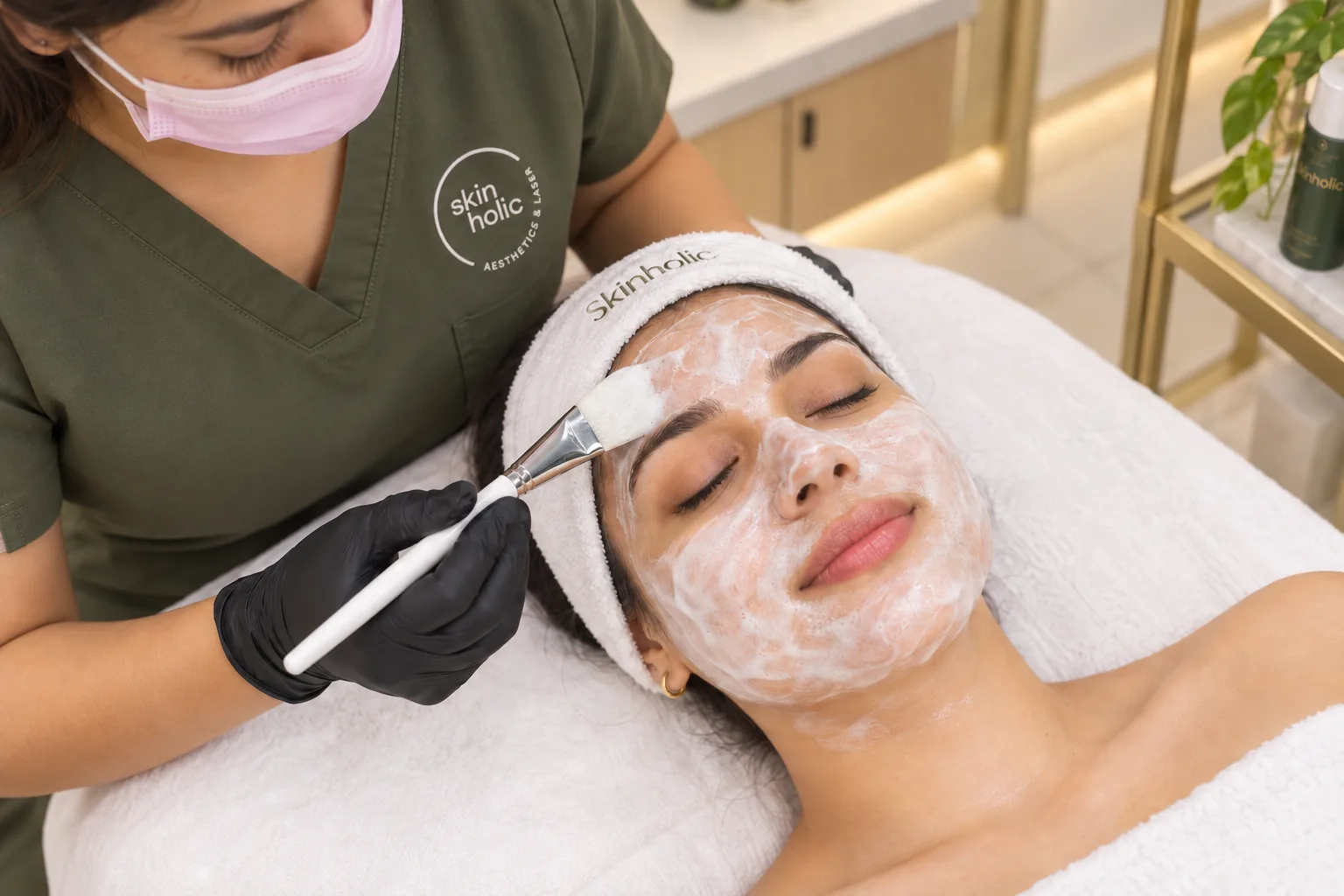
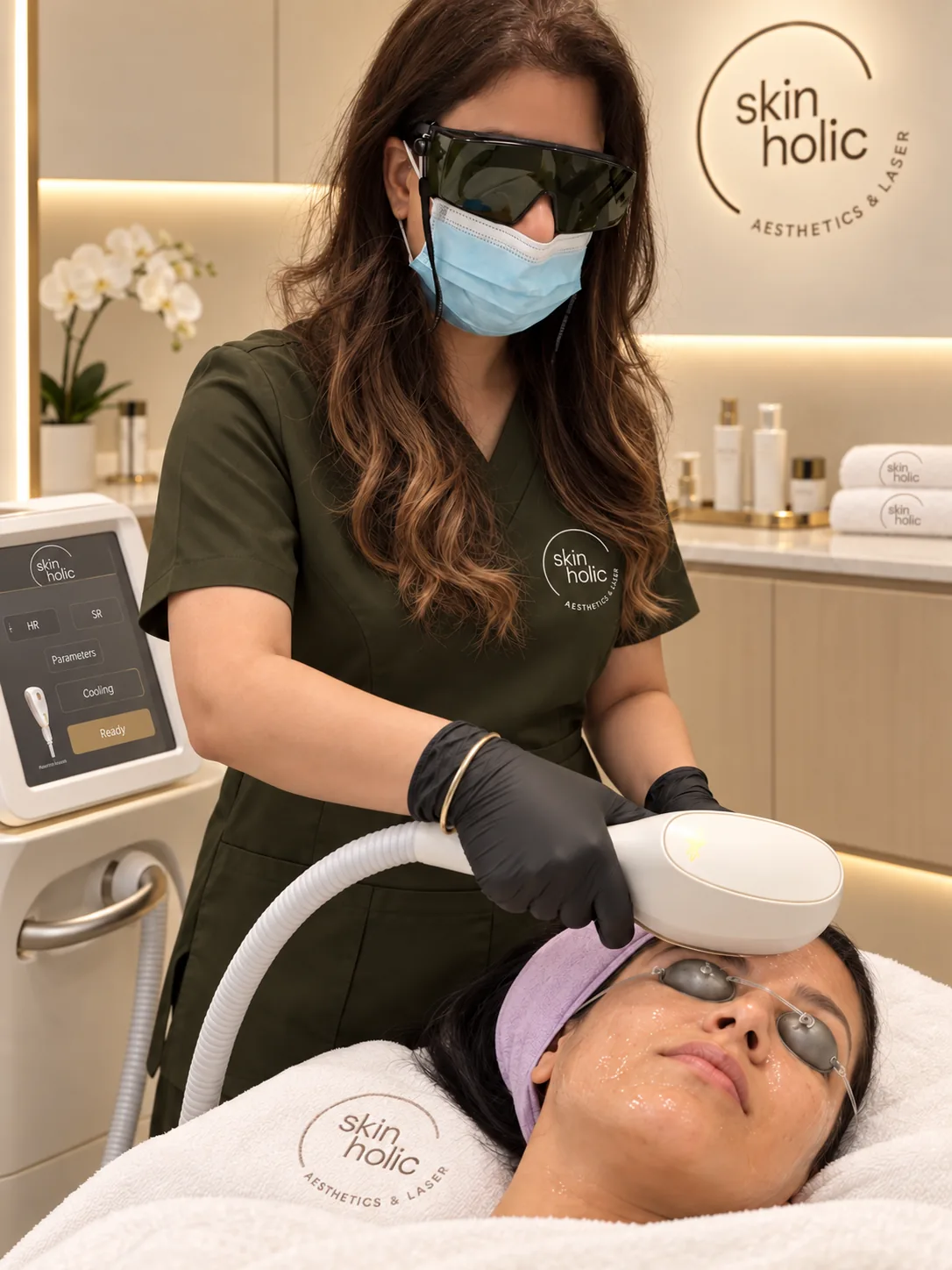
Brightening FacialsProfessional facial protocols designed for dullness, uneven tone and mild surface pigmentation, using gentle exfoliation, infusion and brightening actives. They may help lighter, more superficial post-breakout marks look softer and give the complexion a more even appearance overall. Practitioners often suggest them as a gentle starting point for sensitive skin or as maintenance between more intensive treatments.Recommended starting pointAcne FacialsA deep-cleansing facial with professional extractions and calming actives, designed for congestion, breakouts and oily skin, with support for post-acne marks built in. It may be relevant if you are still breaking out, because calming new blemishes is usually the first step toward fewer fresh marks. Your aesthetician tends to suggest it before anything more intensive when active spots are present.Chemical PeelsProfessional-strength peels applied at graded depths to address tone, texture, post-acne marks, sun damage and fine lines. By lifting away the surface layers where pigment collects and encouraging fresher skin to come through, a series of peels may help brown and red marks look lighter and less defined. Peel depth is matched to your skin, and a gentler strength is usually chosen first for reactive or breakout-prone skin.Pico Laser RejuvenationA picosecond laser treatment designed for pigmentation, sun spots, dullness and laser toning. It may be suggested for stubborn brown marks that have not responded to facials or peels, because the laser targets pigment sitting deeper than surface exfoliation reaches. Your practitioner confirms suitability based on your skin tone and history, and it is usually the last step considered rather than the first.
Not sure which option fits?

A free in-person assessment is where every plan starts.

Some clients combine approaches over time, for example calming active breakouts with facials before moving on to peels, or stepping up to a laser-based option later if the marks call for it; your practitioner sequences these for you. See the treatment menu for the full treatment menu.

Free consultation • Surrey & Aldergrove

What can you expect when you come in for dark spots after breakouts?

Everything starts with a free consultation at the Surrey clinic on 120 Street or the Aldergrove clinic in Langley Township. Your practitioner takes a close look at the marks in good light, asks a few questions about their history and your goals, and talks through what you would most like to change. If you are new to the clinic, first-visit guide explains how to prepare for that first visit.

From there, the plan is personalized. Depending on your skin, the areas involved and your goals, your practitioner may recommend a single treatment, a sequence that begins gently and steps up as your skin settles, or ongoing maintenance to help keep tone even over time. Where a laser-based option is being considered, or where your skin is sensitive or has a deeper tone, a patch test or a gentler first step is often suggested before committing to a full session.

Cosmetic treatments for post-breakout marks are designed to work gradually over a series of sessions with time in between, and your practitioner explains prep and aftercare for whatever is chosen, including how to adjust your home routine around each session. Downtime varies: some options involve little to none, while others may bring temporary redness, tightness or flaking for a few days, all discussed before you decide. See results gallery for examples of what clients have seen, keeping in mind that individual results vary.

Is a consultation the right next step for you?

If you are unsure whether your marks are something a cosmetic treatment can help with, the consultation is the place to find out. It is free, in person and available at both the Surrey and Aldergrove clinics. Your practitioner assesses your skin, asks about your history, goals and lifestyle, walks you through which options may suit you and how they might be sequenced, and answers whatever you want to ask; there is no obligation to book a treatment afterward.

One important line: a changing mole, an unexplained lesion, persistent inflammation or pain, or any medical question belongs with your family doctor or a dermatologist. Skinholic refers clients to a physician when something looks atypical.

Costs depend on the treatment, the area, the number of sessions, customization, your practitioner's assessment and your individual goals, and are confirmed at the consultation; financing options outlines payment options. Questions before you visit? Reach us through contact us, or Start Your Skinholic Journey at book a free consultation.

What to bring or think about before your visit

  • The products you currently use, especially any exfoliants, brightening serums or spot treatments
  • Previous professional treatments and how your skin responded to them
  • Which marks bother you most and how they change with sun or new breakouts (photos help)
  • Any medications, conditions or recent skin reactions your practitioner should know about, so they can advise or refer

Good to know

Frequently asked questions about dark spots after breakouts.

Often, yes, in the sense that they may look lighter and less noticeable; peels, brightening protocols and pico laser toning are designed for exactly this kind of flat, surface-level pigment. How much they improve depends on how long the marks have been there, how deep the colour sits and how your skin responds, so nothing is promised before your assessment.

The treatments most often discussed for post-breakout marks are Brightening Facials, Acne Facials, Chemical Peels and Pico Laser Rejuvenation. Which one, or which combination, suits you depends on whether you are still breaking out, the colour and depth of the marks and your skin tone, and is confirmed at your consultation. Weighing a peel against laser toning? our article “Pico laser or depigmentation peel?” walks through the difference.

Many are, but the choice matters. Skin that produces more pigment in response to irritation needs a gentler, more gradual approach, so your practitioner may lean toward facials and lower-strength peels, and usually patch tests before suggesting a laser-based option. Suitability for your tone and history is confirmed in person at your consultation.

Not all options feel the same. Facials generally involve little to no downtime beyond some pinkness; peels may bring a few days of tightness, mild redness or light flaking as the surface renews; laser toning is usually quick, with brief warmth or redness afterward. Whatever is suggested, your practitioner explains what to expect and when you can wear makeup before you decide.

There is no fixed number. It depends on how many marks there are, how stubborn they prove and how your skin responds to the first session or two. Plans are built as a series with time between visits, and your practitioner reviews progress at each one and adjusts; calm, breakout-free stretches in between tend to help results build.

Usually the breakouts are calmed first and the marks are addressed once your skin has settled. Your practitioner tends to start with the gentler steps that suit active congestion and hold the more intensive, pigment-focused options until things are calmer, since working aggressively on irritated skin can set you back. How quickly the plan moves between stages depends on your assessment and how your skin responds.

Then a cosmetic appointment is not the right first stop. A post-breakout mark typically sits flat and softens slowly; anything that behaves differently, whether it grows, hurts or keeps changing, deserves a physician's eye first. If your doctor is satisfied and a cosmetic option still makes sense, a Skinholic consultation can pick things up from there.

Cost depends on the treatment, the area being treated, the number of sessions, customization, your practitioner's assessment and your individual goals, so there is no single figure to quote in advance. Your personalized plan and its pricing are confirmed at a free consultation at either clinic, and our financing page outlines payment options if you would like to spread the cost.

Ready when you are

Ready to have someone actually look at your post-breakout marks?

Free consultation, in person, personalized plan, no obligation, at either clinic.

Start Your Skinholic Journey

First visit? See what to expect on our new-client page.

Call now Start Your Skinholic Journey