Opening hours
- Mon – Fri
- 10:00 am – 7:00 pm
- Saturday
- 10:00 am – 6:00 pm
- Sunday
- Closed
Facials & Facial Treatments
Dermaplaning Brightening Facials Acne Facials Anti-Aging Facials Buccal Therapy Hadado & Kobido Facial Sculpting Non-Invasive Structural Skin Tightening Skin Resurfacing Microneedling w/ ExosomesLaser Hair Removal & Laser Treatments
Nd:YAG & Alexandrite LHR Pico Laser Rejuvenation Nd:YAG & Alexandrite Laser Rejuvenation Hair Blanching Skin Tag Removal Tattoo RemovalAcne & Congestion
Breakouts and blemish-prone skin Blackheads and clogged pores Oily, shiny skin Dark spots after breakouts Enlarged poresPigmentation & Uneven Tone
Dark spots and sun spots Stubborn brown patches (melasma-type pigmentation) Uneven skin tone and blotchiness Dull, tired-looking skin Sun-damaged, weathered-looking skin Dark marks on the body from bites, scratches or old blemishesAging & Skin Laxity
Fine lines and early wrinkles Sagging jawline and early jowls Loose neck skin Loss of firmness and crepey skin Facial puffiness and fluid retention Jaw tension and a tight, tired-looking face Loose skin on the tummy, arms or thighsTexture & Scarring
Acne scars (pitted or indented) Rough, uneven skin texture Raised or thick scars Stretch marks Peach fuzz and flaky surface buildupDryness, Sensitivity & Redness
Dry, dehydrated, tight-feeling skin Visible facial veins and broken capillariesSkin concern · Aging & Skin Laxity
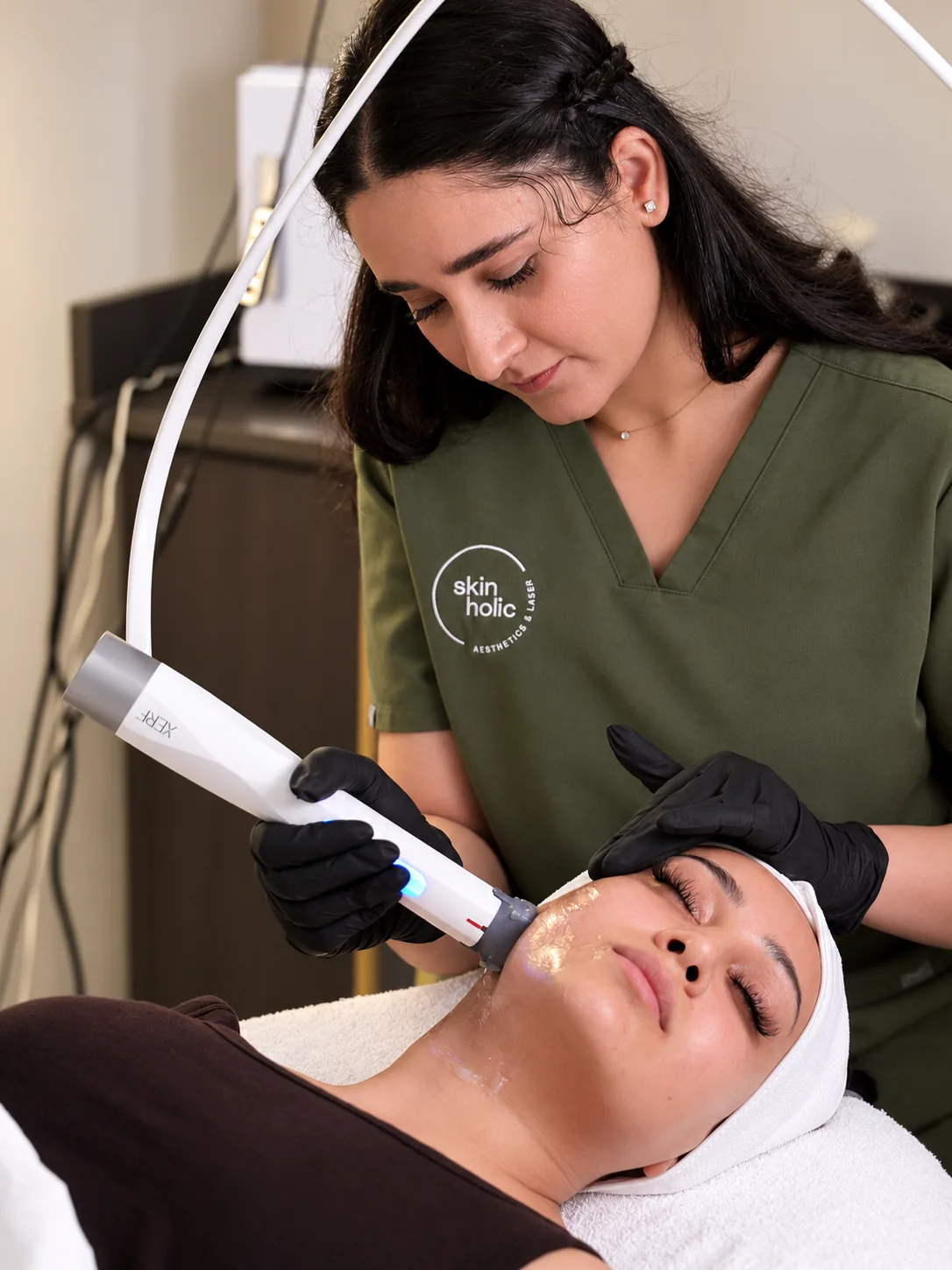
Loose, crepey neck skin is a cosmetic concern that grows as firmness fades. Non-Invasive Structural Skin Tightening, Microneedling w/ Exosomes and Skin Resurfacing may help it look firmer and less crepey over a series. Skinholic assesses the neck in person at a free Surrey or Aldergrove consultation.
Treatments that may help
The three treatments below are the ones most often built into a neck plan. The first thing weighed at the assessment is whether the neck mainly needs support beneath the surface, where slackness begins, or refinement at the surface, where crepey texture and uneven tone show, and each treatment sits at a different point on that line. They are listed from the least expected downtime to the most.
Non-Invasive Structural Skin TighteningRadiofrequency tightening that sends controlled heat into the skin’s support layers without breaking the surface, and the neck is one of the areas it is designed for. It is usually the first option raised for a neck that has lost its snap, and it can be shaped to the front, under the chin, or both, depending on where the looseness is.Recommended starting point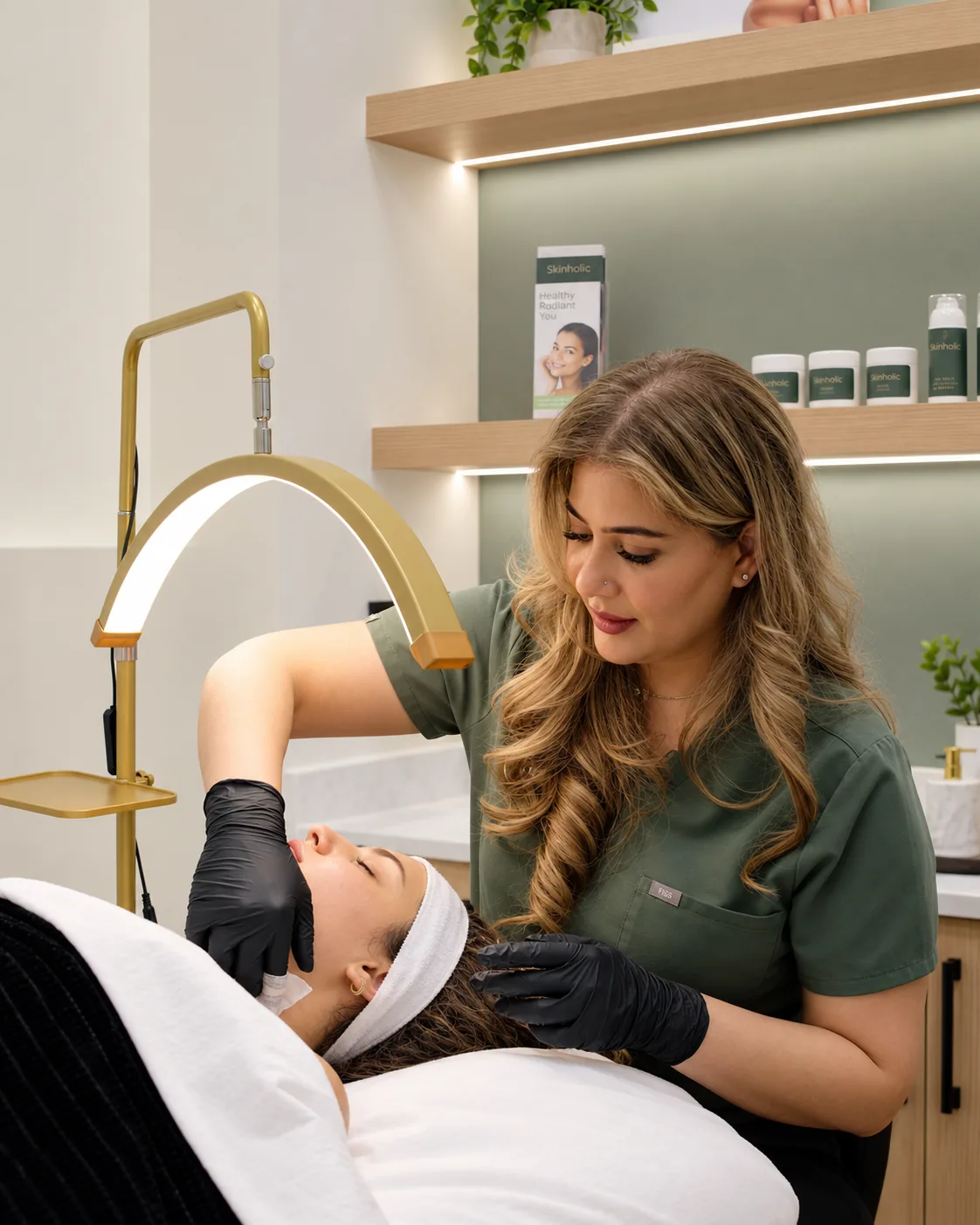 Microneedling w/ ExosomesCollagen-induction microneedling, with an RF option, paired with exosome serums applied while the micro-channels are still open. Neck skin is thinner and heals more slowly than the face, so the needle depth is set conservatively, and the exosome step is meant to carry repair signals into those channels and shorten a recovery the neck has little margin for. It can pair with tightening or stand alone as a first step.
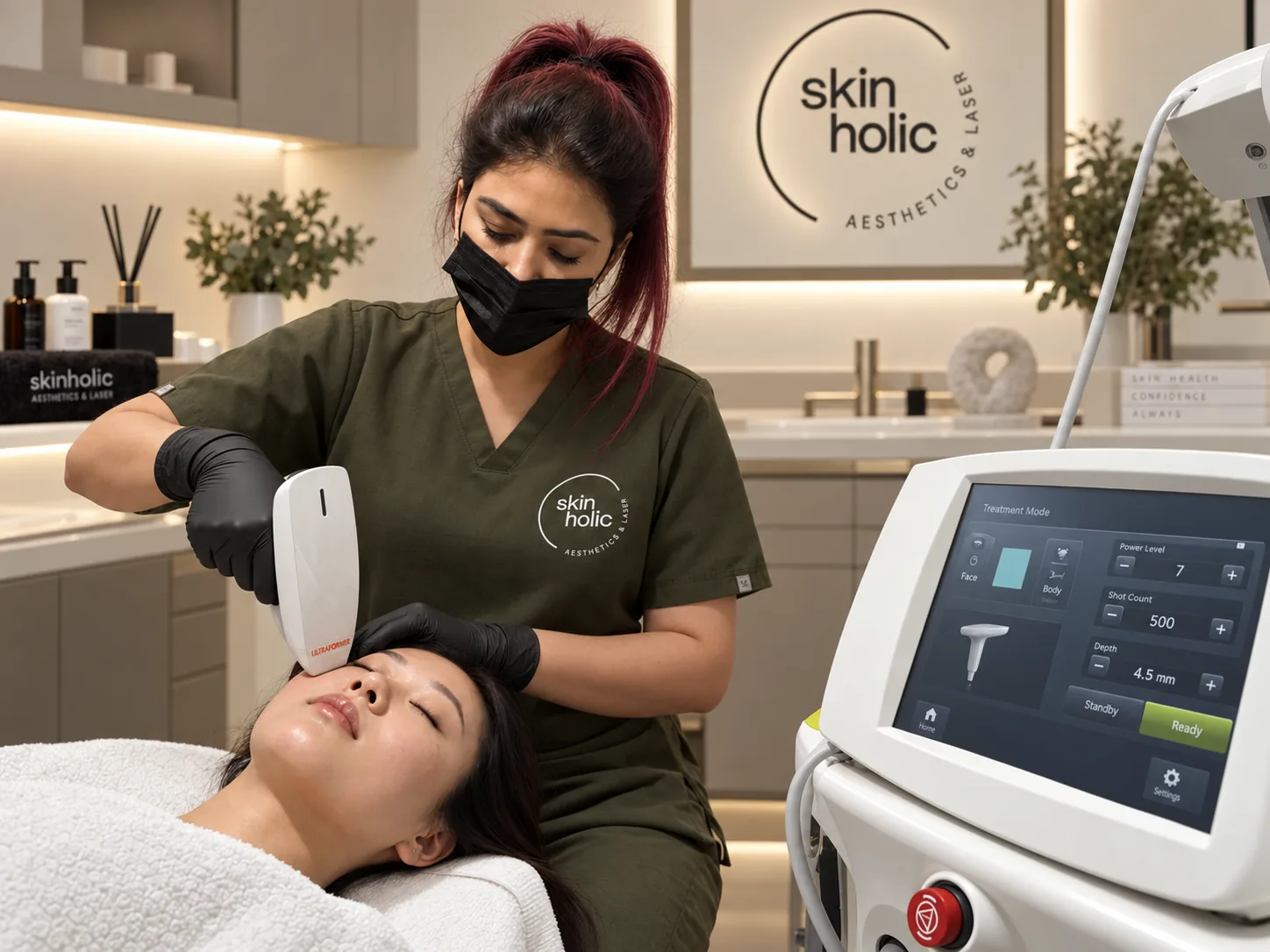 Skin ResurfacingFractional radiofrequency resurfacing, delivered through fine pins, that is designed to refine texture, soften the look of fine lines and even out tone. On the neck it is most often discussed for what sun leaves behind: uneven colour along the sides and the deeper creasing across the front. It usually comes later in a neck plan, once any firmness work is done.