Opening hours
- Mon – Fri
- 10:00 am – 7:00 pm
- Saturday
- 10:00 am – 6:00 pm
- Sunday
- Closed
Facials & Facial Treatments
Dermaplaning Brightening Facials Acne Facials Anti-Aging Facials Buccal Therapy Hadado & Kobido Facial Sculpting Non-Invasive Structural Skin Tightening Skin Resurfacing Microneedling w/ ExosomesLaser Hair Removal & Laser Treatments
Nd:YAG & Alexandrite LHR Pico Laser Rejuvenation Nd:YAG & Alexandrite Laser Rejuvenation Hair Blanching Skin Tag Removal Tattoo RemovalAcne & Congestion
Breakouts and blemish-prone skin Blackheads and clogged pores Oily, shiny skin Dark spots after breakouts Enlarged poresPigmentation & Uneven Tone
Dark spots and sun spots Stubborn brown patches (melasma-type pigmentation) Uneven skin tone and blotchiness Dull, tired-looking skin Sun-damaged, weathered-looking skin Dark marks on the body from bites, scratches or old blemishesAging & Skin Laxity
Fine lines and early wrinkles Sagging jawline and early jowls Loose neck skin Loss of firmness and crepey skin Facial puffiness and fluid retention Jaw tension and a tight, tired-looking face Loose skin on the tummy, arms or thighsTexture & Scarring
Acne scars (pitted or indented) Rough, uneven skin texture Raised or thick scars Stretch marks Peach fuzz and flaky surface buildupDryness, Sensitivity & Redness
Dry, dehydrated, tight-feeling skin Visible facial veins and broken capillariesSkin concern · Pigmentation & Uneven Tone
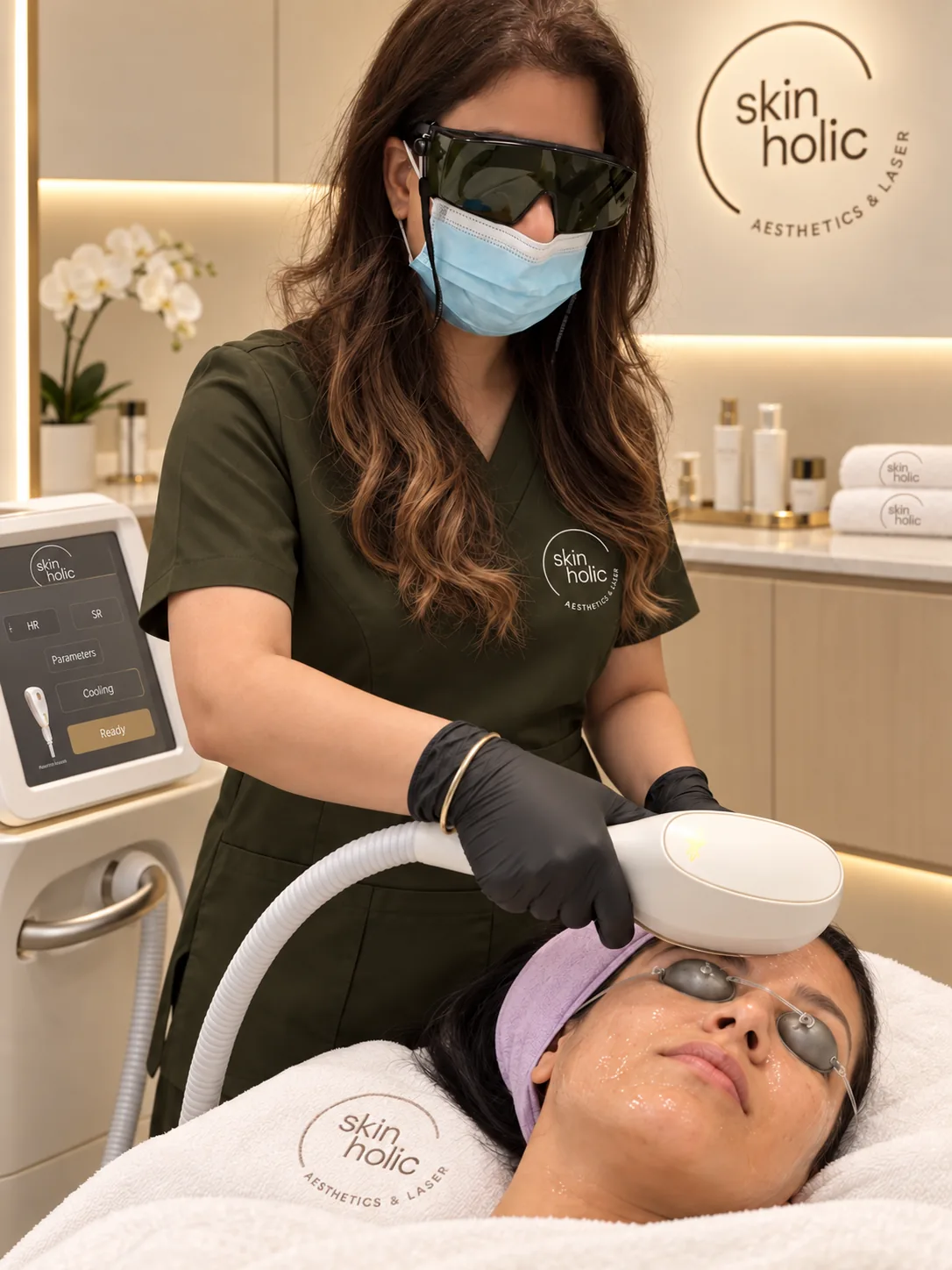
Dark spots and sun spots are flat brown marks that build up over years of sun exposure. At Skinholic in Surrey and Aldergrove, options such as Pico Laser Rejuvenation, Cosmelan, Chemical Peels and Brightening Facials may help soften their appearance, with suitability confirmed at a free in-person consultation.
Treatments that may help
Your practitioner confirms the right fit in person, at a free consultation. The options below are listed from the gentlest, maintenance-style treatment to the most intensive, so you can see how a plan often starts with a lighter step and only moves further down the list if your skin needs it.
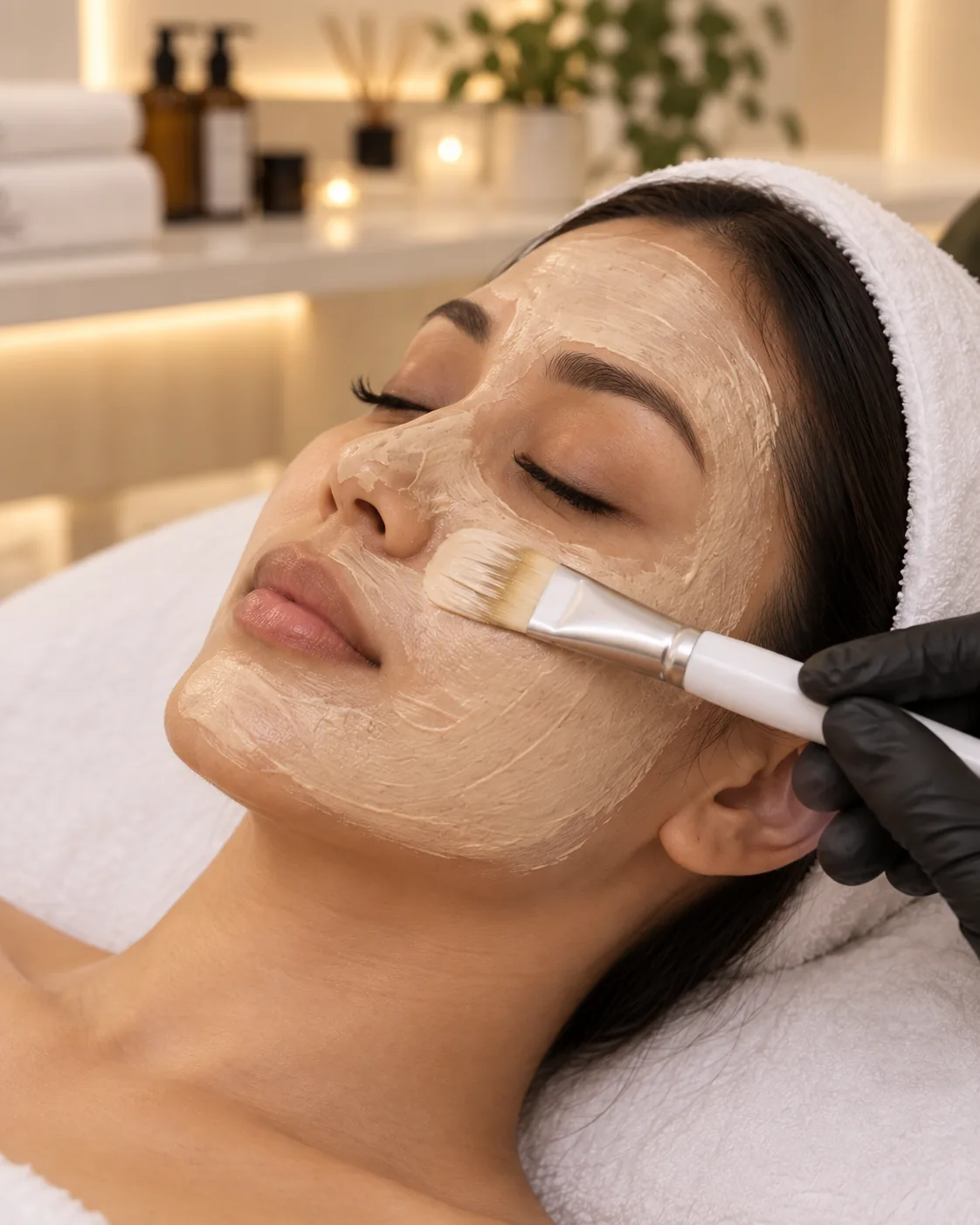
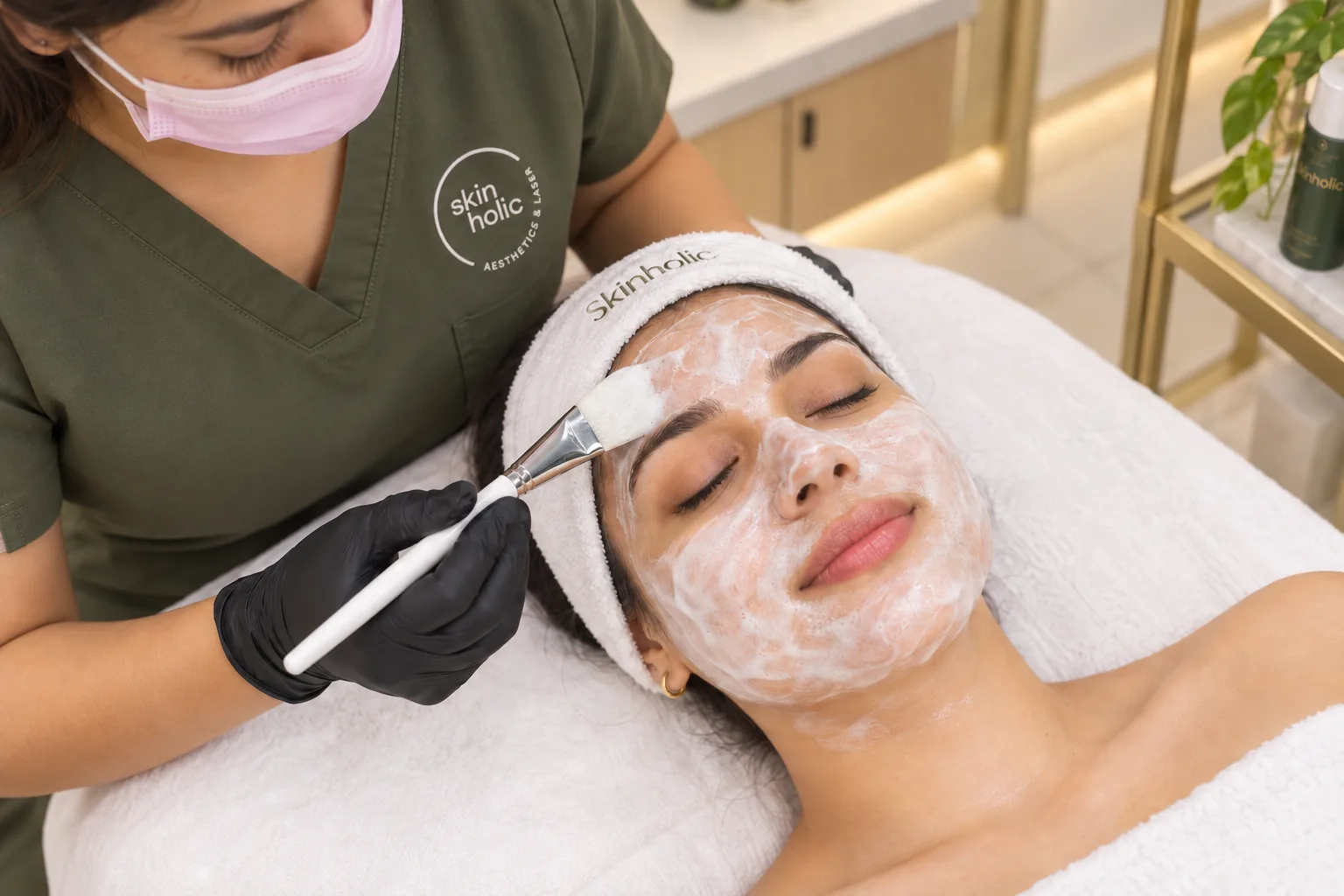 Brightening FacialsFacial protocols built around brightening actives and gentle exfoliation for dullness, uneven tone and mild surface pigmentation. They are designed to support radiance and help maintain the improvement other treatments achieve. Practitioners often suggest them for clients easing into treatment for the first time, for skin that needs a gentler pace, or as ongoing maintenance once a series is complete.Recommended starting point
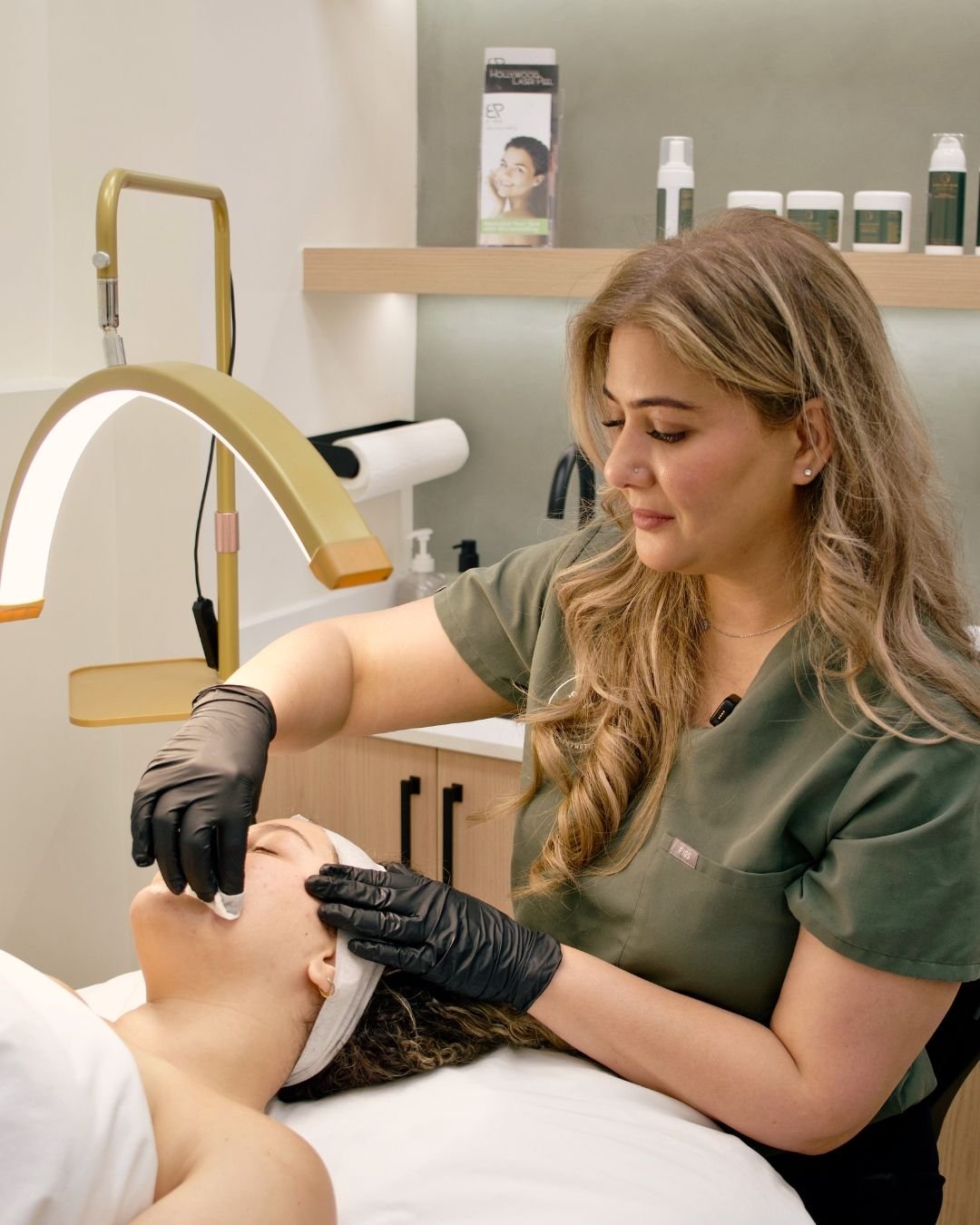 Chemical PeelsProfessional-strength peels applied at graded depths to lift away pigmented surface layers and encourage fresher-looking skin underneath. Over a series they may help soften milder sun spots and support a brighter, more even tone, either on their own or between other treatments. Your practitioner may suggest a peel when pigment sits near the surface or as a stepping stone before a more intensive option.Pico Laser RejuvenationA picosecond laser treatment that delivers ultra-short pulses of energy to break up concentrated pigment while leaving surrounding skin largely undisturbed. It is designed for distinct, well-defined sun spots on the face, chest and hands, and many clients notice spots looking lighter over a series. Your practitioner may suggest it when spots are separate and sharply edged rather than diffuse, or after a gentler step has prepared the skin.
 CosmelanThe most involved option on this list: a non-laser, professional depigmentation protocol designed for deeper sun damage and more widespread dark spots. It may help even out diffuse pigmentation across larger areas rather than isolated spots, which makes it relevant when sun spots and blotchiness overlap. Practitioners often suggest it for clients whose skin tone, sensitivity or pattern of pigment makes a non-laser approach the better fit.