Opening hours
- Mon – Fri
- 10:00 am – 7:00 pm
- Saturday
- 10:00 am – 6:00 pm
- Sunday
- Closed
Facials & Facial Treatments
Dermaplaning Brightening Facials Acne Facials Anti-Aging Facials Buccal Therapy Hadado & Kobido Facial Sculpting Non-Invasive Structural Skin Tightening Skin Resurfacing Microneedling w/ ExosomesLaser Hair Removal & Laser Treatments
Nd:YAG & Alexandrite LHR Pico Laser Rejuvenation Nd:YAG & Alexandrite Laser Rejuvenation Hair Blanching Skin Tag Removal Tattoo RemovalAcne & Congestion
Breakouts and blemish-prone skin Blackheads and clogged pores Oily, shiny skin Dark spots after breakouts Enlarged poresPigmentation & Uneven Tone
Dark spots and sun spots Stubborn brown patches (melasma-type pigmentation) Uneven skin tone and blotchiness Dull, tired-looking skin Sun-damaged, weathered-looking skin Dark marks on the body from bites, scratches or old blemishesAging & Skin Laxity
Fine lines and early wrinkles Sagging jawline and early jowls Loose neck skin Loss of firmness and crepey skin Facial puffiness and fluid retention Jaw tension and a tight, tired-looking face Loose skin on the tummy, arms or thighsTexture & Scarring
Acne scars (pitted or indented) Rough, uneven skin texture Raised or thick scars Stretch marks Peach fuzz and flaky surface buildupDryness, Sensitivity & Redness
Dry, dehydrated, tight-feeling skin Visible facial veins and broken capillariesSkin concern · Body & Scalp Concerns
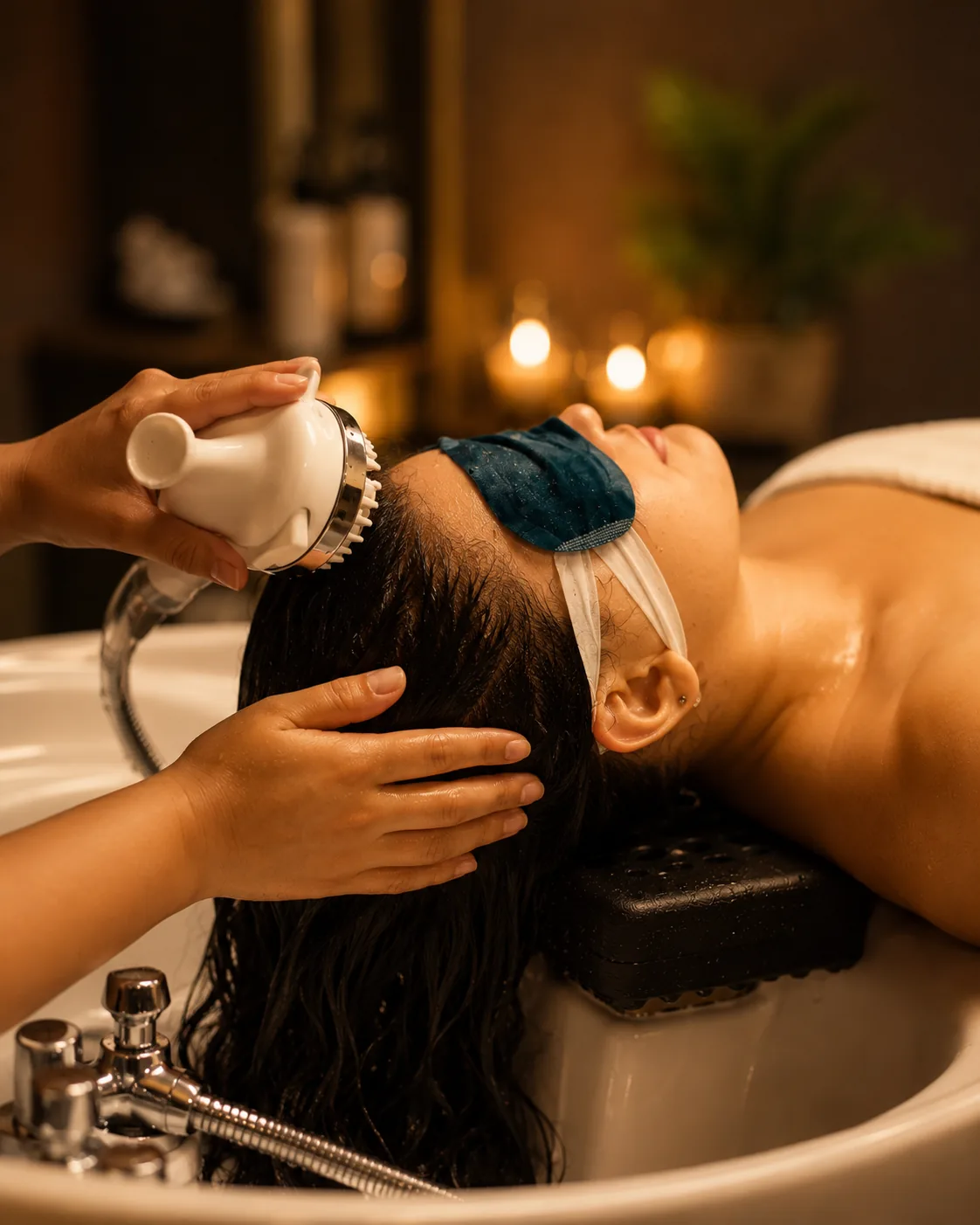
Oily, flaky or itchy scalp buildup is sebum, product residue and dead skin that ordinary washing can miss. A Japanese Head Spa is designed to deep-cleanse, exfoliate and hydrate the scalp, and DERIVE Hair Wellness may support ongoing scalp health. Suitability is confirmed at a free in-person consultation.
Treatments that may help
A free in-person assessment decides which of these is right for you. The options below are listed from the gentler, maintenance-style treatment to the more intensive one.
Japanese Head SpaA Japanese Head Spa is a hands-on scalp treatment combining deep cleansing, buildup removal, massage and hydration in one visit. It is usually the first option we discuss for a greasy, flaky or itchy scalp, because clearing residue and rebalancing moisture is what it is designed to do. It tends to suit anyone whose main goals are a cleaner-feeling, calmer scalp and a genuinely relaxing visit.Recommended starting point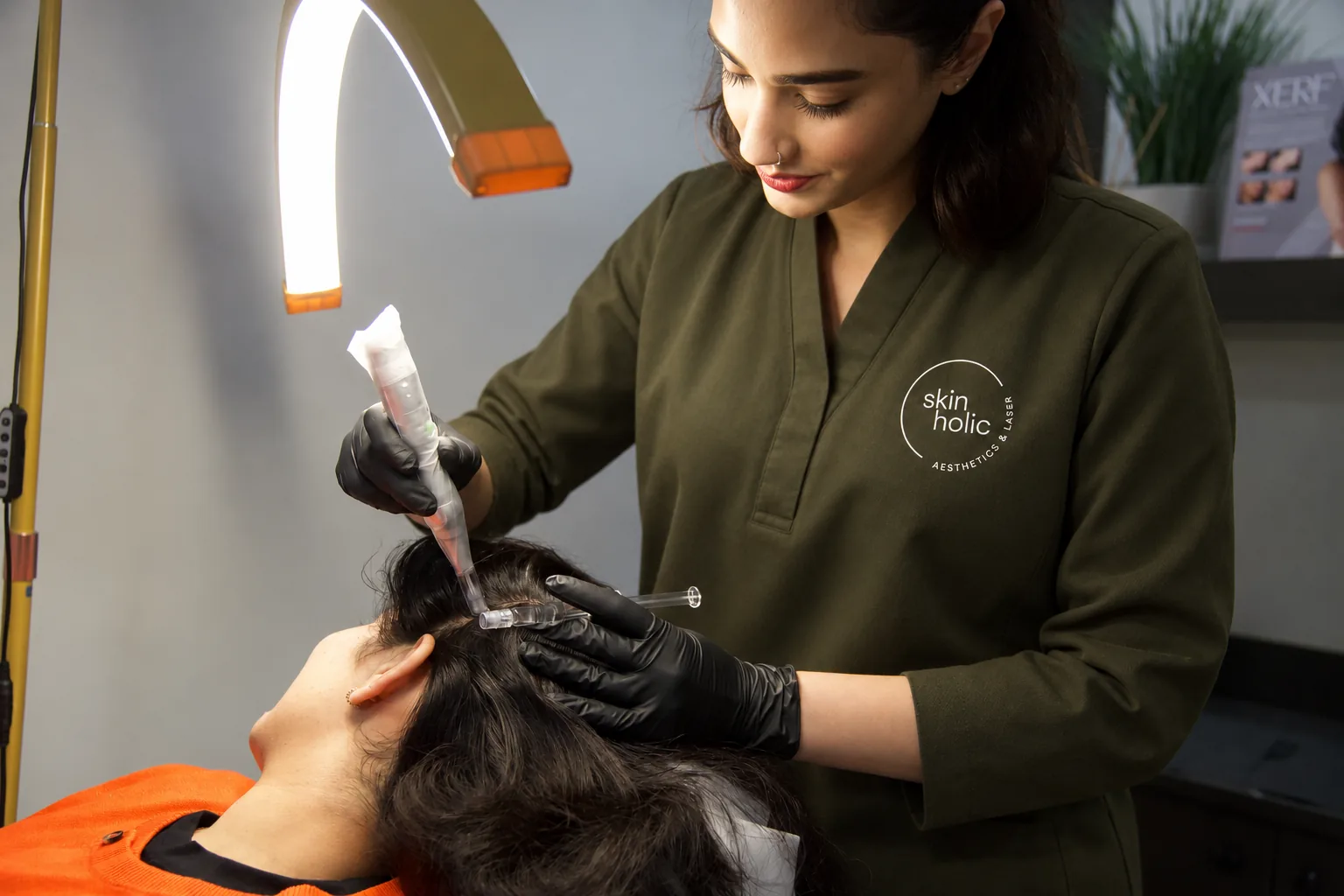 DERIVE Hair WellnessDERIVE Hair Wellness pairs scalp microneedling with a nutrient serum protocol designed to support scalp health and hair density over a series. It may be relevant once the scalp has been cleansed, if you also want to support gradually thinning density that a physician has not flagged. Your practitioner assesses this at consultation and may suggest it alongside head spa visits rather than as a first step.