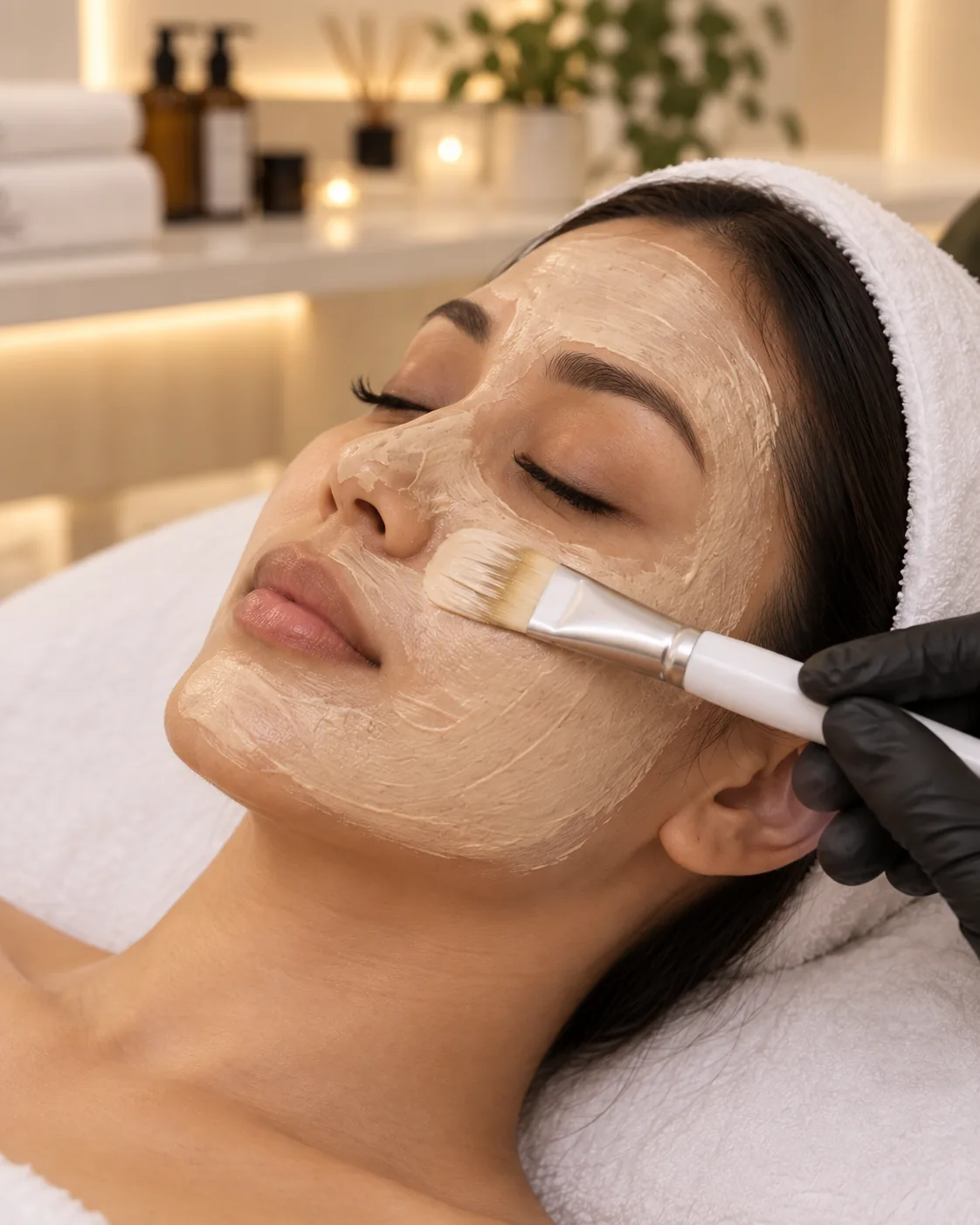
Skin concern · Pigmentation & Uneven Tone

Stubborn Brown Patches (Melasma-Type Pigmentation)

Stubborn, symmetrical brown patches that darken with sun often need more than brightening products. Professional depigmentation protocols such as Dermamelan and Cosmelan, supported by Brightening Facials and daily sun protection, may help soften their appearance. Skinholic confirms suitability at a free in-person consultation in Surrey or Aldergrove.
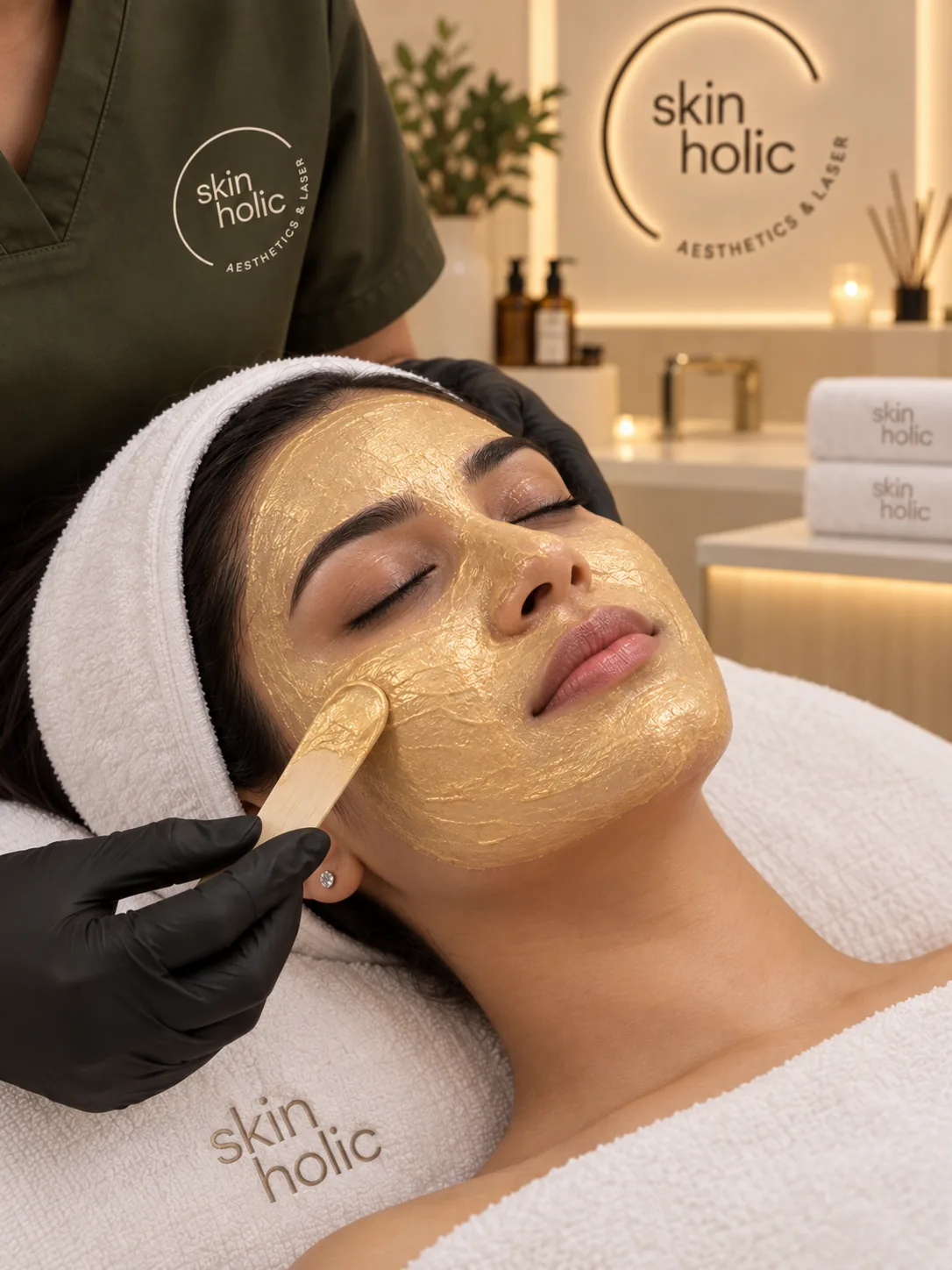
Golden Dermamelan mask covers a reclining woman's whole face as a gloved practitioner smooths it with a wooden spatula

Stubborn brown patches are areas of soft-edged, symmetrical brownish colour that tend to settle across the cheeks, forehead, upper lip or bridge of the nose, deepen after time in the sun and barely budge with ordinary brightening skincare. Many people look for help because the patches have become the first thing they see in the mirror each morning, or because they are tired of being asked whether they have caught the sun. This page describes the concern purely as a cosmetic appearance issue; it is general information, not a medical assessment. Skinholic Aesthetics & Laser assesses this kind of pigmentation in person at a free consultation at either our Surrey clinic or our Aldergrove clinic in Langley Township before recommending anything, so every plan starts with your actual skin rather than a guess.

Why do these patches feel so hard to manage on your own?

The routine may feel familiar by now. You may take the shaded seat at every Fraser Valley patio all July while everyone else moves their chairs into the sun. Perhaps you blend concealer over your upper lip before a morning meeting and notice by lunchtime that it has settled into a slightly different shade from the skin around it. You might even have caught yourself comparing one cheek with the other in the rear-view mirror at a red light, trying to decide whether the colour has spread.

None of that means you have done anything wrong. Every skin is different: how deep the colour sits, how your skin has reacted to things you have tried before, and how much of your week is spent outdoors all shape how this concern behaves. What worked for a friend or a family member may simply not be the right fit for you, and the internet offers no shortage of conflicting advice.

That is where an in-person assessment earns its place. A Skinholic aesthetician or laser technician looks closely at the patches themselves, asks how they have behaved over the years and what you hope to change, and only then suggests a personalized plan. It is also worth resetting expectations gently: cosmetic treatment for this kind of pigmentation aims for visible improvement over a series of sessions and ongoing care, not an overnight change, and your practitioner will be honest about what may and may not be realistic.

What do stubborn melasma-type brown patches typically look like?

These are common ways people describe the cosmetic appearance of this concern, not a checklist for deciding what your skin needs. Some people notice:

  • Soft-edged brown or greyish-brown patches that lie flat and feel no different from the surrounding skin
  • A roughly symmetrical pattern mirrored on both cheeks, across the forehead, along the upper lip or over the bridge of the nose
  • Colour that looks noticeably darker within days of a sunny weekend and only partly fades over the darker months
  • Broad, diffuse areas that read as a shadow across the cheekbone rather than as individual dots
  • Pigment that has stayed put for months or years rather than fading like a healed blemish mark
  • A blotchy, map-like look that is far more obvious in daylight than in a softly lit room

See a physician first. If you notice a mole or spot that is new, changing, bleeding or itchy, an unexplained lesion, persistent inflammation, pain or swelling, or anything that concerns you medically, please see your family doctor or a dermatologist first. Pigmentation that appeared with a new medication or during pregnancy is also worth raising with your physician. If anything looks atypical at your assessment, Skinholic refers you rather than treats.

What might contribute to melasma-type brown patches?

No single cause explains this kind of pigmentation. Contributors commonly associated with it include:

  • Sun exposure, including the low-key kind on a school run or a drive with the window down, especially without daily broad-spectrum sunscreen
  • Heat and strong visible light, since hot kitchens, saunas and hot yoga studios are often associated with darker patches
  • Hormonal shifts, which can be associated with pigmentation that appears or deepens during pregnancy or at other times of change
  • Genetics and natural skin tone, since skin that tans easily tends to produce pigment more readily
  • Friction, harsh scrubbing or irritating products that inflame the skin and are often followed by darker colour
  • Scented skincare or perfume on the face before heading outdoors, since some fragrances may make skin more reactive to light

A Skinholic practitioner reviews these factors with you at your consultation because the mix is different for everyone. Daily broad-spectrum sunscreen protects any improvement most; our post at Why Mineral Sunscreen Belongs in Your Skincare Routine explains what to look for.

Treatments that may help

Which Skinholic treatments may help with stubborn brown patches (melasma-type pigmentation)?

The fit is decided at your free consultation, never from a page. The treatments below are listed from the gentlest, maintenance-style option to the most intensive protocol; your practitioner may suggest one, a sequence or ongoing maintenance depending on your skin.
Not sure which option fits?

A free in-person assessment is where every plan starts.

Some clients combine approaches over time, for example starting with a gentler option before moving on to a full protocol, and your practitioner sequences them for you. See the full treatment menu at the treatment menu.

Free consultation • Surrey & Aldergrove

What can you expect when you come in for stubborn brown patches (melasma-type pigmentation)?

The first step is always a free consultation, at our Surrey clinic on 120 Street or our Aldergrove clinic in Langley Township, whichever is easier for you. Your practitioner examines the patches under good lighting, talks through how they have changed from season to season and what you have already tried, and checks that nothing about them looks atypical. If something does, you are pointed to a physician before any cosmetic option is put on the table. If you are new to the clinic, first-visit guide explains how to prepare for that first visit.

From there, the plan is personalized. Depending on your skin, the area involved and what you hope to see, your practitioner may recommend a single protocol, a sequence of treatments or ongoing maintenance. Because this kind of pigmentation can be reactive, a gentler first step or a small patch test may be suggested before committing to a full protocol, particularly for sensitive skin or deeper skin tones.

Results with this concern tend to build gradually over a series of sessions and a consistent home routine rather than after one visit. Downtime varies: some options involve little to no downtime, while others may bring temporary redness, dryness or flaking that your practitioner walks you through before you decide. You can see examples of the kinds of changes clients have noticed at results gallery, keeping in mind that individual results vary and that your plan is adjusted as your skin responds.

Is a consultation the right next step for you?

The consultation is free, in person and available at both our Surrey and Aldergrove clinics, and it is where every plan for this concern begins. Your practitioner assesses your skin, talks through your history, goals and lifestyle, reviews which options may suit you and how they might be sequenced, and answers anything you want to ask. There is no obligation to book treatment afterward.

Please see your physician first about a changing mole, an unexplained lesion, persistent inflammation or pain, or any medical question about your skin; Skinholic refers you whenever something looks atypical.

Costs depend on the treatment, the area, the number of sessions, how the plan is customized, your practitioner's assessment and your individual goals, and are confirmed at your consultation. Payment options are outlined at financing options. For questions before you book, reach us through contact us, or Start Your Skinholic Journey at book a free consultation when you are ready.

What to bring or think about before your visit

  • The brightening products you currently use, and roughly how long they have been part of your routine
  • Any previous professional treatments and how your skin responded
  • What bothers you most about the patches and what a good result would look like to you
  • Any medications, hormonal changes or health conditions to mention so your practitioner can advise or refer
  • Photos showing how the patches change between summer and winter

Good to know

Frequently asked questions about stubborn brown patches (melasma-type pigmentation).

Many clients see the patches become softer and less defined, though the degree of improvement depends on how deep the pigment sits, your skin tone and how consistently you protect your skin afterward. Professional depigmentation protocols were developed for precisely this kind of stubborn colour. Your practitioner assesses your skin in person before suggesting anything; our post at our article “Melasma & pigmentation treatments in Surrey” gives a broader overview of the options.

Three options are usually in the conversation. Brightening Facials are the gentlest and are often used to keep tone even between or after other treatments; Cosmelan is a depigmentation system that may suit patches sitting within wider sun-related discolouration; Dermamelan is the most intensive and the protocol most often discussed for stubborn, deeper melasma-type patches. Which fits you, and in what order, depends on your assessment; the Dermamelan page at Dermamelan explains that protocol in more depth.

Depigmentation protocols such as Cosmelan and Dermamelan are often considered across a wide range of skin tones, including olive and deeper complexions, but suitability is always confirmed in person because every complexion responds differently. For deeper skin tones, your practitioner pays particular attention to how your skin has reacted to past irritation, since skin that darkens easily calls for a carefully paced plan, and the right pace for you is decided at the consultation.

Not all options feel the same. A depigmentation protocol asks more of your skin for a stretch of days as it renews, and your practitioner explains exactly what that looks like for your plan, while a facial is usually something you can walk out of and carry on with your day. Most clients describe warmth or mild tingling rather than pain, and you are shown how to keep skin comfortable at home before you decide on anything.

It depends on your assessment. A depigmentation protocol is structured differently from a series of facials, and the number of visits, the spacing between them and any maintenance afterward are shaped by pigment depth, your skin's response and how well sun exposure is managed. Your Skinholic practitioner outlines a suggested plan after examining your skin in person; our post at our article “Cosmelan or Dermamelan?” explains how the two protocols differ.

They can. Melasma-type pigmentation tends to be sensitive to sun, heat and hormonal shifts, so cosmetic treatment aims to manage and visibly improve it rather than remove it outright. Consistent sun protection, shade on bright days and the occasional maintenance visit are what tend to keep the improvement going. Your practitioner talks through a realistic long-term routine with you rather than promising a one-time fix.

That is a question for your family doctor or a dermatologist rather than a cosmetic clinic: any patch that has changed shape or colour, developed a raised or scaly surface, started to itch, bleed or hurt, or appeared at the same time as a new medication or a pregnancy should be looked at by a physician before you book anything cosmetic. Skinholic practitioners assess cosmetic appearance only, and if anything looks atypical at your consultation you are referred before cosmetic options are discussed.

Costs depend on the treatment chosen, the area being treated, the number of sessions, how the plan is customized, your practitioner's assessment and your individual goals, and they are confirmed at your free consultation rather than quoted online. There is no single figure for this concern, because the right plan for one client's patches may look nothing like the plan for another's. Payment options are outlined at our financing page.

Ready when you are

Ready to talk through your brown patches with someone who will actually look at your skin?

Free consultation, in person, personalized plan, no obligation, at either clinic.

Start Your Skinholic Journey

First visit? See what to expect on our new-client page.

Call now Start Your Skinholic Journey