Opening hours
- Mon – Fri
- 10:00 am – 7:00 pm
- Saturday
- 10:00 am – 6:00 pm
- Sunday
- Closed
Facials & Facial Treatments
Dermaplaning Brightening Facials Acne Facials Anti-Aging Facials Buccal Therapy Hadado & Kobido Facial Sculpting Non-Invasive Structural Skin Tightening Skin Resurfacing Microneedling w/ ExosomesLaser Hair Removal & Laser Treatments
Nd:YAG & Alexandrite LHR Pico Laser Rejuvenation Nd:YAG & Alexandrite Laser Rejuvenation Hair Blanching Skin Tag Removal Tattoo RemovalAcne & Congestion
Breakouts and blemish-prone skin Blackheads and clogged pores Oily, shiny skin Dark spots after breakouts Enlarged poresPigmentation & Uneven Tone
Dark spots and sun spots Stubborn brown patches (melasma-type pigmentation) Uneven skin tone and blotchiness Dull, tired-looking skin Sun-damaged, weathered-looking skin Dark marks on the body from bites, scratches or old blemishesAging & Skin Laxity
Fine lines and early wrinkles Sagging jawline and early jowls Loose neck skin Loss of firmness and crepey skin Facial puffiness and fluid retention Jaw tension and a tight, tired-looking face Loose skin on the tummy, arms or thighsTexture & Scarring
Acne scars (pitted or indented) Rough, uneven skin texture Raised or thick scars Stretch marks Peach fuzz and flaky surface buildupDryness, Sensitivity & Redness
Dry, dehydrated, tight-feeling skin Visible facial veins and broken capillariesSkin concern · Aging & Skin Laxity
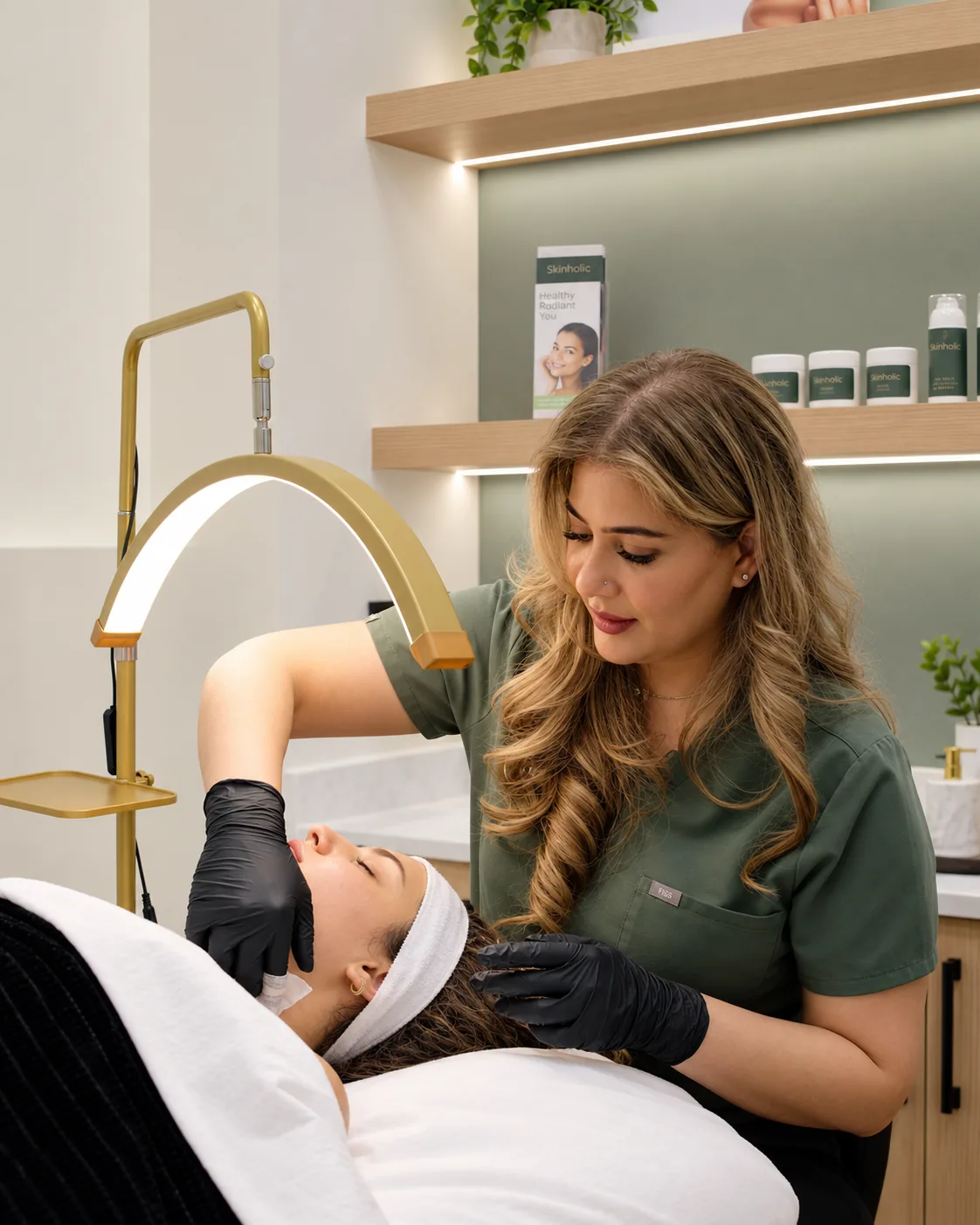
Fine lines and early wrinkles show up as shallow creases at the eye corners, forehead and mouth that appear as collagen and hydration decline. Microneedling with exosomes, skin resurfacing, chemical peels and anti-aging facials may help soften them, with Skinholic in Surrey and Aldergrove confirming a plan after a consultation.
Treatments that may help
The four below run from the lightest touch to the most intensive, but they are not a ladder to climb in order: your practitioner may pick one, pair two, or go straight to the third if that is what your lines call for, and the plan is as likely to change between visits as to stay fixed.
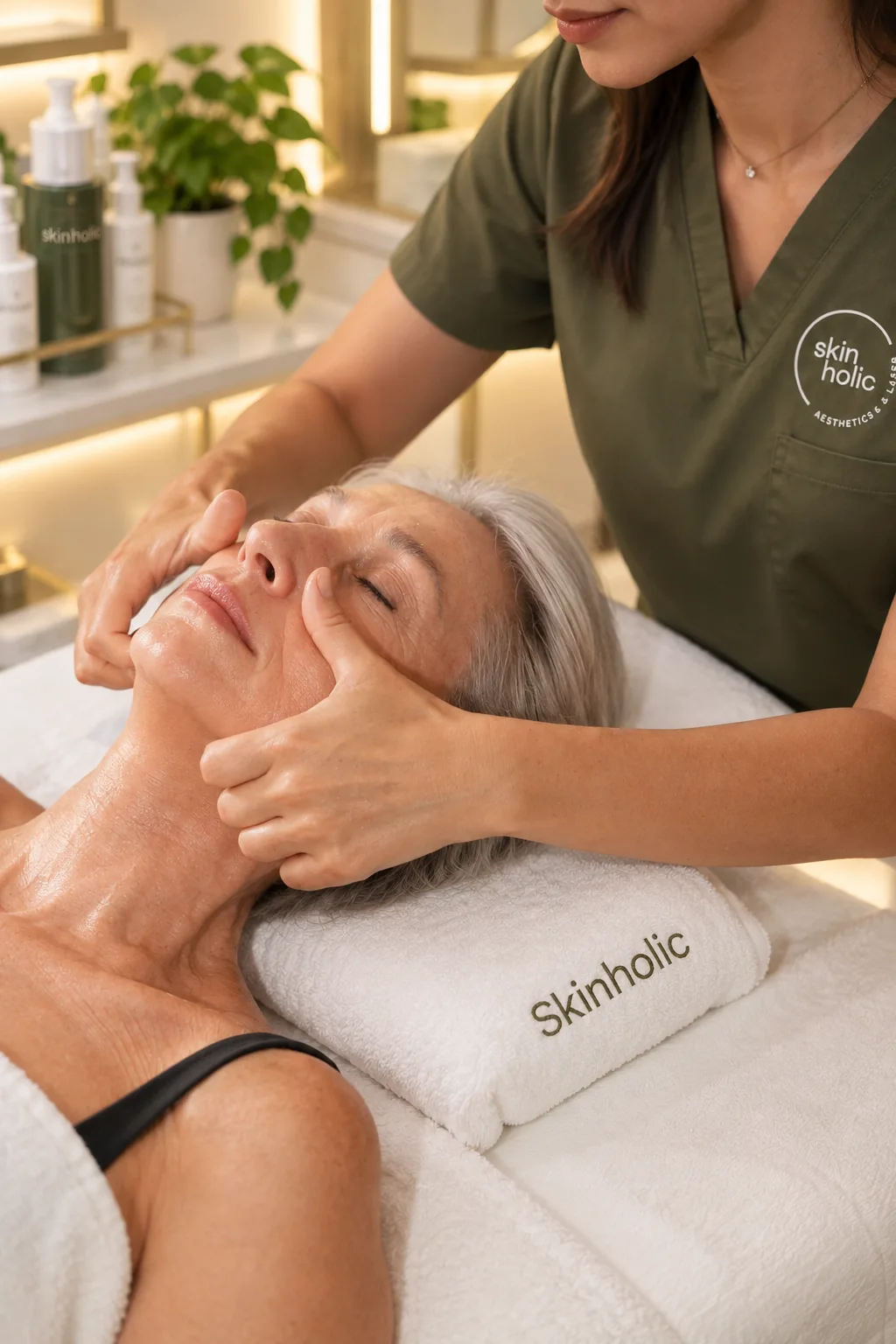 Anti-Aging FacialsAnti-Aging Facials are hydrating, firming and antioxidant-rich facials designed for fine lines, dryness and loss of glow. Restoring moisture and surface smoothness may make very early lines look less pronounced, and regular facials may help maintain results between more intensive sessions. They tend to suit clients just starting to notice lines, with delicate or sensitive skin, or who prefer a gentle, low-downtime routine.Recommended starting point
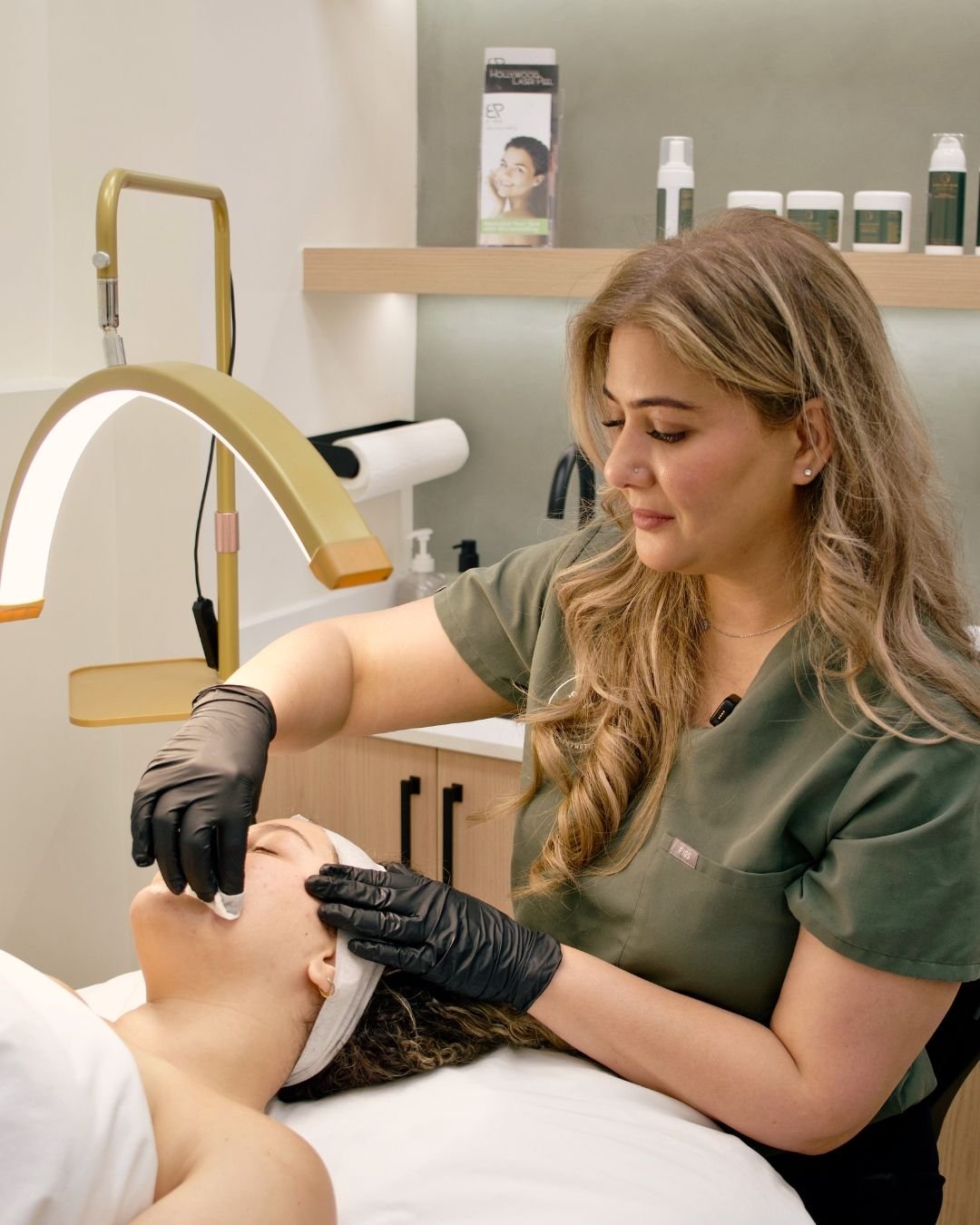 Chemical PeelsChemical Peels are professional-strength peels at graded depths for tone, texture, sun damage and fine lines. By lifting away the dull outer layer so fresher skin comes through, a peel may help soften superficial lines and leave skin looking smoother and brighter. A practitioner may suggest a peel when early lines come with dullness or sun-related unevenness, choosing a depth that matches your skin's sensitivity and tolerance for flaking.Microneedling w/ ExosomesMicroneedling w/ Exosomes is a collagen-induction treatment that creates controlled micro-channels and pairs them with exosome serums, with a radiofrequency option for suitable skin. Those channels are designed to prompt the skin to build new collagen, which may help soften fine lines and improve texture over the months that follow. A practitioner often builds a plan around it when early lines are the main goal and texture is otherwise even.
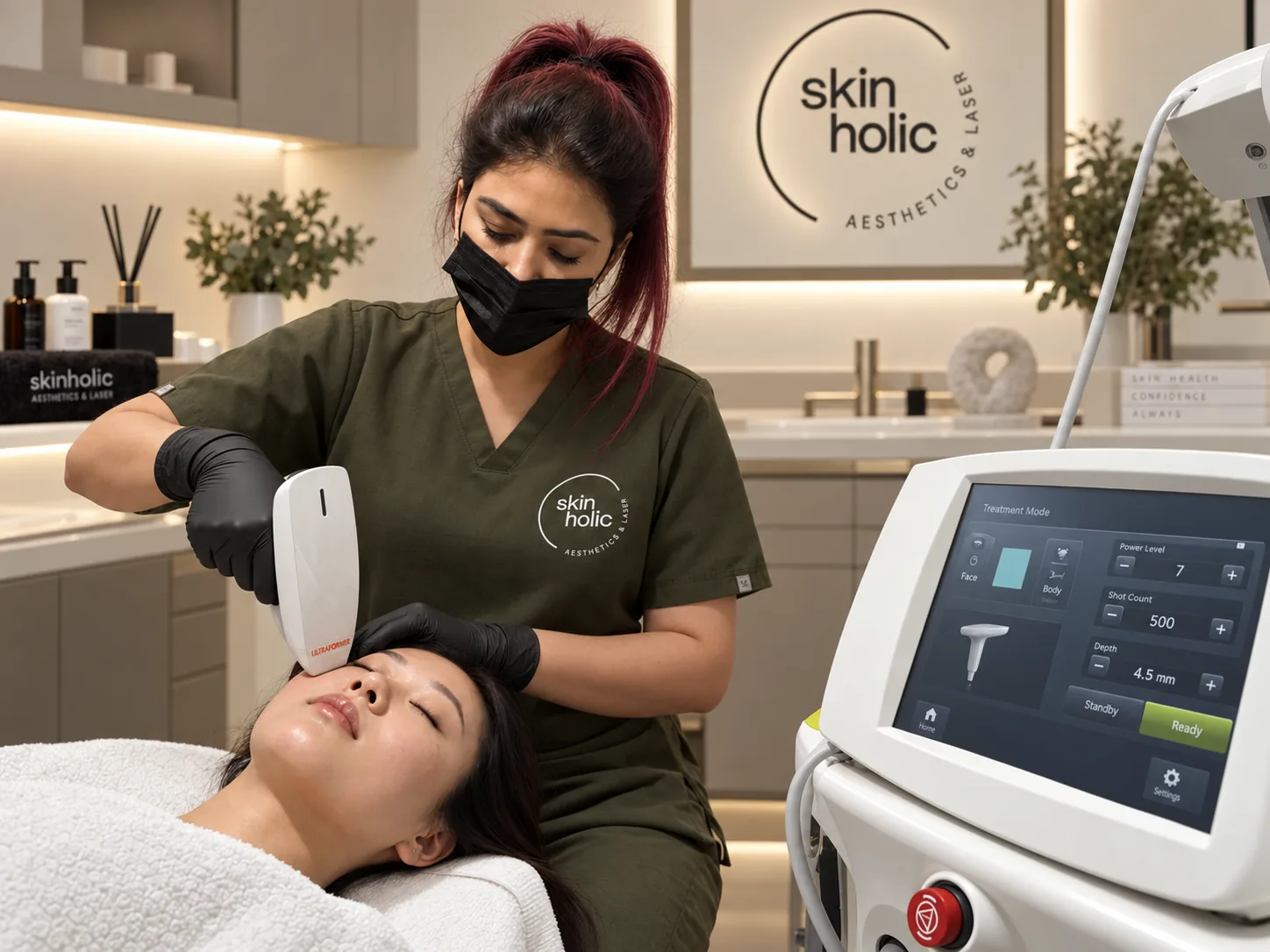 Skin ResurfacingSkin Resurfacing uses fractional radiofrequency to refine texture, pores, fine lines, mild scarring and tone. It is designed to smooth the surface while the energy is intended to encourage the layers beneath to remodel, so it may help where early lines sit alongside roughness or uneven tone. A practitioner may suggest it as the most intensive step once your skin’s suitability is assessed, with the recovery days planned in.