Skin concern · Acne & Congestion

Oily, Shiny Skin

Oily, shiny skin is a cosmetic concern where excess oil makes the face look glossy soon after washing. Oil-balancing facials, peels and resurfacing may help skin look more matte and balanced, but the right option depends on an in-person assessment at a free Skinholic consultation in Surrey or Aldergrove.
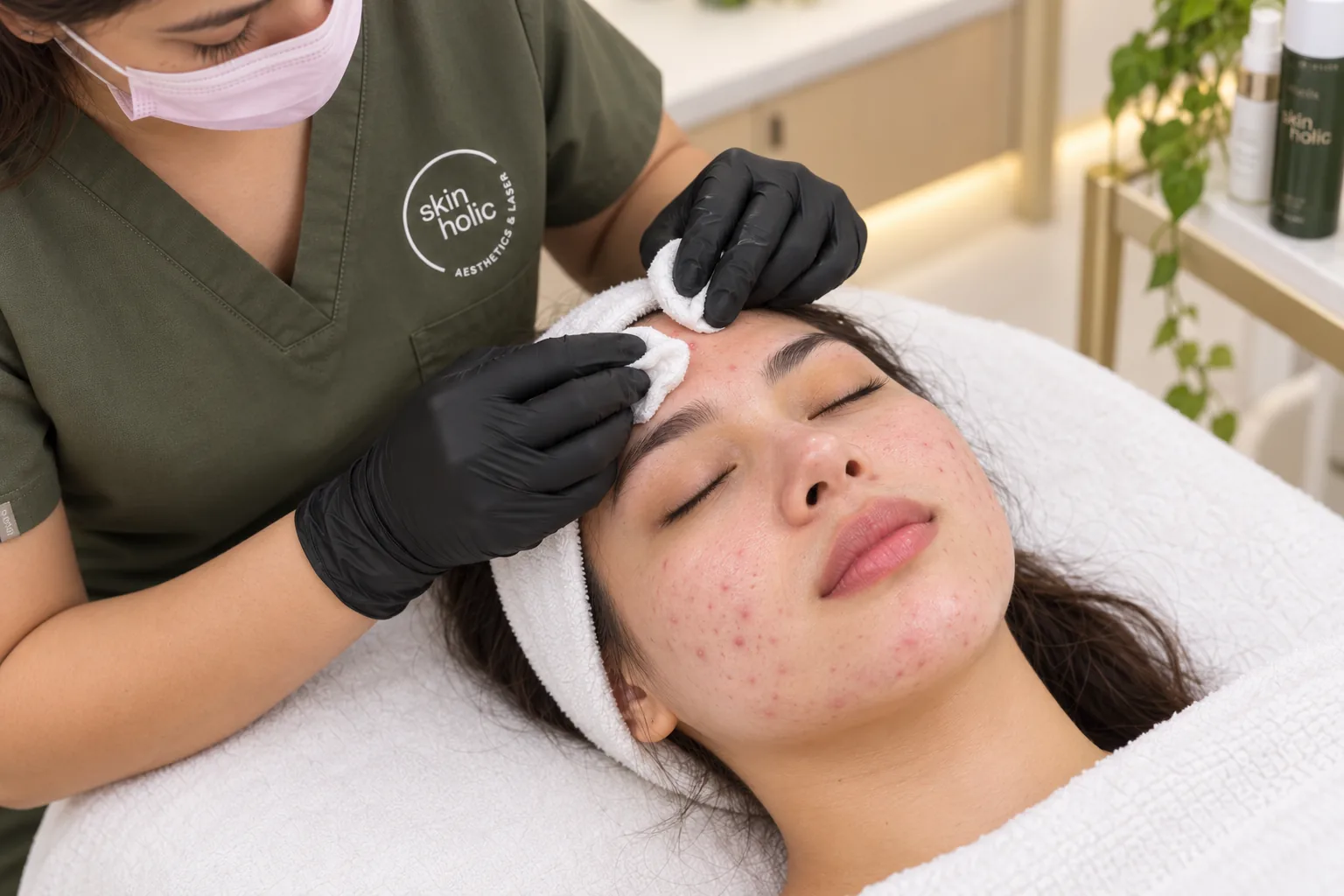
Masked practitioner wipes a woman's forehead with cotton pads during an acne facial; blemishes show on her cheeks

Oily, shiny skin is a cosmetic concern where your face looks glossy within an hour or two of washing, feels greasy by midday and leaves makeup sliding across the nose, forehead and chin. People search for it because the shine tends to be the first thing you notice about your own face, and it can leave you feeling less fresh and put-together than you actually are. This page is written from a cosmetic point of view and is not a medical assessment. Skinholic Aesthetics & Laser looks at your skin in person at a free consultation at its Surrey or Aldergrove (Langley Township) clinic before recommending anything, so any plan reflects how your skin really behaves rather than a guess.

Why does oily, shiny skin feel so hard to manage on your own?

Your bathroom drawer may already hold a few products that promised a matte finish: a gel cleanser that left your skin squeaky, a clay mask you used more often than the label suggested, a primer that held for an hour before the shine crept back through. By lunchtime you may be checking your reflection in your phone and dabbing at your forehead with a folded tissue, unsure whether you are doing too much to your skin or not enough.

Photos can be another sore point. Under office lighting or the flash at a friend's wedding, the glow you hoped for can turn into a glare across your nose, and the makeup you applied so carefully has settled into the creases beside it. It is easy to feel that your skin is working against you.

Here is the honest part: every skin is different. Oil production varies from person to person and even from season to season, and the routine that keeps a friend matte all day may be exactly what overstimulates yours. That is why a Skinholic practitioner looks at your skin in person, asks about your history, habits and goals, and only then suggests a personalized plan.

The aim is steady, realistic improvement over a series of sessions and consistent care at home, not an overnight change. A more balanced, less shiny look tends to build gradually, and having someone track that progress with you is often the part clients appreciate most.

What does oily, shiny skin typically look like?

These are common cosmetic appearances some people notice, not a checklist for working out what is happening medically, and they may look different on you.

  • A visible sheen across the forehead, nose and chin that returns within an hour or two of cleansing
  • Skin that feels slick to the touch by early afternoon, especially in warm weather
  • Foundation that goes patchy or breaks up through the T-zone within hours while the cheeks hold
  • Pores that look more noticeable on the nose and inner cheeks, often alongside blackheads or small bumps
  • A coarse or slightly waxy feel to the surface, with a flat, dull look rather than a healthy glow
  • A fringe or hairline that looks greasy sooner where hair rests against the forehead

See a physician first. If you notice a mole or spot that is changing, bleeding or new, persistent inflammation, pain or swelling, or anything that concerns you medically, please see your family doctor or a dermatologist first. Skinholic assesses skin from a cosmetic point of view only and will refer you if something looks atypical during your assessment.

What might contribute to oily, shiny skin?

Oil production is individual, and the mix of contributors differs for everyone. These are commonly discussed cosmetic factors, not a medical explanation of your skin.

  • A naturally oilier skin type, which often runs in families and sets a higher baseline for how much oil reaches the surface
  • Hormone-related fluctuations through the month, during stressful stretches or at different stages of life, which are commonly associated with a shinier forehead, nose and chin
  • A routine built to strip oil, such as foaming cleanser several times a day or gritty scrubs, which can leave the surface dry and is often followed by more shine rather than less
  • Skin that is short on water rather than oil, where a tight, dehydrated surface is frequently associated with a greasier film on top
  • Rich night creams or balm-textured sunscreens chosen for a different skin type, which can sit on top of oil and read as extra shine
  • Warm, humid days and time spent in steamy or overheated rooms, which can bring oil to the surface faster
  • Slow surface turnover, so dead cells linger and mix with oil at the pore opening, which is commonly associated with a rough, congested look

A Skinholic practitioner reviews these factors with you at your consultation, since the mix is different for everyone. Small habits, such as choosing a lightweight mineral sunscreen (see Why Mineral Sunscreen Belongs in Your Skincare Routine), can support whatever plan you decide on together.

Treatments that may help

Which Skinholic treatments may help with oily, shiny skin?

Your practitioner confirms the right fit in person, at a free consultation. The options below are listed from gentler, maintenance-style treatments to more intensive ones, and your practitioner may suggest one, a sequence or a combination depending on how your skin behaves.

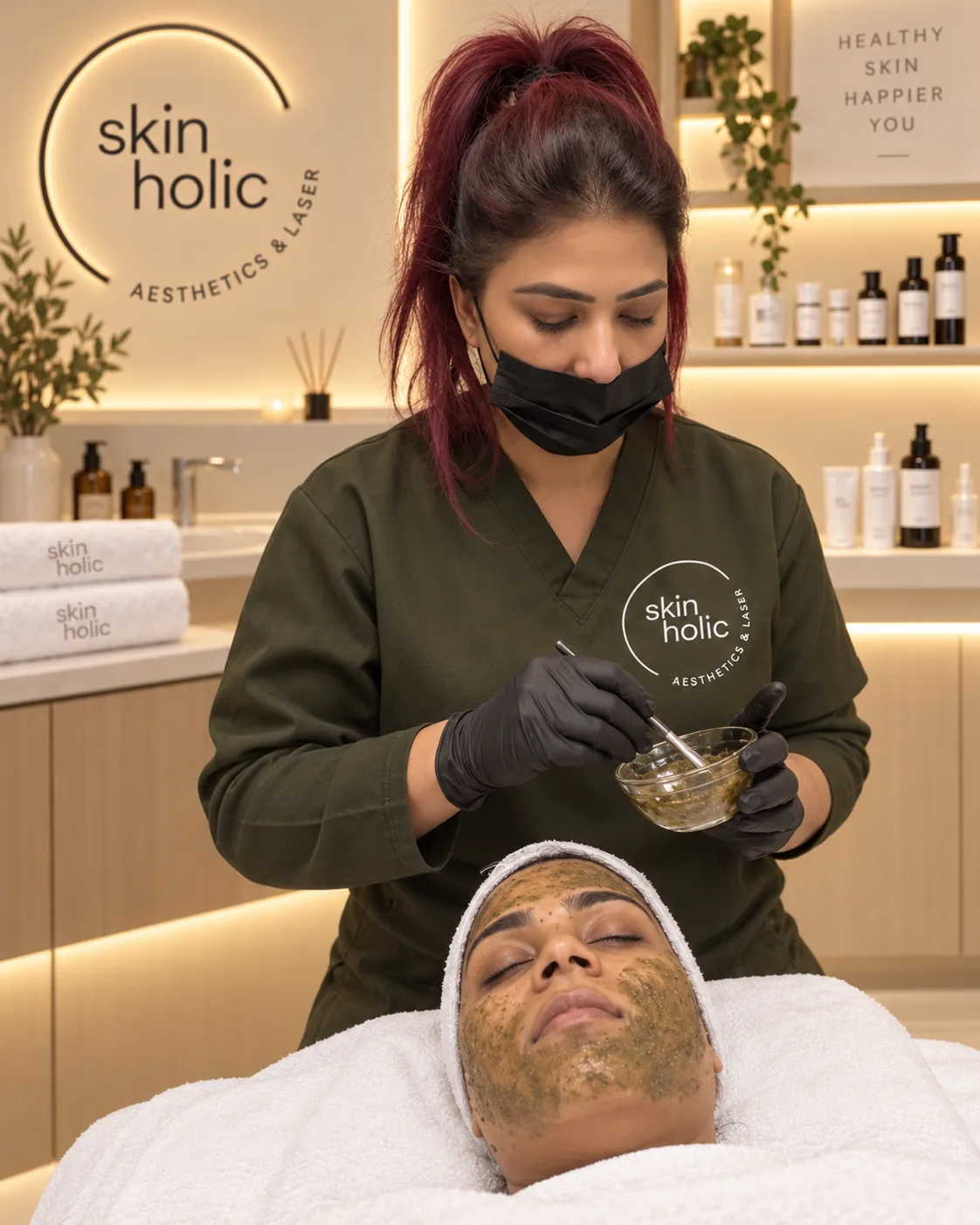
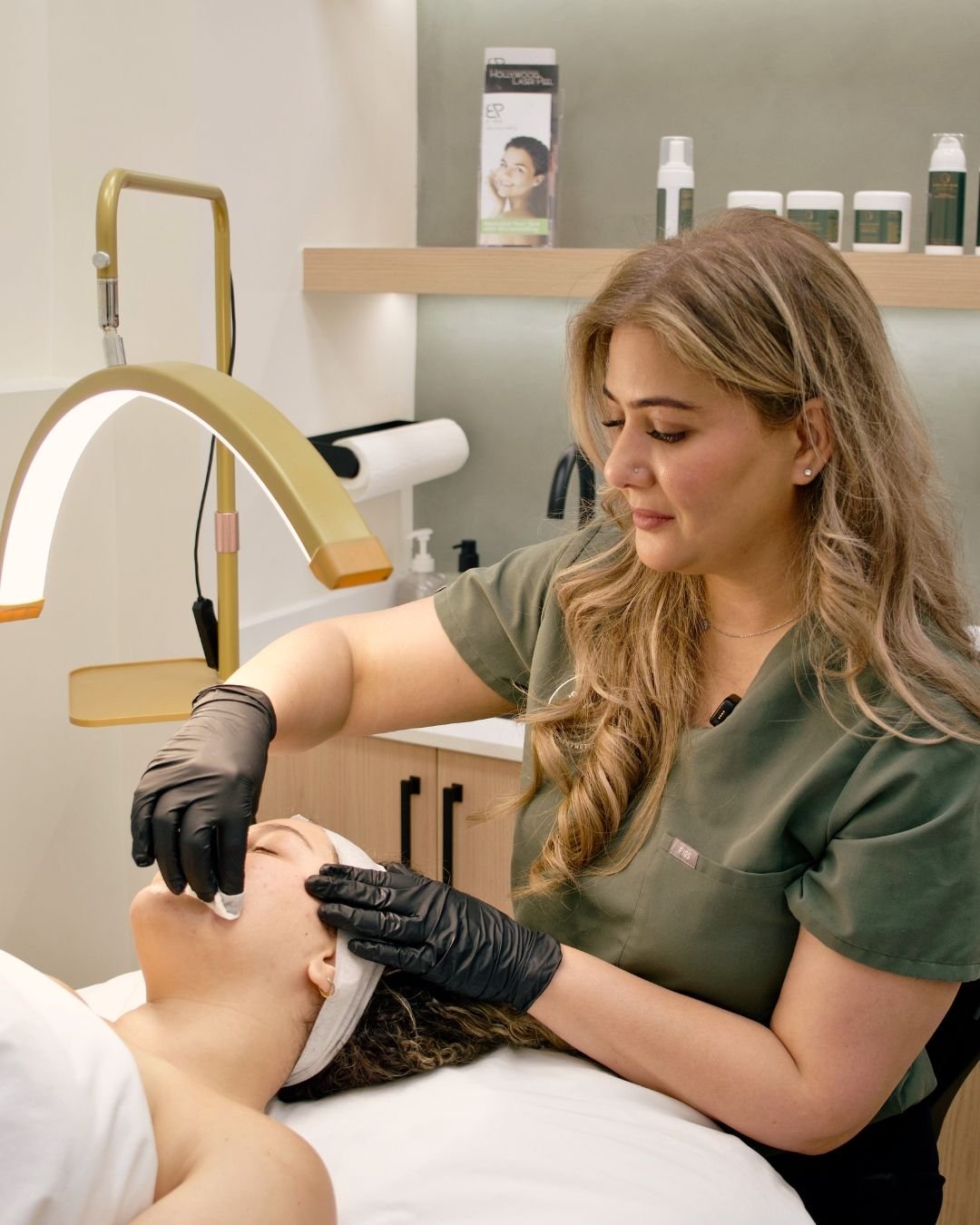
Acne FacialsAcne Facials are deep-cleansing facials with professional extractions and calming actives chosen for congested, oily skin. They are designed to clear the build-up that adds to shine and may help the T-zone look less glossy between visits. Practitioners often suggest them as the first step and as ongoing maintenance for clients whose main frustration is midday oil rather than texture.Recommended starting pointZena Algae PeelThe Zena Algae Peel is a marine-derived, non-acid micro-spicule peel that resurfaces congested, dull skin. It may help smooth the rough, slick-looking surface that often comes with oiliness while staying gentle on the skin. A practitioner may suggest it as a softer introduction to resurfacing before moving to anything stronger.Chemical PeelsChemical Peels are professional-strength peels applied at graded depths to improve tone and texture. For oily skin they are designed to encourage fresher surface cells to come through so pores look clearer and the skin appears smoother and less shiny. They tend to suit clients who want a more noticeable step up from facials, with the depth confirmed at your consultation.Skin ResurfacingSkin Resurfacing uses laser or energy-based technology to address texture, pores, fine lines and tone. Where oiliness comes with enlarged-looking pores and an uneven surface, it may help the skin appear more refined and less glossy over a series. It is the more intensive option here, usually suggested once your skin has settled with facials or peels and your main goal has shifted to texture.
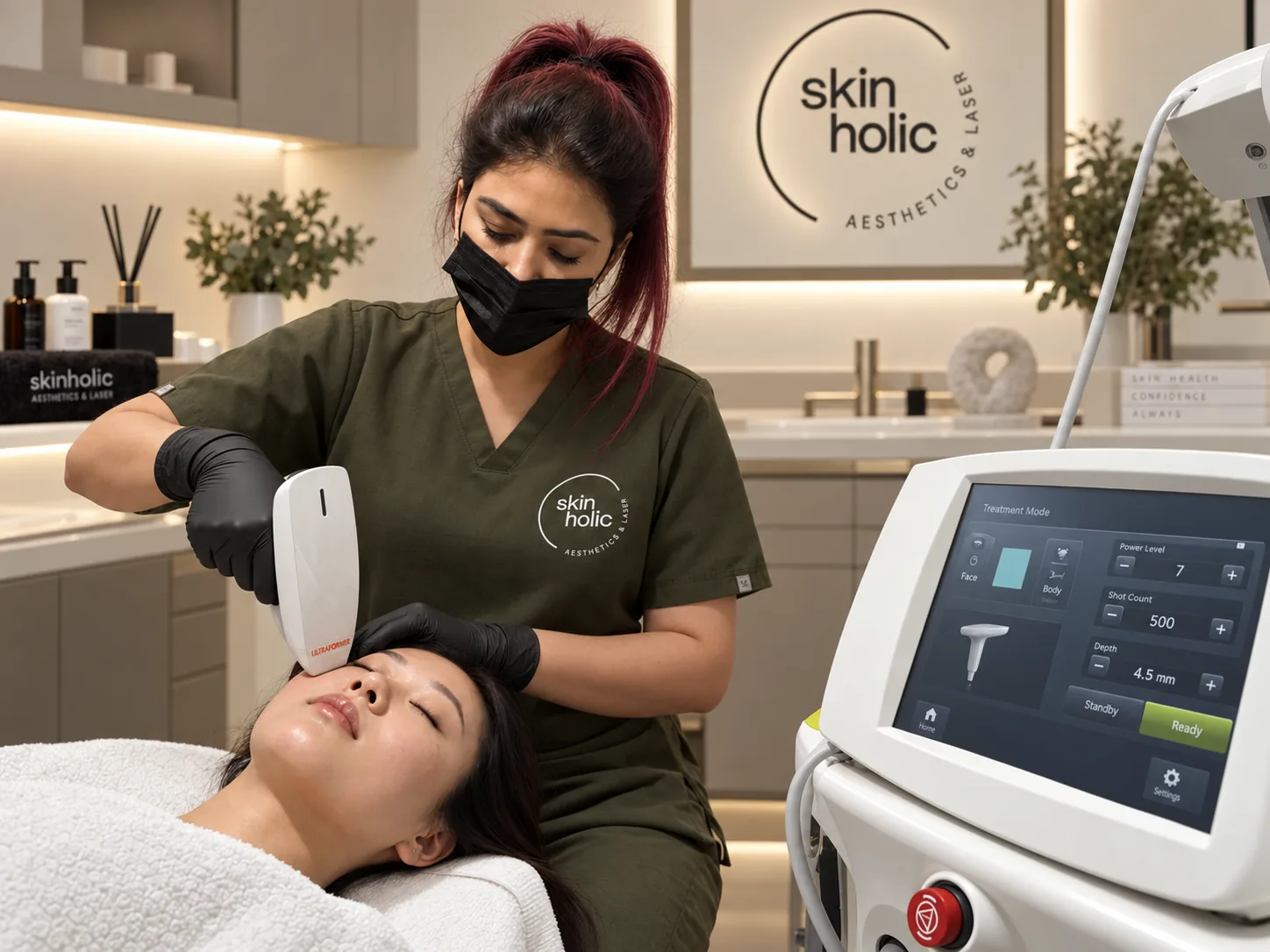
Not sure which option fits?

A free in-person assessment is where every plan starts.

Some clients combine approaches over time, for example maintaining with facials while adding a peel or resurfacing session once their skin is ready, and your practitioner sequences them so each step builds on the last. See the treatment menu for the full treatment menu.

Free consultation • Surrey & Aldergrove

What can you expect when you come in for oily, shiny skin?

Everything starts with a free consultation at the Surrey clinic on 120 Street or the Aldergrove clinic in Langley Township. Your practitioner asks about your routine, how your skin behaves through the day and what you would most like to change, then examines it under proper lighting to see where oil sits, how congested the pores are and how reactive the surface is.

From there the plan is personalized. Depending on your skin, the area and your goals, you may be recommended a single treatment, a sequence that moves from gentler to more intensive steps, or ongoing maintenance visits. Where a laser-based option is on the table, or your skin is sensitive, a patch test or a gentler first step may be suggested before anything more intensive.

Most cosmetic treatments work over a series of sessions with time between them, so results build gradually rather than appearing after one visit. Downtime varies: some options have little to none, while others may involve temporary redness or light flaking, and this is discussed before you decide, along with prep and aftercare for whatever is chosen. First visit? See first-visit guide for how to prepare, and browse results gallery for examples of what clients have seen, keeping in mind that individual results vary.

Is a consultation the right next step for you?

The consultation is free, in person and available at both the Surrey and Aldergrove clinics. It is the decision tool: rather than guessing which treatment you need, you sit down with a practitioner who assesses your skin, asks about your history, goals and lifestyle, reviews the options that may suit you and explains how they might be sequenced. You can ask anything, and there is no obligation to book treatment afterwards.

One thing to keep in mind: a changing mole, an unexplained lesion, persistent inflammation or pain, or any question that is medical rather than cosmetic should go to your physician first. Skinholic refers clients when something looks atypical.

Cost depends on the treatment, the area being treated, the number of sessions, customization, practitioner assessment and your individual goals, and it is confirmed at your consultation. Payment options are outlined at financing options. When you are ready, Start Your Skinholic Journey at book a free consultation, or send a question through contact us.

What to bring or think about before your visit

  • The products you currently use, including cleanser, moisturizer, sunscreen and makeup
  • Any previous facials, peels or laser treatments and how your skin responded
  • What bothers you most and when in the day it is worst
  • Medications or health conditions to mention so your practitioner can advise or refer you
  • A couple of photos taken in different lighting, with and without makeup

Good to know

Frequently asked questions about oily, shiny skin.

They may. Oil-balancing facials and peels are routine cosmetic protocols designed to clear the build-up that adds to shine, so the surface can look calmer and less slick between visits. They are not designed to change how much oil your skin naturally produces, so results vary and depend on your individual assessment and on consistent care at home. Your practitioner confirms which options suit you at a free consultation.

Four treatments on the Skinholic menu match this concern: Acne Facials (Acne Facials) for deep cleansing and extractions, the Zena Algae Peel and Chemical Peels for resurfacing at different intensities, and Skin Resurfacing where pore appearance and texture are the bigger goal. Which one, and in what order, depends on your in-person assessment rather than a fixed formula.

Facials and peels are adjusted to the individual, and laser-based resurfacing is matched to your skin tone and sensitivity, so most clients can find a suitable option. Skin tone, reactivity and how your skin has responded to past products all shape which option is suggested first and how quickly the plan progresses. Your practitioner confirms suitability at the consultation after seeing your skin in person.

It depends on the treatment. A facial is usually something you can have on a lunch break and return to your day, while a peel or resurfacing session may leave the skin pink and a little dry for a short stretch afterwards. Your practitioner walks you through what to expect for the option chosen, including how to care for your skin afterwards and how to time it around work or events.

There is no fixed number. It depends on how your skin behaves, how congested it is and which treatments your practitioner recommends after your assessment. Rather than a set course, the plan is reviewed at each visit and adjusted as your skin responds, and some clients move to occasional maintenance once they are happy with how their skin looks.

If oiliness changed suddenly, especially alongside other changes in how you feel or in your skin, it is worth seeing your family physician or a dermatologist before booking cosmetic treatment. Skinholic works from a cosmetic point of view only and does not assess medical conditions. Once your physician is comfortable, cosmetic treatments may still be an option, and your practitioner can plan around any care you are already receiving.

There is no flat rate, because plans are personalized. The total reflects which treatment or combination is recommended, the area treated, how many sessions your plan includes, customization and what your practitioner sees at your assessment, and it is confirmed at your free consultation rather than quoted in advance. Payment options are outlined at our financing page, and two clients with similar-looking skin may end up with different plans and different totals.

Neither suits everyone. Chemical Peels rely on professional-strength acids at a depth chosen for you, while the Zena Algae Peel uses no acid at all, which some sensitive or reactive skins tolerate more comfortably. Your practitioner recommends one after seeing how your skin behaves, and our article “Zena algae peel or a chemical peel?” walks through the differences in more detail.

Ready when you are

Ready to stop guessing about the shine and have someone look at your skin in person?

Free consultation, in person, personalized plan, no obligation, at either clinic.

Start Your Skinholic Journey

First visit? See what to expect on our new-client page.

Call now Start Your Skinholic Journey