Opening hours
- Mon – Fri
- 10:00 am – 7:00 pm
- Saturday
- 10:00 am – 6:00 pm
- Sunday
- Closed
Facials & Facial Treatments
Dermaplaning Brightening Facials Acne Facials Anti-Aging Facials Buccal Therapy Hadado & Kobido Facial Sculpting Non-Invasive Structural Skin Tightening Skin Resurfacing Microneedling w/ ExosomesLaser Hair Removal & Laser Treatments
Nd:YAG & Alexandrite LHR Pico Laser Rejuvenation Nd:YAG & Alexandrite Laser Rejuvenation Hair Blanching Skin Tag Removal Tattoo RemovalAcne & Congestion
Breakouts and blemish-prone skin Blackheads and clogged pores Oily, shiny skin Dark spots after breakouts Enlarged poresPigmentation & Uneven Tone
Dark spots and sun spots Stubborn brown patches (melasma-type pigmentation) Uneven skin tone and blotchiness Dull, tired-looking skin Sun-damaged, weathered-looking skin Dark marks on the body from bites, scratches or old blemishesAging & Skin Laxity
Fine lines and early wrinkles Sagging jawline and early jowls Loose neck skin Loss of firmness and crepey skin Facial puffiness and fluid retention Jaw tension and a tight, tired-looking face Loose skin on the tummy, arms or thighsTexture & Scarring
Acne scars (pitted or indented) Rough, uneven skin texture Raised or thick scars Stretch marks Peach fuzz and flaky surface buildupDryness, Sensitivity & Redness
Dry, dehydrated, tight-feeling skin Visible facial veins and broken capillariesSkin concern · Texture & Scarring
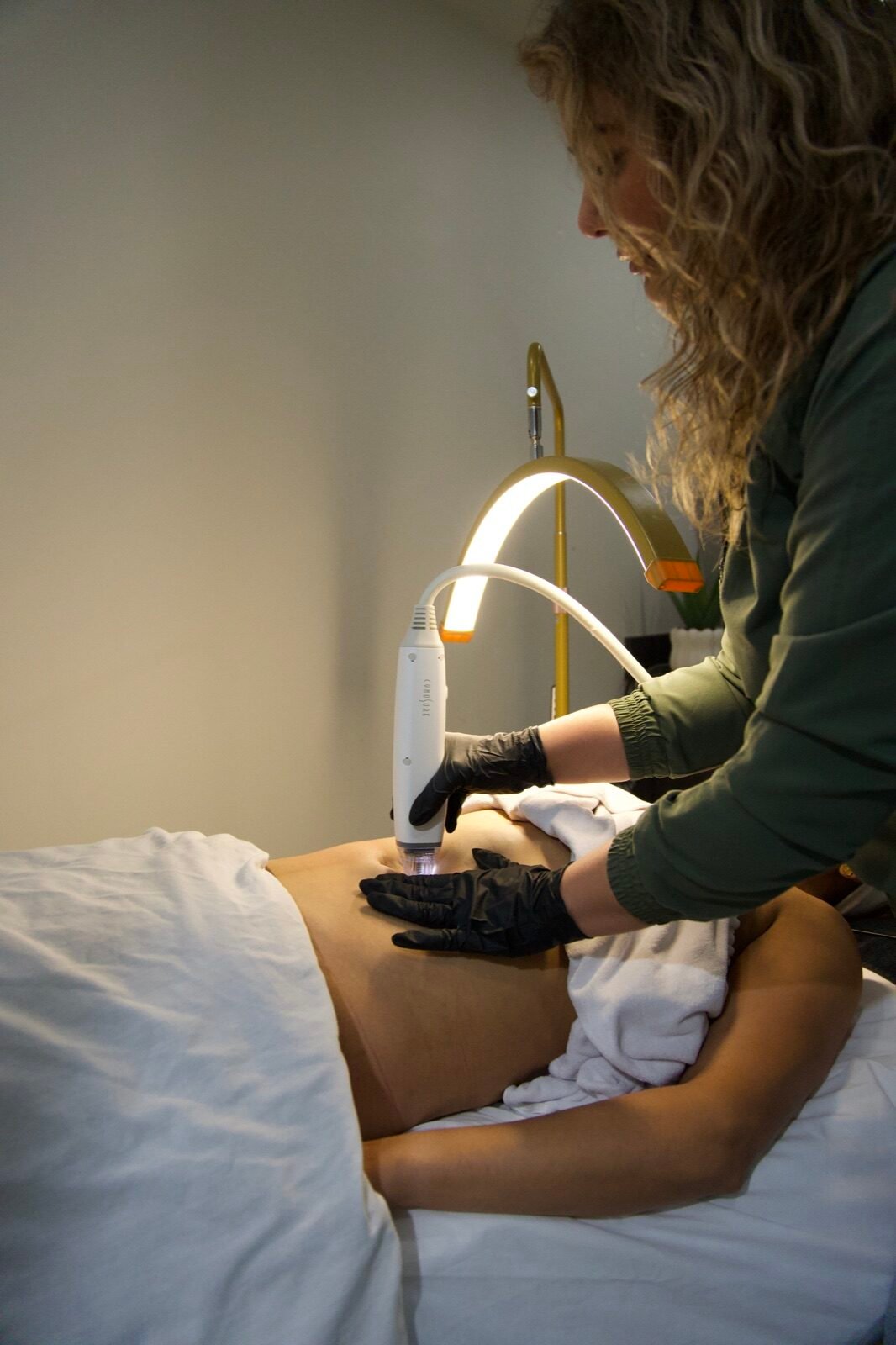
Stretch marks are red, purple or silvery streaks that appear where skin has stretched quickly, often on the tummy, hips, thighs or arms. Energy and microneedling-based treatments may help soften their texture and colour; the right plan depends on a free in-person assessment at Skinholic in Surrey or Aldergrove.
Treatments that may help
The treatments below are listed from the gentler, lower-downtime option to the more intensive ones. The order is a guide to intensity rather than a recommendation: depending on your marks and the skin around them, a practitioner may begin anywhere on the list or pair two approaches over time. A free in-person assessment decides which of these is right for you.
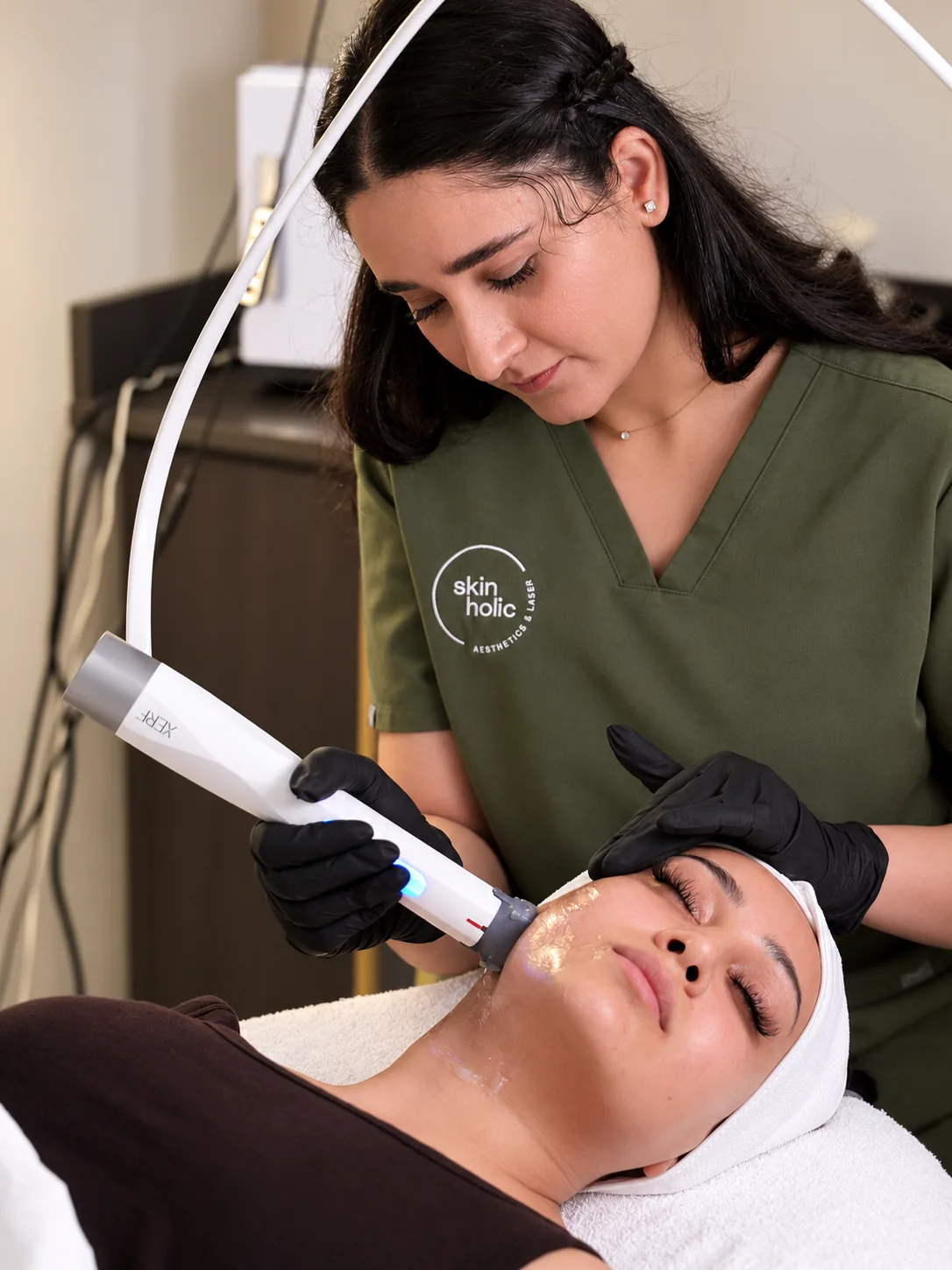 Non-Invasive Structural Skin TighteningEnergy-based tightening on radiofrequency platforms designed for mild-to-moderate skin laxity on the face, neck and body. Stretch marks often sit on skin that has also loosened after pregnancy or weight change, and firming the surrounding area may help the whole region look smoother so the marks read as less prominent. A practitioner may suggest it when laxity is part of what bothers you, not for the marks alone.Recommended starting point
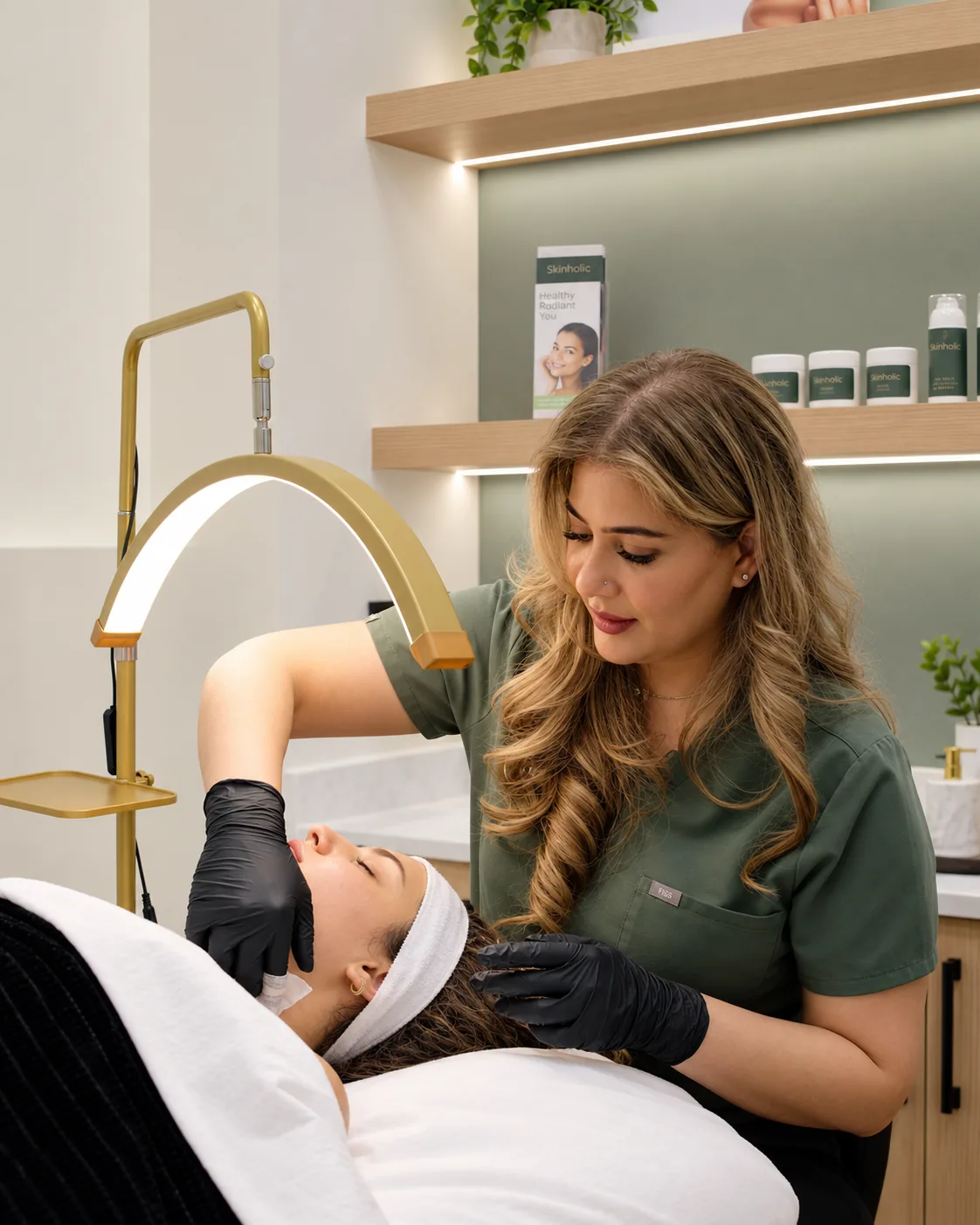 Microneedling w/ ExosomesCollagen-induction microneedling, including a radiofrequency option, paired with exosome serums that support the skin between sessions. Because the indented feel of a stretch mark comes from lost support beneath it, encouraging your skin to rebuild that support may help the marks look shallower and blend more evenly. A practitioner may suggest it where texture is the main concern, or alongside Stretch Mark Reduction over a series.Stretch Mark ReductionStretch Mark Reduction uses energy-based and microneedling-based approaches designed to improve the texture and colour of stretch marks on the body. It is the most direct match for this concern, built to address both the indented feel and the red, purple or silvery tone of the marks. A practitioner may suggest it when the marks themselves, rather than the skin around them, are what you most want to change.