Opening hours
- Mon – Fri
- 10:00 am – 7:00 pm
- Saturday
- 10:00 am – 6:00 pm
- Sunday
- Closed
Facials & Facial Treatments
Dermaplaning Brightening Facials Acne Facials Anti-Aging Facials Buccal Therapy Hadado & Kobido Facial Sculpting Non-Invasive Structural Skin Tightening Skin Resurfacing Microneedling w/ ExosomesLaser Hair Removal & Laser Treatments
Nd:YAG & Alexandrite LHR Pico Laser Rejuvenation Nd:YAG & Alexandrite Laser Rejuvenation Hair Blanching Skin Tag Removal Tattoo RemovalAcne & Congestion
Breakouts and blemish-prone skin Blackheads and clogged pores Oily, shiny skin Dark spots after breakouts Enlarged poresPigmentation & Uneven Tone
Dark spots and sun spots Stubborn brown patches (melasma-type pigmentation) Uneven skin tone and blotchiness Dull, tired-looking skin Sun-damaged, weathered-looking skin Dark marks on the body from bites, scratches or old blemishesAging & Skin Laxity
Fine lines and early wrinkles Sagging jawline and early jowls Loose neck skin Loss of firmness and crepey skin Facial puffiness and fluid retention Jaw tension and a tight, tired-looking face Loose skin on the tummy, arms or thighsTexture & Scarring
Acne scars (pitted or indented) Rough, uneven skin texture Raised or thick scars Stretch marks Peach fuzz and flaky surface buildupDryness, Sensitivity & Redness
Dry, dehydrated, tight-feeling skin Visible facial veins and broken capillariesSkin concern · Body & Scalp Concerns
Thinning hair often shows as a wider part, more visible scalp or a thinner ponytail. KeraLase MD and DERIVE Hair Wellness are designed to support density and scalp health; Japanese Head Spa focuses on scalp cleansing and comfort. Suitability is confirmed at a free consultation in Surrey or Aldergrove.
Treatments that may help
Which of these fits your skin is settled at your free consultation. The options below are listed from the gentlest maintenance option to the most intensive, and each links to its own page for the full details.
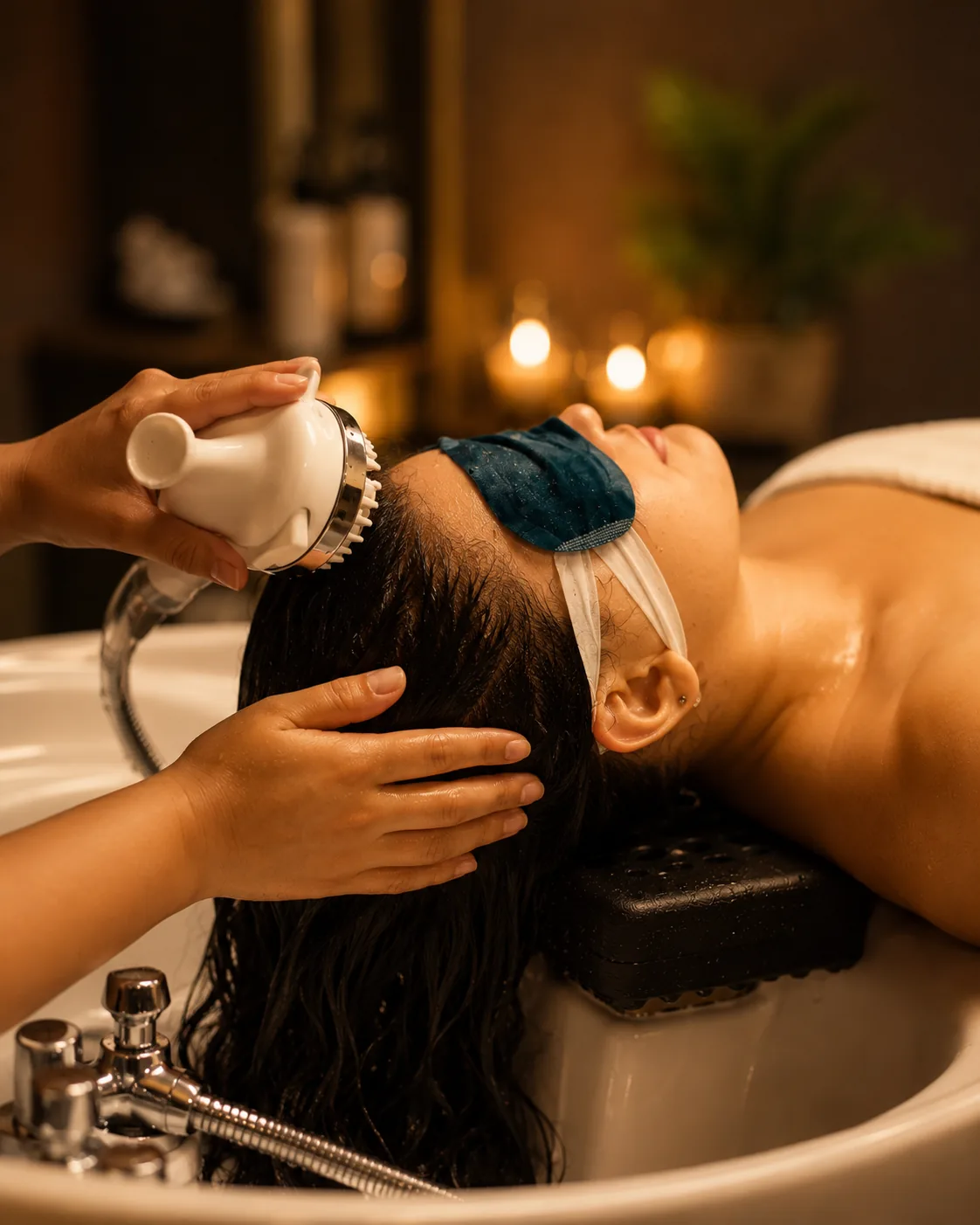 Japanese Head SpaA scalp-focused ritual of deep cleansing, buildup removal, massage and hydration, designed to leave the scalp clean and comfortable. When flaking, excess oil or product residue is weighing hair down at the roots, clearing the scalp may help hair look fuller and gives other options a better base. Practitioners often suggest it as a gentle first step or as maintenance between more targeted sessions.Recommended starting point
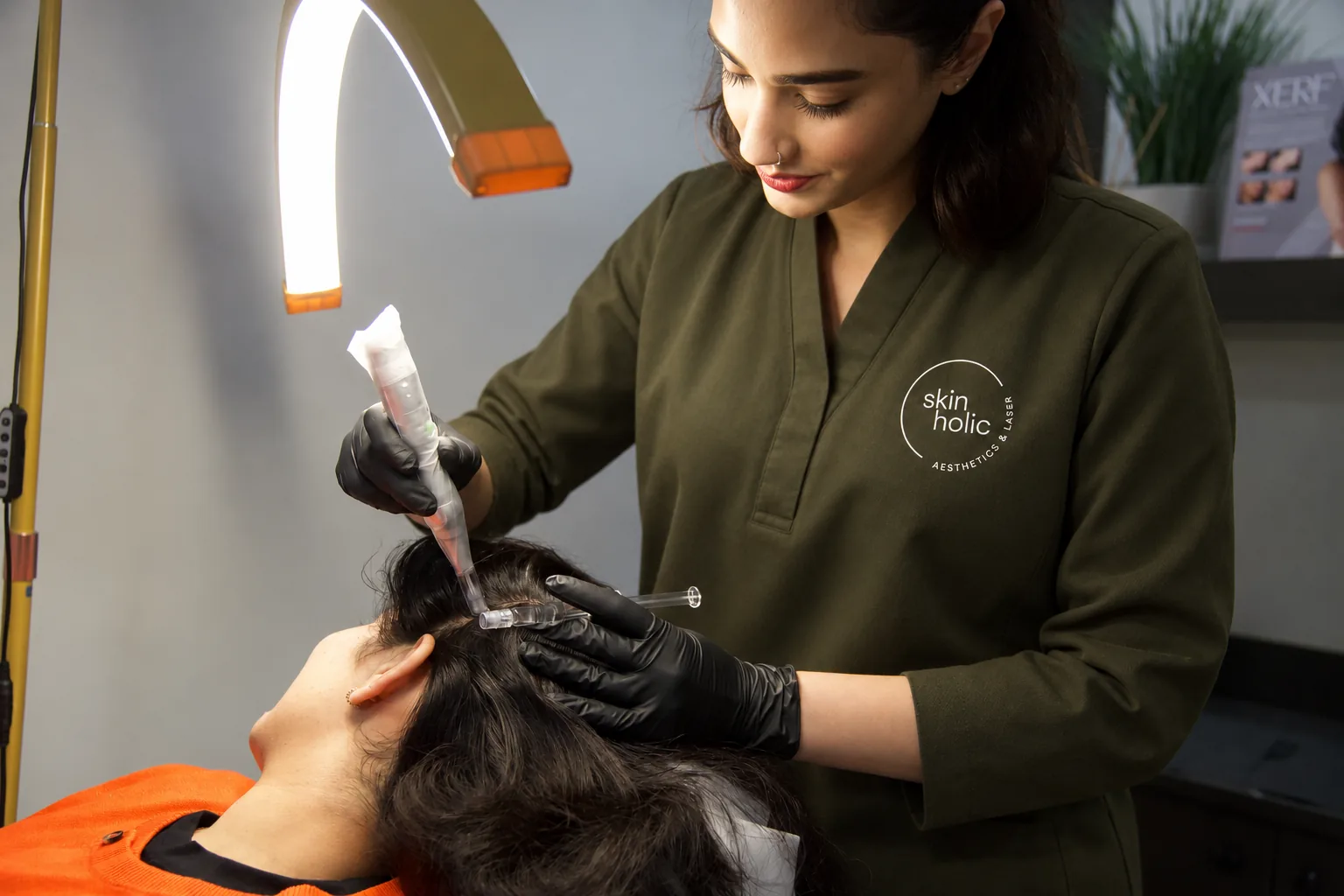 DERIVE Hair WellnessA scalp microneedling protocol with a nutrient serum, designed to support hair density and scalp health. The microneedling step is intended to help the serum absorb, so practitioners may suggest it when thinning is spread across the top of the head rather than in one spot. It may be chosen over KeraLase MD if you are comfortable with needles or laser is not the right fit for your scalp.KeraLase MDLaser-enhanced hair restoration in which the laseMD platform prepares the scalp for a hair-wellness serum, designed to support thinning hair and scalp health. Practitioners often suggest it for a widening part or a crown that has lost coverage. It may be chosen over DERIVE Hair Wellness if you would rather avoid needles and your scalp and skin tone are assessed as suited to laser.