Opening hours
- Mon – Fri
- 10:00 am – 7:00 pm
- Saturday
- 10:00 am – 6:00 pm
- Sunday
- Closed
Facials & Facial Treatments
Dermaplaning Brightening Facials Acne Facials Anti-Aging Facials Buccal Therapy Hadado & Kobido Facial Sculpting Non-Invasive Structural Skin Tightening Skin Resurfacing Microneedling w/ ExosomesLaser Hair Removal & Laser Treatments
Nd:YAG & Alexandrite LHR Pico Laser Rejuvenation Nd:YAG & Alexandrite Laser Rejuvenation Hair Blanching Skin Tag Removal Tattoo RemovalAcne & Congestion
Breakouts and blemish-prone skin Blackheads and clogged pores Oily, shiny skin Dark spots after breakouts Enlarged poresPigmentation & Uneven Tone
Dark spots and sun spots Stubborn brown patches (melasma-type pigmentation) Uneven skin tone and blotchiness Dull, tired-looking skin Sun-damaged, weathered-looking skin Dark marks on the body from bites, scratches or old blemishesAging & Skin Laxity
Fine lines and early wrinkles Sagging jawline and early jowls Loose neck skin Loss of firmness and crepey skin Facial puffiness and fluid retention Jaw tension and a tight, tired-looking face Loose skin on the tummy, arms or thighsTexture & Scarring
Acne scars (pitted or indented) Rough, uneven skin texture Raised or thick scars Stretch marks Peach fuzz and flaky surface buildupDryness, Sensitivity & Redness
Dry, dehydrated, tight-feeling skin Visible facial veins and broken capillariesSkin concern · Pigmentation & Uneven Tone
Sun-damaged, weathered-looking skin shows up as mottled colour, rough patches, freckling and a leathery texture after years outdoors. At Skinholic in Surrey and Aldergrove, Cosmelan, Pico Laser Rejuvenation, Chemical Peels and Skin Resurfacing may help improve its appearance, with the right option confirmed at a free in-person assessment.
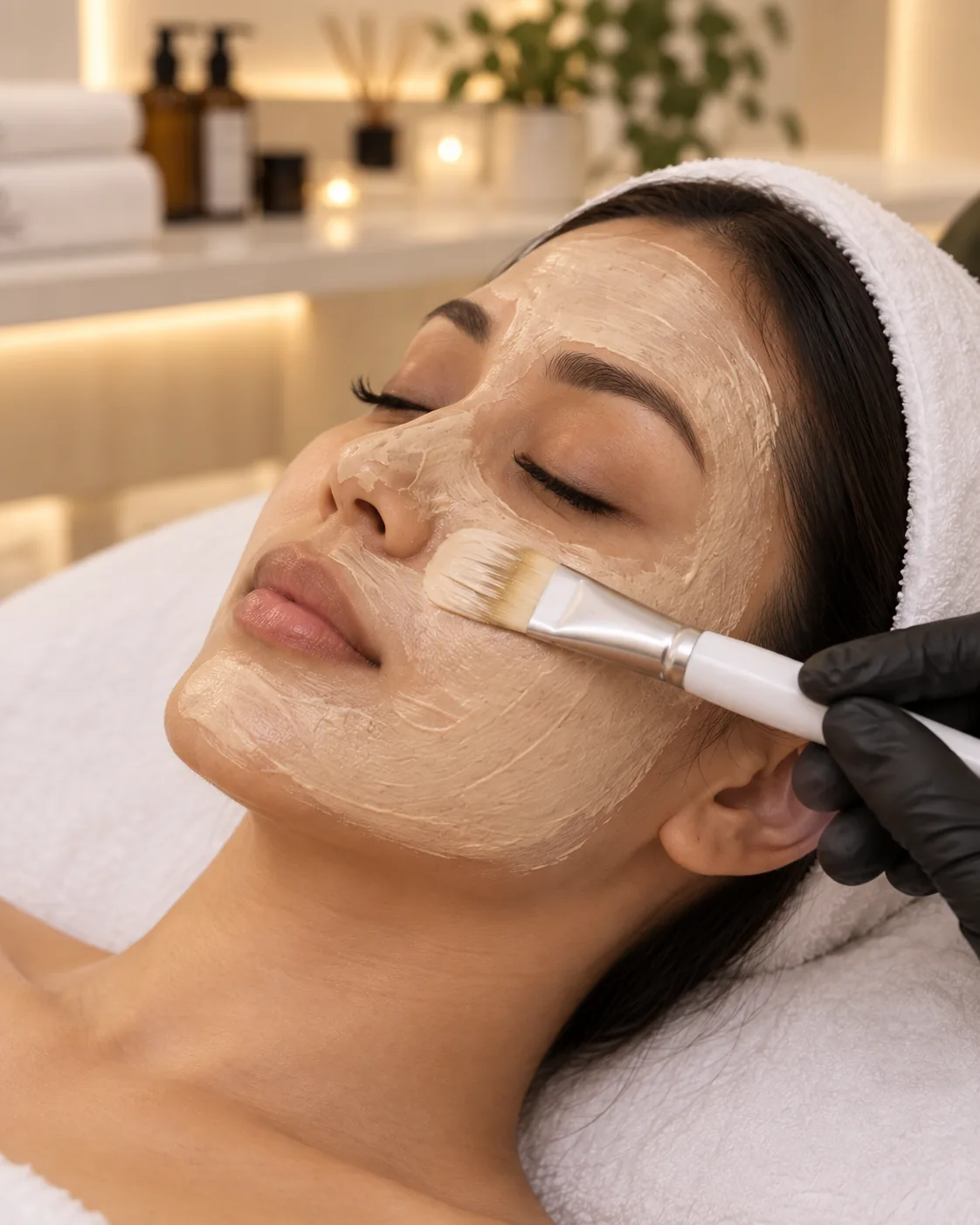
Treatments that may help
Which of these fits your skin is settled at your free consultation. The options below run from the gentler, lower-downtime approaches to the more intensive, correction-focused ones, so you can see how a practitioner might layer them over time.
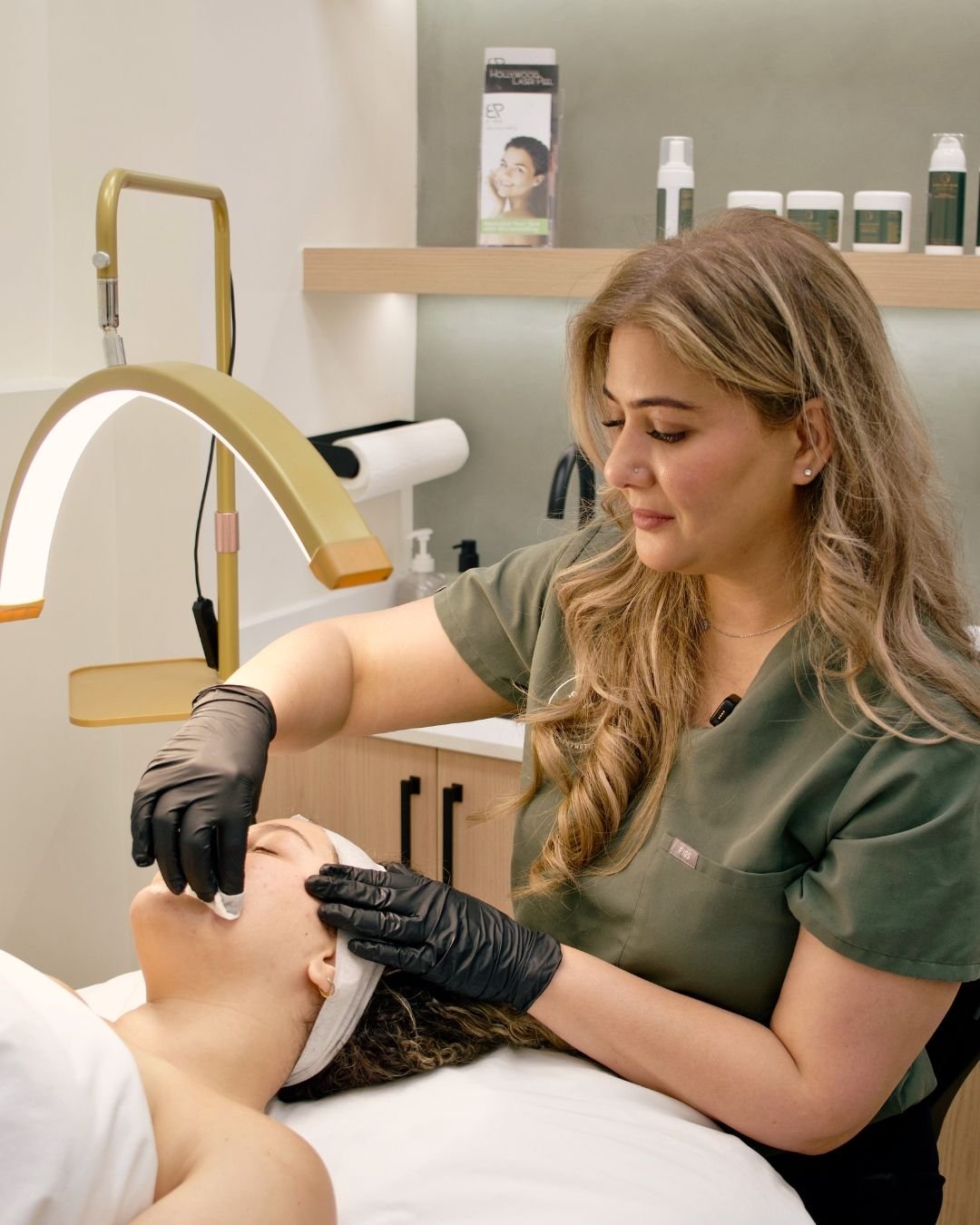 Chemical PeelsProfessional-strength peels applied at graded depths to exfoliate the pigmented, roughened surface layers. Over a series they may help improve the appearance of mottled tone, freckling and coarse texture at the same time. A practitioner often suggests a lighter peel as a first step for sensitive skin, or as a supporting treatment between other sessions.Recommended starting point
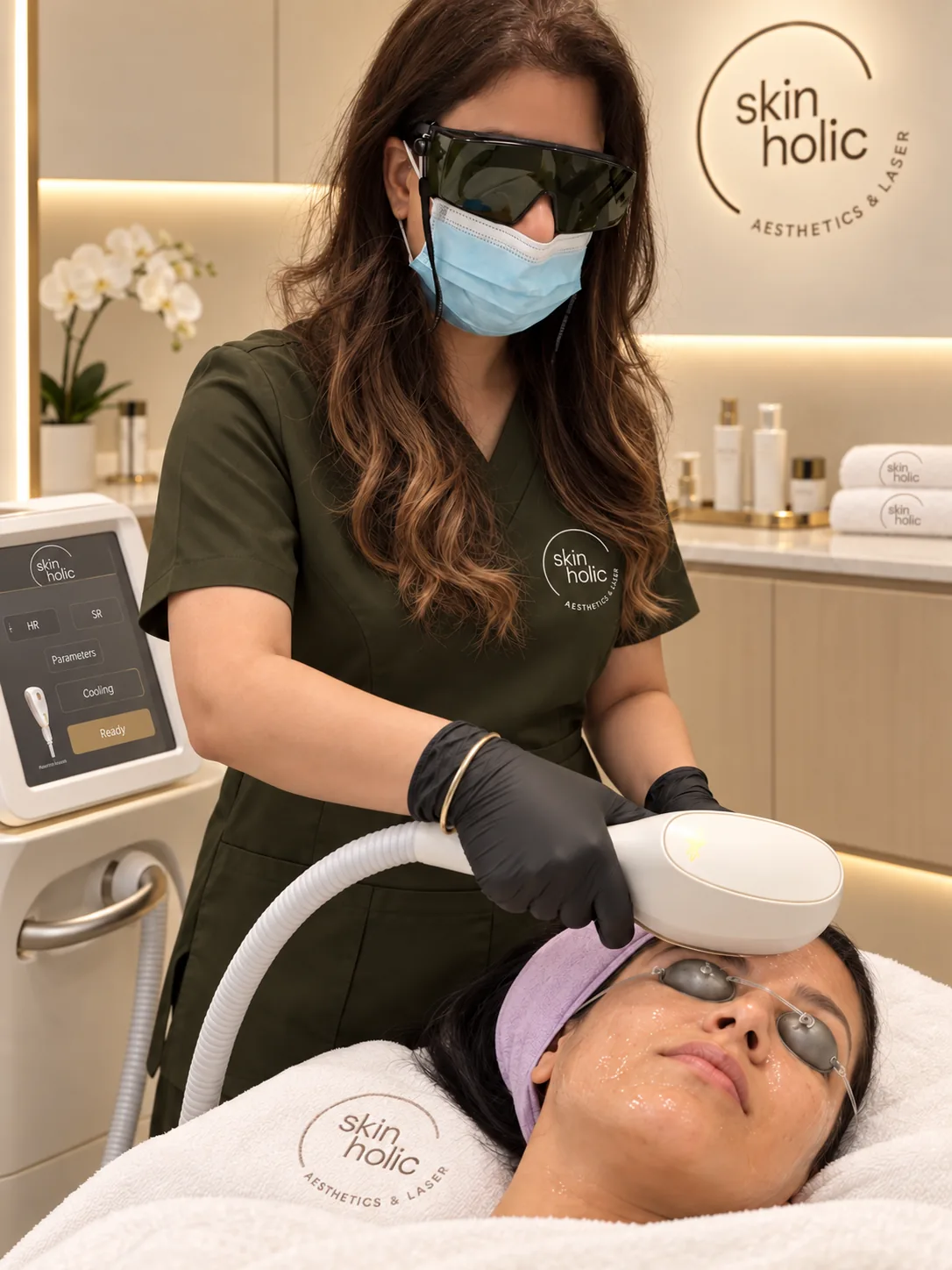 Pico Laser RejuvenationA picosecond laser designed to target concentrated pigment, sun spots and dullness with very short pulses and minimal downtime. It may help lighten scattered freckling and even out blotchy colour on the face, neck and chest. Practitioners tend to suggest it when pigment is the main issue and a quick return to normal activities matters to you.
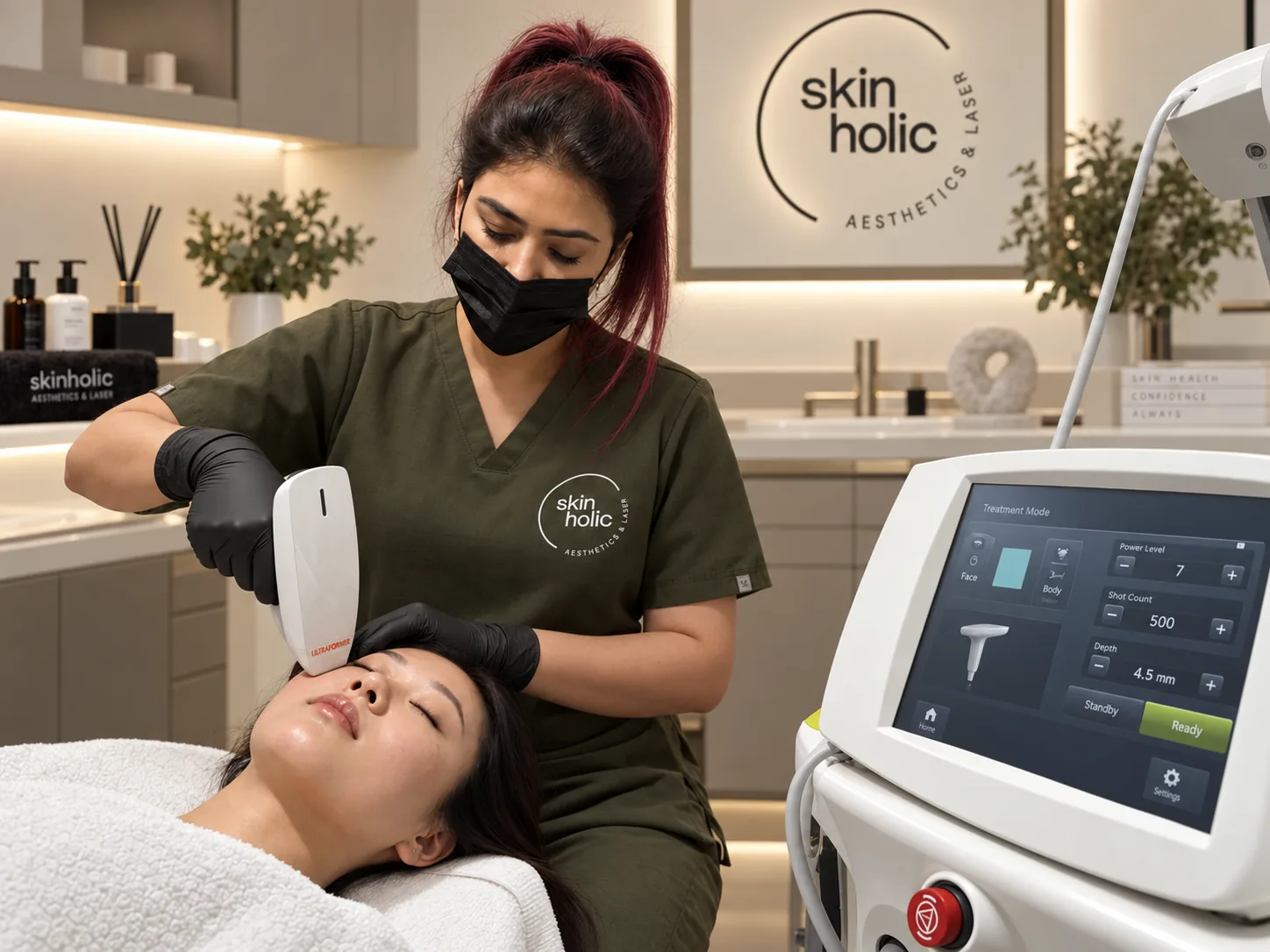 Skin ResurfacingLaser or energy-based resurfacing that works on texture, pores, fine lines and tone by encouraging the skin to renew its surface. It may suit weathered skin where roughness and crinkling bother you as much as colour. Because it involves more temporary redness or flaking than a lighter peel, it is usually discussed once you know your downtime tolerance.CosmelanA non-laser depigmentation system designed for deeper, widespread sun damage and stubborn uneven tone. It may help improve the appearance of diffuse mottling across larger areas, and is often suggested for clients whose skin tone or sensitivity makes a laser-first approach less suitable. It is the most involved protocol here, so it is discussed once your practitioner has assessed your skin.