Skin concern · Texture & Scarring

Raised or Thick Scars

Raised or thick scars form when healing leaves firm, excess tissue sitting above the skin. Energy-based scar relaxation, microneedling with exosomes and skin resurfacing may help soften, flatten and even the tone of such scars over a series of sessions, with suitability confirmed at a free in-person consultation.
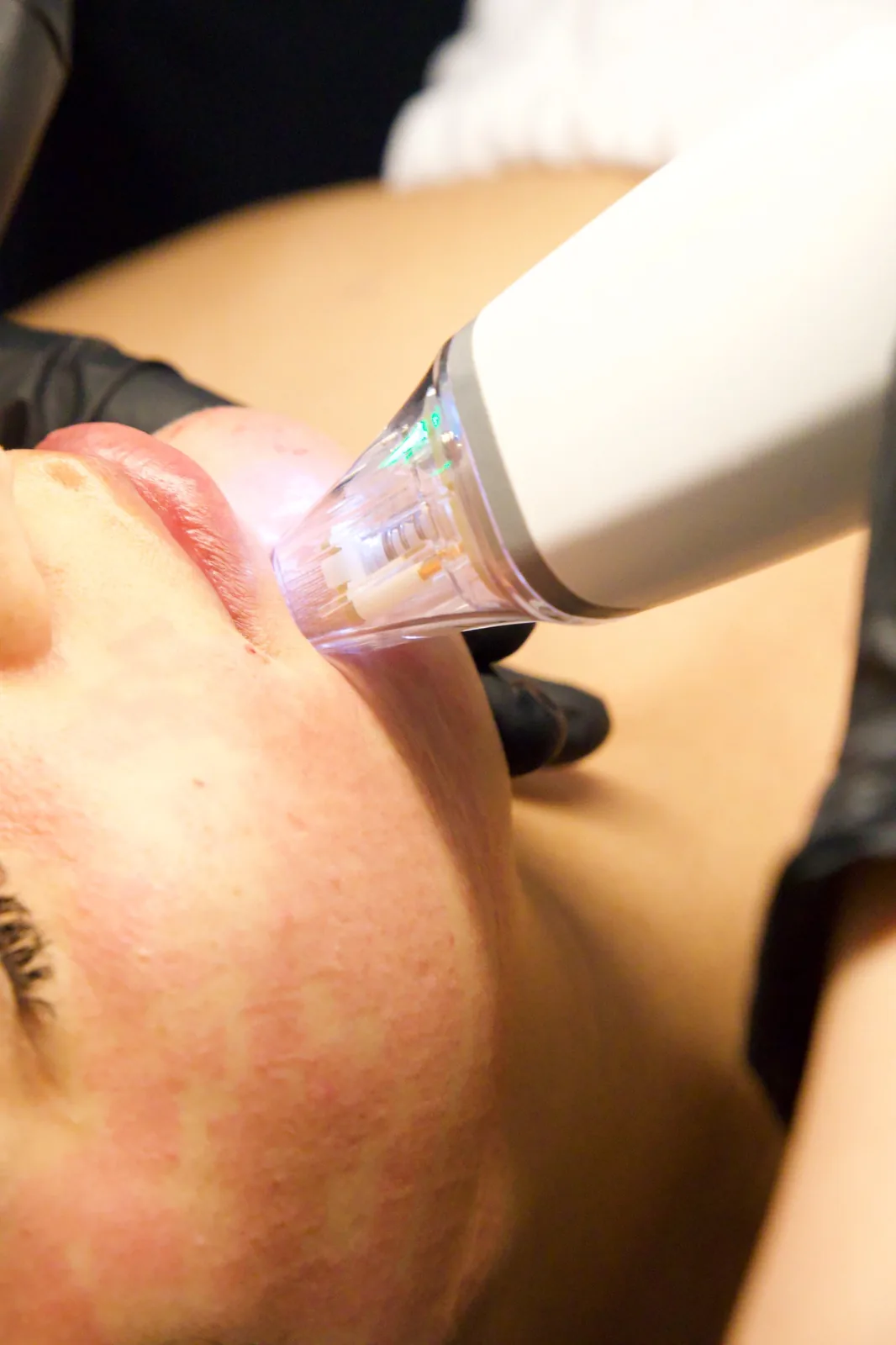
Raised or Thick Scars, assessed in person at Skinholic

Raised or thick scars are healed marks from an injury, burn or past procedure that sit above the surrounding skin, feel firm to the touch and are often darker or redder than the skin around them. Many people look for help because they are tired of being aware of them every day and want their skin to feel like theirs again rather than a reminder of how it got hurt. This is a cosmetic page about how raised scars look and feel, not a medical assessment. Skinholic Aesthetics & Laser looks at every scar in person at a free consultation at our Surrey or Aldergrove (Langley Township) clinic before recommending anything, because no two scars heal quite the same way.

Why is a raised scar so hard to ignore?

A raised scar has a way of announcing itself. Maybe it sits on your shoulder or knee and you find yourself reaching for sleeves or longer shorts even on a warm Fraser Valley afternoon. Maybe it runs along your jaw or collarbone and you have mostly given up on makeup, because concealer sits on top of a ridge rather than hiding it. Perhaps you have tried silicone sheets, oils and massage creams that promised to smooth it, and now wonder whether anything changes a scar once it has set.

Part of the frustration is that scar tissue behaves differently from the skin around it. It is built differently, stiffer and slower to change, which is why products made for ordinary texture concerns tend to do little for it. Every skin heals in its own way too: the approach that softened a friend's scar may not be the right fit for yours, because scar age, depth, location and skin tone all shape what is sensible.

That is why the path at Skinholic starts with looking, not selling. A practitioner examines the scar in person, asks about its history and what you want to change, and only then suggests a personalized plan. Cosmetic treatments aim to soften and flatten a raised scar gradually across several visits, with ongoing care in between. A scar may become far less noticeable, but not overnight, and we would rather say so honestly at the start.

What do raised or thick scars typically look and feel like?

These are common cosmetic appearances of raised scars, not a checklist for self-diagnosis. Some people notice one or two; others notice several. A raised or thick scar often shows up as:

  • A ridge or bump you can trace with a fingertip, sitting higher than the skin on either side of it
  • Tissue that feels stiffer and less springy than the skin around it when you press on it
  • A glossy, tight-looking surface without the fine lines, pores or hair of the skin beside it
  • A tight or pulling sensation when you stretch or bend the area
  • A scar that stays within the original wound but remains thick and raised many months after healing
  • A scar that looks more prominent in photos or bright light than it feels day to day

See a physician first. If a scar keeps spreading beyond the original wound, itches intensely, bleeds, is painful or stays persistently inflamed, if it is less than about a year old and still changing, or if you notice a mole or spot nearby that is new or changing, see your family doctor or a dermatologist first. Skinholic does not diagnose skin conditions, and we will refer you if anything looks atypical during your assessment.

Why do some scars heal raised or thick?

No single factor decides whether a scar heals flat or raised, and a thick scar is not a verdict on how well you cared for the wound. Contributors often linked with raised scarring include:

  • Deeper cuts, burns and wounds that stayed open, inflamed or were reopened by friction or picking, which are often linked with thicker scar tissue
  • Genetics and skin type, which influence how much collagen your skin lays down as it repairs
  • Skin tone, since some complexions are more prone to raised, darker or longer-lasting scars
  • Location, since skin that is constantly stretched, such as across the chest, upper back or over a joint, tends to lay down thicker scar tissue
  • Age at the time of injury, as younger skin often heals with a stronger, more visible repair response
  • Sun exposure on a healing scar, which can deepen its colour and make it stand out for longer

The mix is different for everyone, so a Skinholic practitioner reviews these factors with you at your consultation. Day to day, shading a scar from direct sun and using a broad-spectrum mineral sunscreen over it may help it blend in sooner.

Treatments that may help

Which Skinholic treatments may help with raised or thick scars?

Everything below is confirmed at a free, in-person consultation before anything is booked. The treatments below are listed from gentler options to more intensive ones, and each links to its own page for full details.
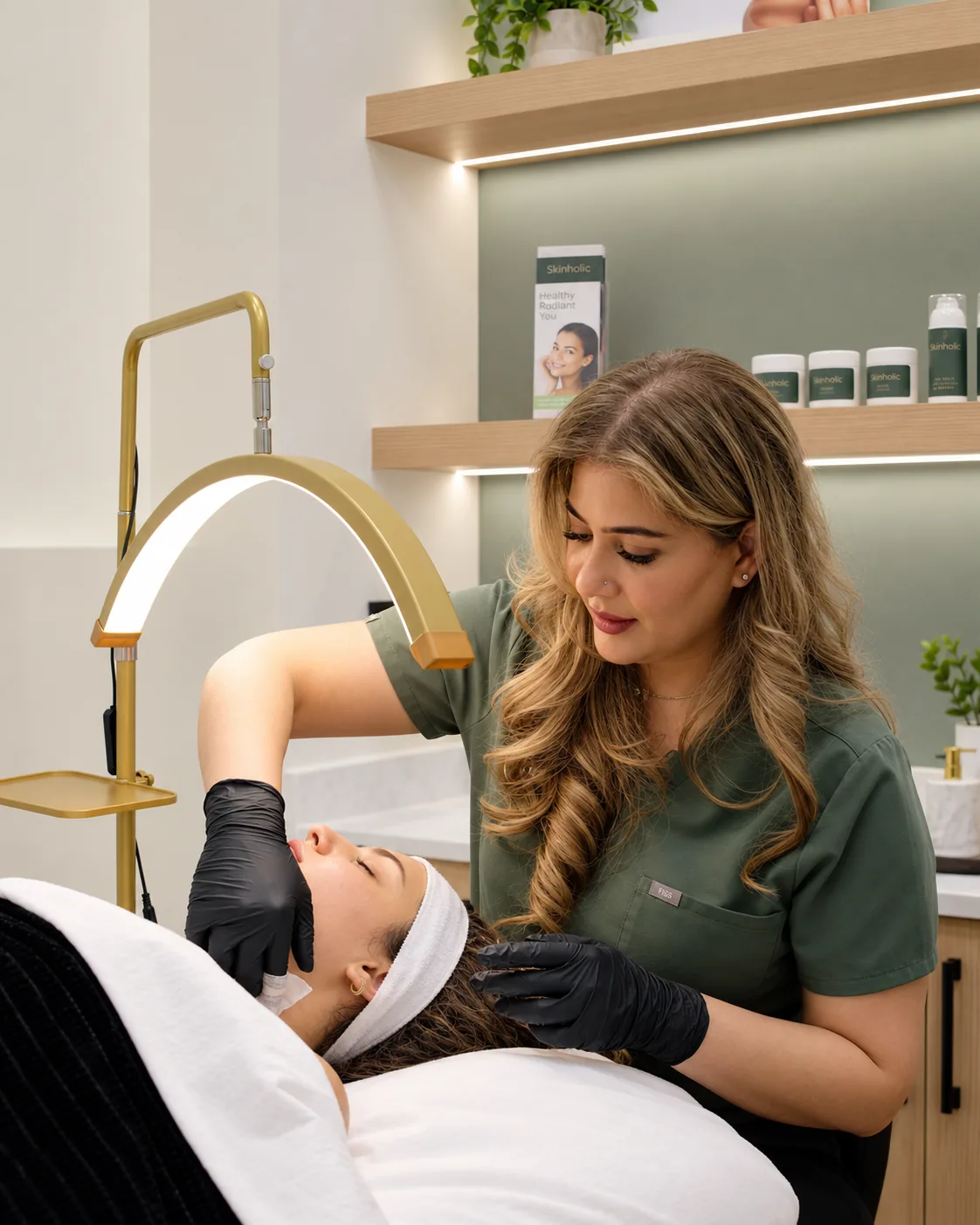
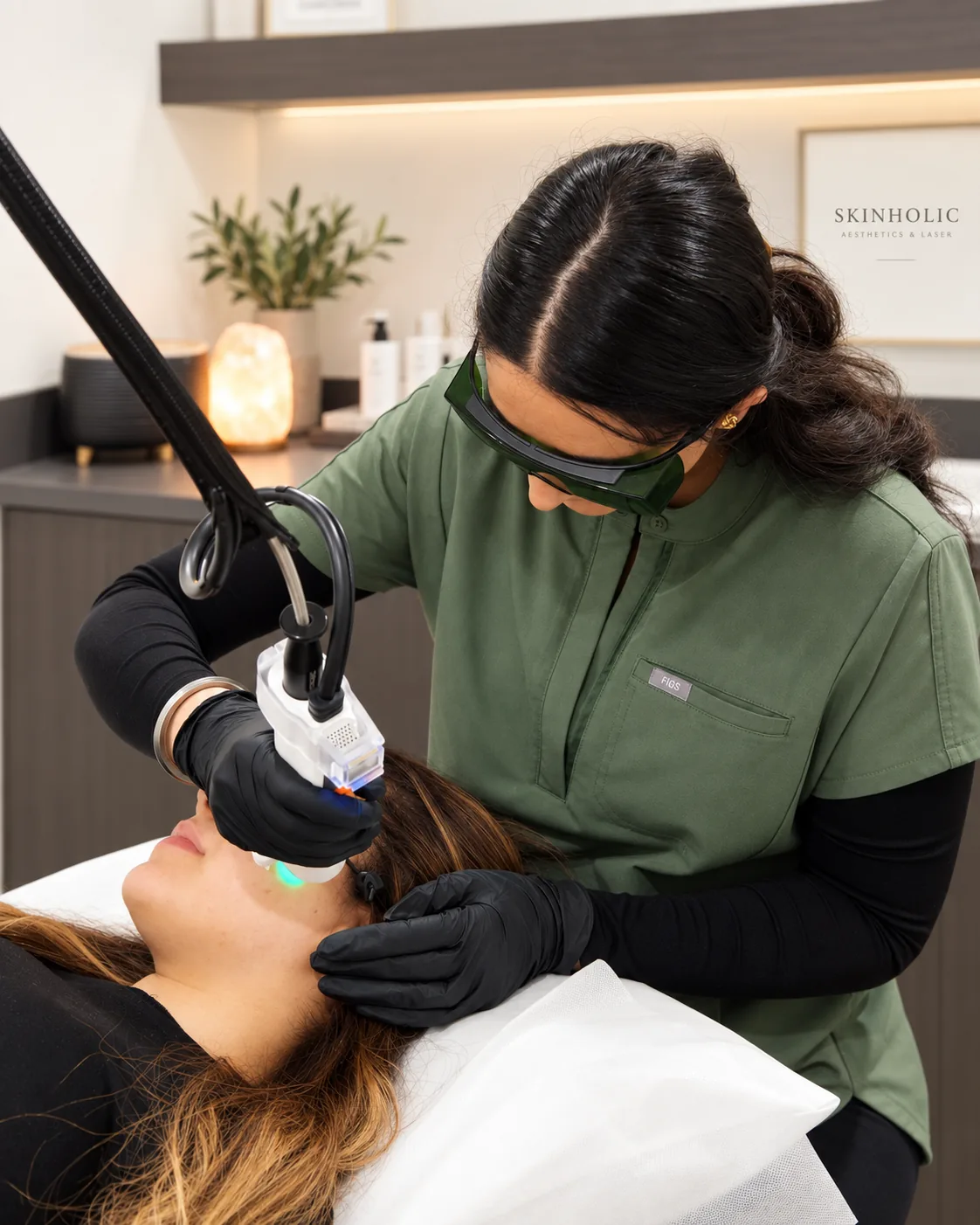
Microneedling w/ ExosomesMicroneedling for collagen induction, offered with or without RF, creates controlled micro-channels, and the exosome serums applied afterwards are intended to support recovery between sessions. On raised scars it may help the firm tissue remodel gradually and blend more evenly with the surrounding skin. It tends to suit clients whose scars are also uneven in texture, or who prefer a gentler-feeling starting point before energy-based work.Recommended starting pointSkin ResurfacingSkin Resurfacing uses laser or energy to refine the surface layer, targeting texture, tone and mild scarring. For a raised scar it may help smooth the edges where scar meets normal skin so the transition reads less sharply. A practitioner may suggest it once a scar has flattened somewhat, or for wider, shallower scars where surface texture matters more than height.Nd:YAG & Alexandrite Laser RejuvenationWavelength-matched laser rejuvenation is designed to work on tone, texture and the visible redness of skin while encouraging collagen. It may be relevant when a raised scar stays noticeably red or pink well after it has healed. A practitioner may pair it with scar relaxation, or reserve it for scars where lingering colour, rather than height, is the main concern.Scar RelaxationScar Relaxation uses laser and energy-based treatment designed to soften and flatten raised or textured scars and improve scar tone. It is the option most directly matched to firm, thick scar tissue. A practitioner may make it the main step for older, settled scars on the face or body, sequencing the gentler options around it if texture or colour also need attention.
Not sure which option fits?

A free in-person assessment is where every plan starts.

Some clients combine approaches over time, for example pairing scar relaxation with a resurfacing step once the tissue has settled, and the practitioner sequences these for you rather than offering everything at once. See the full treatment menu at the treatment menu.

Free consultation • Surrey & Aldergrove

What can you expect when you come in for raised or thick scars?

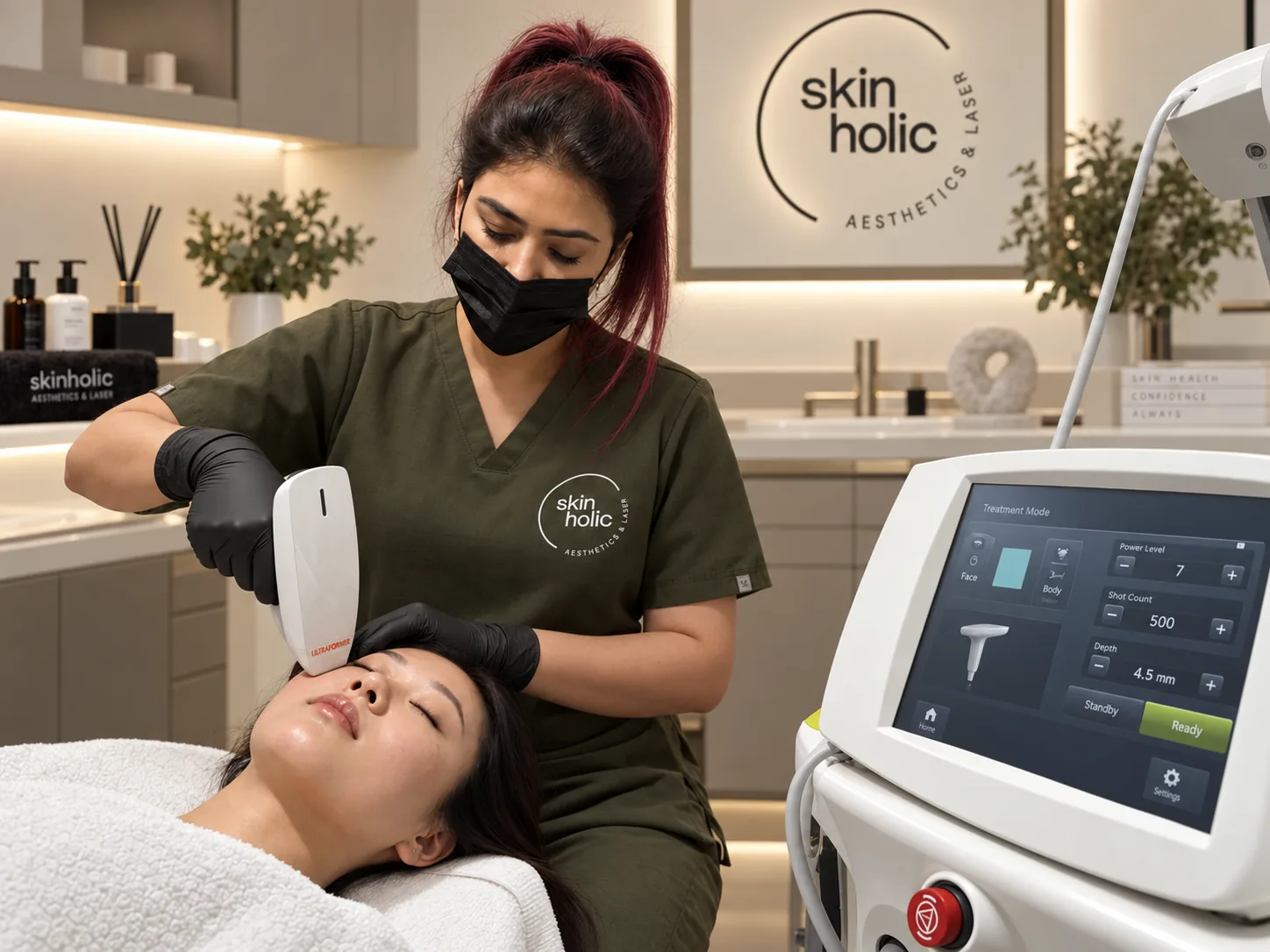
Your first step is a free consultation and in-person skin assessment at either our Surrey clinic on 120 Street or our Aldergrove clinic on Aldergrove Town Centre Drive in Langley Township. The practitioner examines the scar closely, presses gently to gauge how firm it is, compares its colour with the skin around it and asks whether it still seems to be changing. If you are new to Skinholic, first-visit guide explains how to prepare for that first visit.

From there the plan is personalized. Depending on the scar and your goals, the practitioner may recommend a single treatment, a sequence that softens the raised tissue first and refines tone later, or occasional maintenance. Most cosmetic scar treatments work over a series of sessions with time between them, and results tend to build gradually rather than appear after one visit. The practitioner explains prep and aftercare for whatever is chosen and reviews progress with you along the way.

Where a laser-based option is being considered, or if your skin is sensitive or deeper in tone, a patch test or a gentler first step may be suggested before a full session. Downtime varies: some options involve little more than mild warmth or pinkness for a day or so, while others may bring temporary redness, swelling or flaking. All of this is discussed before you decide. You can see examples of the kinds of changes clients have seen at results gallery, keeping in mind that individual results vary.

Is a consultation the right next step for you?

If you are unsure whether your scar is something a laser and aesthetics clinic can help with, the free consultation is the decision tool. It is in person, available at both our Surrey and Aldergrove clinics, and carries no obligation. The practitioner assesses the scar and the skin around it, asks about your history, goals and lifestyle, walks you through the options that may suit and how they might be sequenced, and gives you room to ask anything.

If your scar is still spreading past the edges of the original wound, hurts or stays inflamed, or sits beside a mole or spot you cannot explain, see your family doctor or a dermatologist first; Skinholic refers when anything looks atypical.

Cost depends on the treatment, the treatment area, the number of sessions, customization, practitioner assessment and your individual goals, and is confirmed at the consultation. Payment options are outlined at financing options. Questions before you visit are welcome through contact us, or you can Start Your Skinholic Journey at book a free consultation.

What to bring or think about before your visit

  • Roughly when the scar formed and how it came about
  • Anything you have already tried on it, from over-the-counter gels to earlier treatments
  • Any medications, conditions or healing issues, so the practitioner can advise or refer
  • A few photos of the scar taken over time, if you have them
  • What bothers you most: the height, the firmness, the colour or how it feels

Good to know

Frequently asked questions about raised or thick scars.

Many raised or thick scars may be softened and flattened with laser and energy-based scar relaxation, sometimes combined with microneedling with exosomes or skin resurfacing. The goal is improvement, not removal: the aim is for the scar to sit lower, feel softer and look less noticeable. How much change is realistic varies from scar to scar and is assessed in person at your free consultation.

Scar Relaxation is the closest match, because it is built around firm, raised scar tissue. Microneedling w/ Exosomes and Skin Resurfacing may be added for the surrounding texture, and Nd:YAG & Alexandrite Laser Rejuvenation may help where a scar stays red. Which combination fits, if any, depends on your assessment; our article “What treatments help with scars?” walks through the options in more depth.

Often, with the right adjustments. Scar tissue frequently carries more pigment than neighbouring skin, and deeper complexions can be more prone to colour changes after energy-based work, so settings and even the choice of treatment are matched to your skin tone. Your practitioner may also start more conservatively and build up as the scar shows how it responds. Whether it is a fit is settled at your in-person assessment.

Comfort and downtime vary by option and by where the scar sits; a scar over a joint may feel more tender afterwards than one on the torso, for instance. Some sessions feel like brief heat and leave the area pink overnight; others may need a few days of care while the skin settles. Numbing is used where appropriate, and your practitioner walks you through what to expect from each option before you decide.

There is no standard number. Scar tissue remodels gradually, so a run of sessions spaced weeks apart is typical, and the length of that run depends on how thick and old the scar is, where it sits and how your skin responds. Your practitioner outlines a realistic plan at your free consultation and adjusts it as your progress becomes clear, rather than working to a fixed count.

Cost depends on the treatment, the treatment area, the number of sessions, customization, practitioner assessment and your individual goals, which is why no figure appears online. Once the practitioner has seen the scar and mapped out a plan, you receive a personalized estimate at the consultation itself, and payment options are explained at our financing page if spreading the cost over time would help.

Those are reasons to have a physician look at the scar before any cosmetic work. Healed scar tissue should be settled and quiet; one that is still enlarging, intensely itchy or sore is behaving more like an active wound, and that is not something an aesthetics clinic assesses. Skinholic does not diagnose or treat medical conditions, so we would point you to your family doctor or a dermatologist rather than book a session. Once it has been reviewed, we are glad to discuss cosmetic softening if appropriate.

Scars keep remodelling for many months after a wound closes, and a scar that is still in its first year may flatten and fade on its own. For that reason, newer scars are assessed carefully and may need physician input before any treatment is planned. Older, settled scars are usually the clearest candidates, but the right timing depends on your assessment rather than a fixed rule.

Ready when you are

Ready to have someone actually look at your scar before suggesting a plan?

Free consultation, in person, personalized plan, no obligation, at either clinic.

Start Your Skinholic Journey

First visit? See what to expect on our new-client page.

Call now Start Your Skinholic Journey