Skin concern · Texture & Scarring

Acne Scars (Pitted or Indented)

Pitted acne scars are dents where breakouts healed with less support under the skin. Microneedling w/ Exosomes, Skin Resurfacing, Chemical Peels and Scar Relaxation are designed to soften their appearance over a series; scars can be improved, not removed. Skinholic confirms suitability at a free consultation in Surrey or Aldergrove.
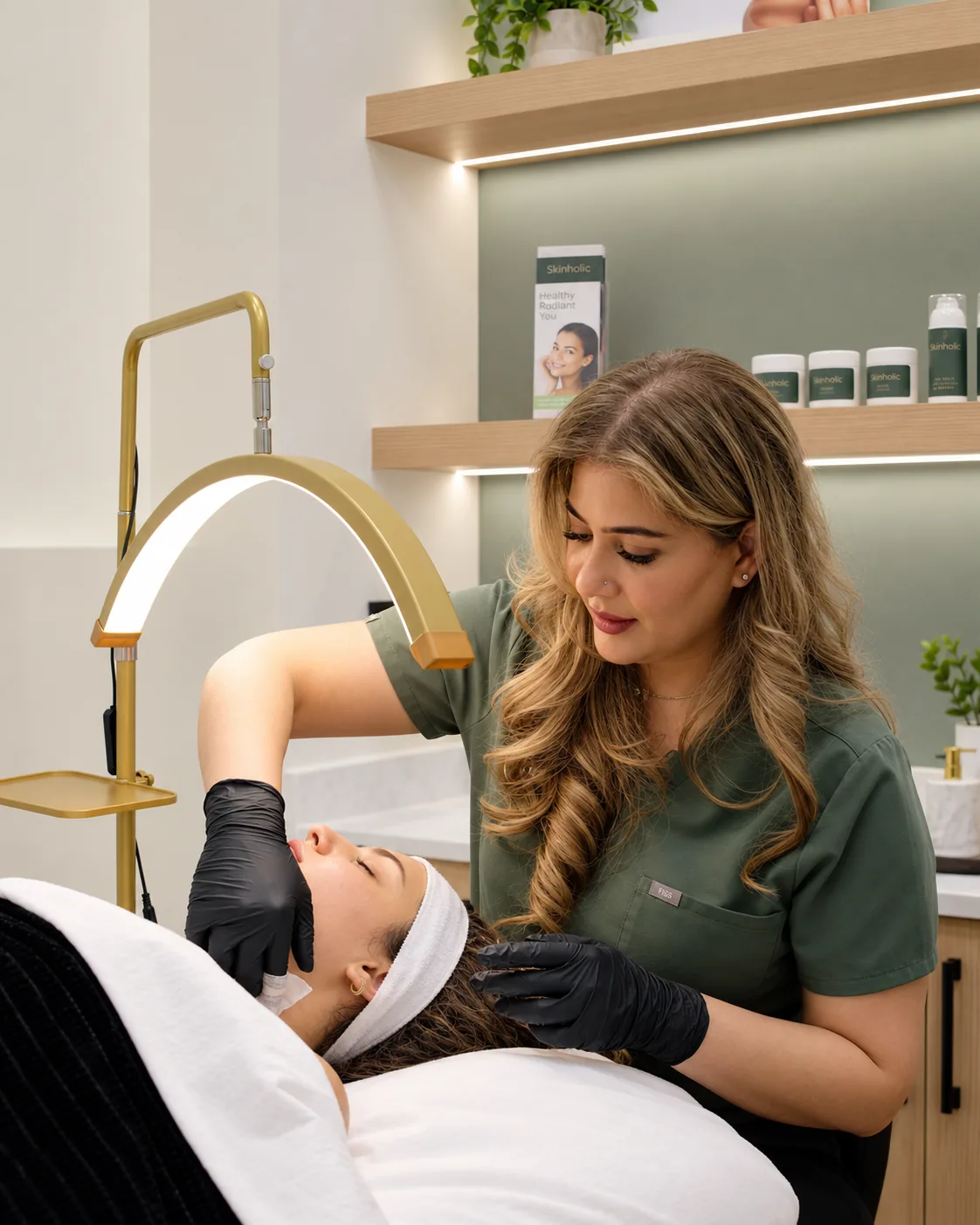
Practitioner in sage scrubs cradles a woman's chin under a gold arc lamp to begin microneedling with exosomes

Pitted or indented acne scars are the small dents, ice-pick pits and rolling unevenness that can linger on the cheeks, temples or jawline long after breakouts have settled. If you are looking into them, it is often because they have outlasted the breakouts by years, and you are not sure what to ask for at a clinic or how to tell a sensible plan from an over-promise. This is a cosmetic page about how these scars look and what may help their appearance, not a medical assessment. At Skinholic Aesthetics & Laser, nothing is recommended until a practitioner has looked at your skin in person at a free consultation at either the Surrey clinic or the Aldergrove clinic in Langley Township.

Why do pitted acne scars feel so hard to improve on your own?

If you are reading this, your breakouts are probably behind you, or nearly so, and yet the mirror still tells a story you would rather move on from. Perhaps you catch the texture in the car mirror in daylight, or have quietly worked out which side of the table to sit on for group photos. Serums, scrubs and at-home rollers that promised smoother skin may have delivered very little, and by now you may be wondering whether a clinic can really change it.

Indented scars are one of the better-understood texture concerns in aesthetics. They tend to form when a deeper breakout disrupts the collagen beneath the surface and the skin heals with less support than it had before. Approaches that encourage your skin to rebuild that support, and that gently refine the surface above it, may help the pits look shallower and the overall texture read more evenly. Progress is gradual and builds over a series of sessions and ongoing care, not overnight, which is why no one at Skinholic promises a particular result before seeing your skin.

Every skin is different, too. A friend in Surrey or Langley may have had a great experience with one approach, but your scar types, depth, skin tone and history may call for something else entirely. That is why your path starts with a practitioner looking at your skin in person, asking about your breakout history and your goals, and only then suggesting a personalized plan with realistic expectations built in.

What do pitted or indented acne scars typically look like?

These are common cosmetic appearances rather than a checklist for self-diagnosis. Some people notice one pattern, others a mix of several:

  • Narrow, sharp-edged pits, often called ice-pick scars, that look like tiny puncture marks up close
  • Broader, shallow dents that give the cheeks a wavy or rolling look under side-lighting
  • Box-shaped depressions with more defined edges, sometimes clustered together
  • Texture that stands out under harsh overhead or fluorescent lighting but softens in front-facing light
  • Foundation or concealer that sinks into the dents rather than sitting smoothly over them
  • A surface that feels uneven when you run a fingertip across the cheek, even though the skin is calm
  • Lingering pink, red or brown marks sitting in the same areas as the dents

See a physician first. If you notice a mole or spot that is changing, bleeding or new, persistent inflammation, pain or swelling, or anything that concerns you medically, please see your family doctor or a dermatologist first. Skinholic does not diagnose or treat medical skin conditions, and if anything looks atypical during your assessment, your practitioner will refer you before any cosmetic treatment is planned.

What might contribute to pitted acne scars?

The mix is different for everyone, but these are the contributors most often associated with indented scarring:

  • Deep, inflamed spots that took weeks to settle rather than clearing in a few days
  • Picking, squeezing or popping spots, which can prolong inflammation and interfere with how the skin repairs
  • Breakouts that recurred in the same spot over many months before settling
  • Genetics and the way your skin tends to rebuild collagen as it heals
  • Skin tone and type, which can influence how scars and post-breakout marks show
  • Sun exposure on healing skin, which can make marks and texture more noticeable
  • Natural collagen changes with age, which can make existing dents appear deeper over time

None of this is about blame; most of it happened while your skin was simply trying to heal. Daily broad-spectrum sunscreen is a simple way to protect healing skin and can help keep pigment from emphasizing texture, and Why Mineral Sunscreen Belongs in Your Skincare Routine explains why a mineral formula is an easy place to start. A Skinholic practitioner reviews these factors with you at your consultation because the combination is different for everyone.

Treatments that may help

Which Skinholic treatments may help with acne scars (pitted or indented)?

The fit is decided at your free consultation, never from a page. The options below run from the gentler, surface-level treatments to the more intensive ones; your practitioner may start anywhere in that range depending on what your assessment shows.
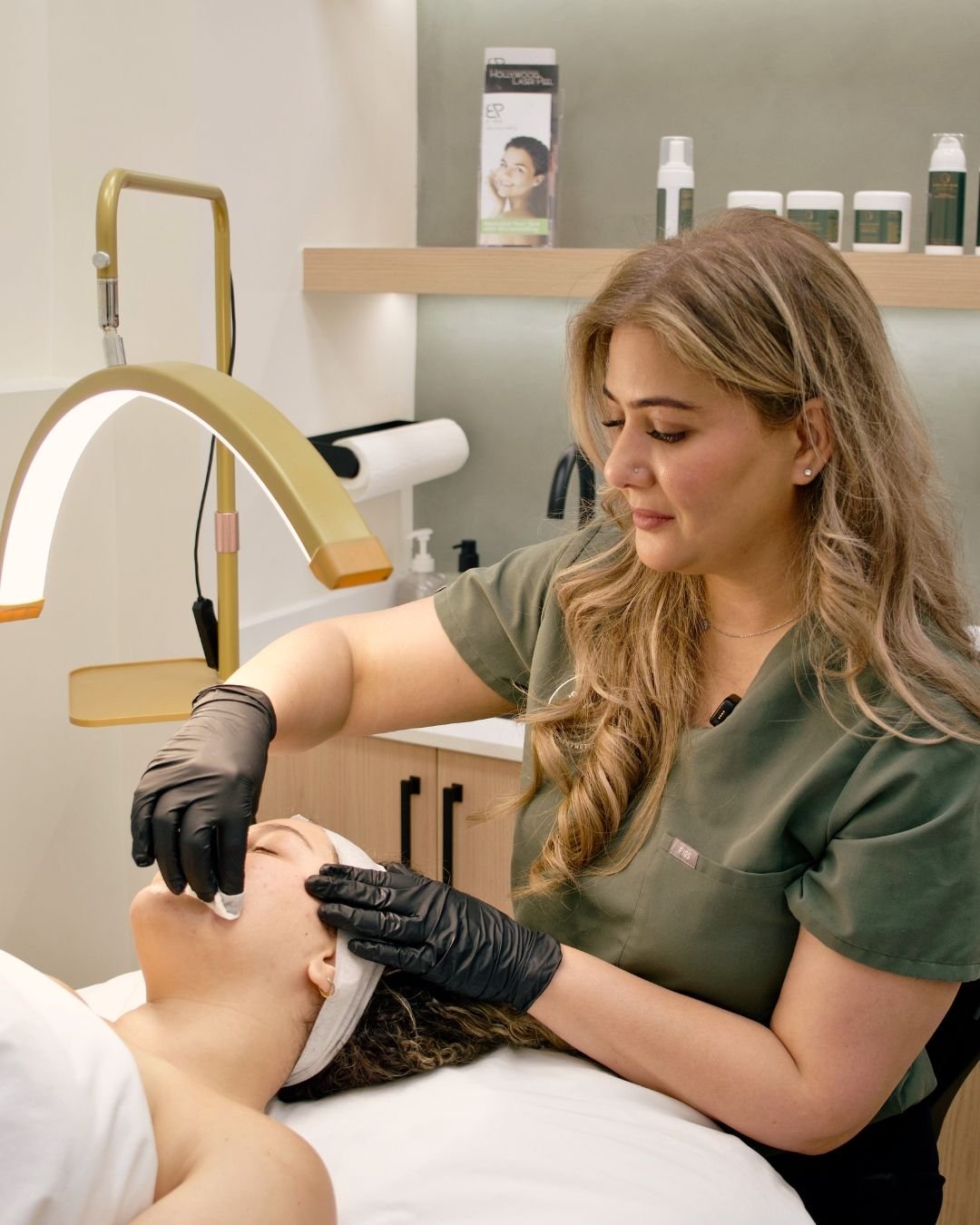
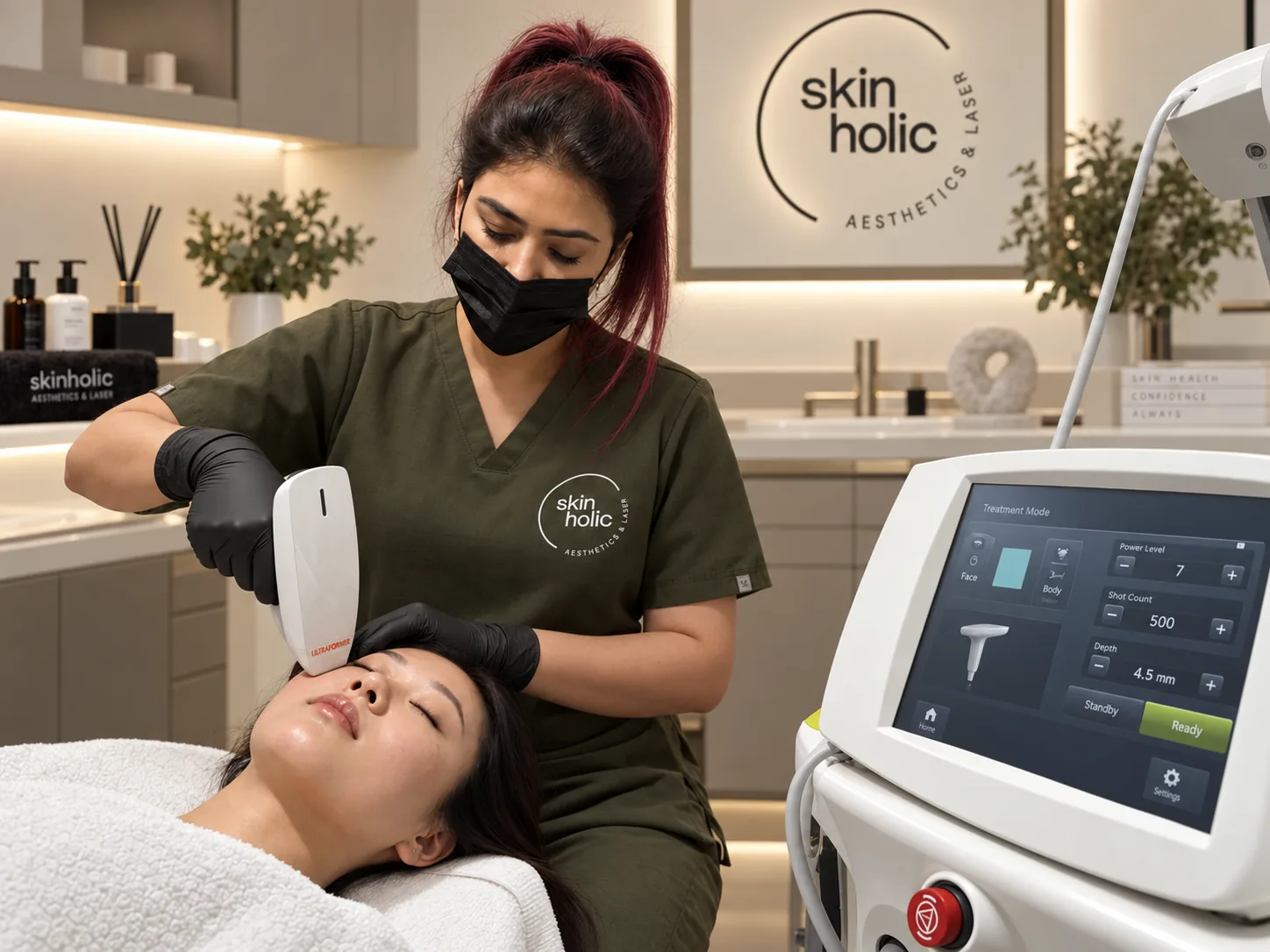
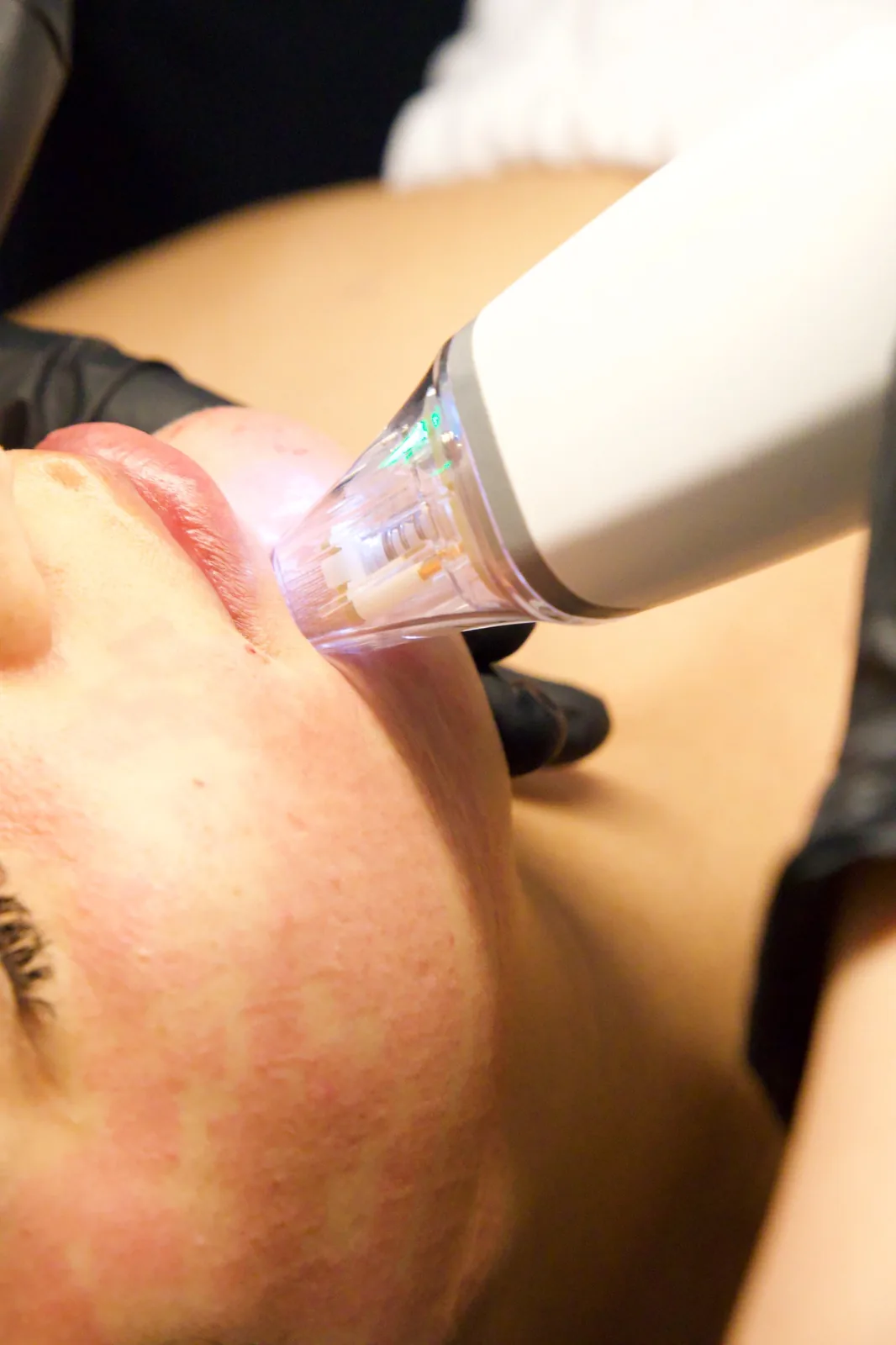
Chemical PeelsProfessional-strength peels applied at graded depths are designed to lift away dull surface cells and refine tone and texture. For indented scarring, a peel series may help smooth the surface around shallower dents and fade the post-breakout marks that often sit alongside them. A practitioner may suggest peels as a gentle first step, in the gaps between a collagen-focused series, or as maintenance once your skin has settled.Recommended starting pointSkin ResurfacingLaser or energy-based resurfacing is applied to the outer layers of the skin and is designed to refine texture, pores, tone and mild scarring. It may help soften the edges of shallow or rolling scars and even out the surrounding surface so individual dents catch less light. It tends to suit clients whose scarring is mostly shallow and spread across a wider area rather than a few deep pits.Scar RelaxationScar Relaxation uses laser or energy designed to soften and flatten firm or textured scar tissue and improve scar tone, working on the scars themselves rather than the surface around them. It may be relevant where scar edges feel tight, where indented scarring is mixed with raised areas, or where the scars sit darker than the skin around them. A practitioner may pair it with the other options here.Microneedling w/ ExosomesCollagen-induction microneedling, with a radiofrequency option, aims to encourage the skin to rebuild support from beneath and is paired with exosome serums during the session. It is designed to work in the deeper layer where indented scars form and may help dents look shallower over a series. Rolling and box-shaped scars are usually the best fit, while narrow ice-pick pits are assessed individually.
Not sure which option fits?

A free in-person assessment is where every plan starts.

Some clients combine two or more of these approaches over time, and it is the practitioner who sequences them so each step builds on the last. See the full treatment menu at the treatment menu.

Free consultation • Surrey & Aldergrove

What can you expect when you come in for acne scars (pitted or indented)?

Your first visit is a free consultation at either the Surrey clinic at 9332 120 St or the Aldergrove clinic in Langley Township. Your practitioner asks about your history with breakouts, what you have already tried and your goals, then assesses your skin in person, noting the mix of ice-pick, rolling and box-shaped scars, how deep they sit, your skin tone and whether any active breakouts need to settle before scar-focused work makes sense. If you are new, first-visit guide explains how to prepare for that first appointment.

From there you receive a personalized plan. Depending on your skin, area and goals, the practitioner may recommend a single treatment, a sequence that pairs a collagen-focused series with surface refinement, or ongoing maintenance once you have reached a place you are happy with.

Most cosmetic treatments for texture work over a series of sessions with recovery time between them, and prep and aftercare for whatever you choose are explained in plain language. Where laser-based options are on the table, or your skin is sensitive or deeper in tone, a patch test or a gentler first step may be suggested before a full series. Downtime varies: some options involve little more than a temporary flush, while others may bring short-lived redness, dryness or flaking, and this is discussed before you decide. Results build gradually and differ from person to person; see results gallery for examples of what clients have seen.

Is a consultation the right next step for you?

Everything here is general. Which treatments suit you, how they should be sequenced and how many sessions make sense depend on an in-person assessment, so treat the free consultation as the real starting point. It is available at both the Surrey and Aldergrove clinics and involves a close look at your skin, a conversation about your history, goals and lifestyle, a walk-through of the options that fit and the order they might go in, and time to ask anything.

A few situations belong with a physician first: a scar or spot that is changing or bleeding, persistent inflammation or pain, or any medical question. Very deep, tethered scars may call for physician-level options, and your practitioner will refer you if anything looks atypical.

Cost depends on the treatment, the area, the number of sessions, customization, the practitioner's assessment and your individual goals, and it is confirmed at the consultation; financing options outlines payment options. When you are ready, Start Your Skinholic Journey at book a free consultation, or send questions through contact us.

What to bring or think about before your visit

  • The products you currently use, especially exfoliating actives
  • Any previous scar or acne treatments and how your skin responded
  • Which scars bother you most and where they show
  • Medications or conditions your practitioner should know about so they can advise or refer
  • Photos of how the area looks in different lighting

Good to know

Frequently asked questions about acne scars (pitted or indented).

Often, yes, within limits. Treatments that target the support beneath the dents and refine the surface above them may help scars look shallower and less noticeable over a series. The goal is softer, less obvious scarring rather than skin that looks as though it never scarred, and how much change to expect depends on the type and depth of your scars, assessed in person.

The treatments most often discussed for pitted scarring are Microneedling w/ Exosomes (Microneedling w/ Exosomes), Skin Resurfacing, Chemical Peels and, where scar edges feel firm, Scar Relaxation. Each plays a different role, from support under the dents to surface refinement and fading lingering marks. Which suit you, and in what order, depends on your assessment at the Surrey or Aldergrove clinic.

They do different jobs, so it is rarely either/or. Microneedling is designed to prompt new support under the pits, while a peel works on the top layer and may help fade the marks that sit alongside scarring. Many plans use both, sequenced by your practitioner. For a fuller comparison see our article “Chemical peel or microneedling?”, and expect the final call to depend on your consultation.

It can be, with the right choices. Darker skin tones may be more prone to darkening that takes time to fade after treatments that stimulate the skin, so the approach, intensity and spacing are adjusted for your complexion, and some options are favoured over others. Suitability is confirmed at your in-person consultation rather than assumed.

It depends on the option and how it is adjusted for you. Surface-level sessions usually let you carry on with your day, while more intensive sessions may mean a few days of looking as though you have caught the sun. Comfort measures are used where appropriate, and many clients find the sensation tolerable. Your practitioner explains what recovery looks like for each option before you decide.

There is no fixed number. Support under the skin tends to rebuild gradually, so plans for indented scarring are usually built as a series with time between sessions, and the total depends on how deep the scars are, how your skin responds and whether other treatments are combined. Your practitioner outlines a likely series at your free consultation and reviews progress as you go.

In some situations, yes. If you still get frequent, painful or cystic breakouts, a physician or dermatologist is the right person to help those settle first. If any scar or spot is changing, bleeding, persistently inflamed or painful, have it checked by your doctor before considering cosmetic treatment. Skinholic does not diagnose skin conditions and refers you if anything looks atypical.

Cost depends on the treatment, the area treated, the number of sessions, customization, the practitioner's assessment and your individual goals, so no figure is quoted online. Your free consultation includes a clear, personalized plan with pricing confirmed at that visit, and payment options are outlined at our financing page if spreading the cost would help.

Ready when you are

Ready to talk through your acne scars with someone who will actually look at your skin?

Free consultation, in person, personalized plan, no obligation, at either clinic.

Start Your Skinholic Journey

First visit? See what to expect on our new-client page.

Call now Start Your Skinholic Journey