
A practical decision guide for recurring ingrown hairs: who may benefit from laser hair reduction, which alternatives to consider, and how to set goals that matter to you.
When shaving repeatedly leaves painful bumps, laser hair removal can sound like an obvious next step. The decision deserves a closer look. Reducing hair growth may help some people break the cycle of close shaving and irritation, but the treatment needs to match your hair, skin and the reason the bumps are happening.
This guide focuses on deciding whether a course is worth considering for recurring ingrown hairs. It is different from treating a single inflamed bump. At Skinholic Aesthetics & Laser in Surrey, a consultation should begin with assessment and realistic goals, including whether the concern belongs with a physician before any cosmetic procedure.
Start with a goal you can measure
Complete smoothness is not the only useful outcome. You may want to shave less often, have fewer tender bumps on your neck, or feel more comfortable in clothing after hair removal. Describe the problem that affects your day rather than asking for the largest package or the strongest settings.
Write down your starting point. Note how often you shave, which areas become inflamed and whether you avoid certain clothes because they rub. You can then compare the result with something meaningful. An advertisement showing smooth legs cannot tell you how your own skin will respond.
Make sure the bumps have been identified
Ingrown hairs develop when hair grows back into the skin. Folliculitis and other skin conditions can produce bumps in similar locations. Persistent deep lumps, drainage, spreading redness or significant pain are reasons to seek medical assessment, rather than assuming that a course of laser will solve the problem.
Take photographs of a typical flare if the area is clear when you attend. Explain whether bumps follow shaving, waxing or another method, and how long they last. The clinic needs a picture of the pattern between visits. Do not pick at the area beforehand to expose a hair for the appointment.
Understand what laser is intended to do
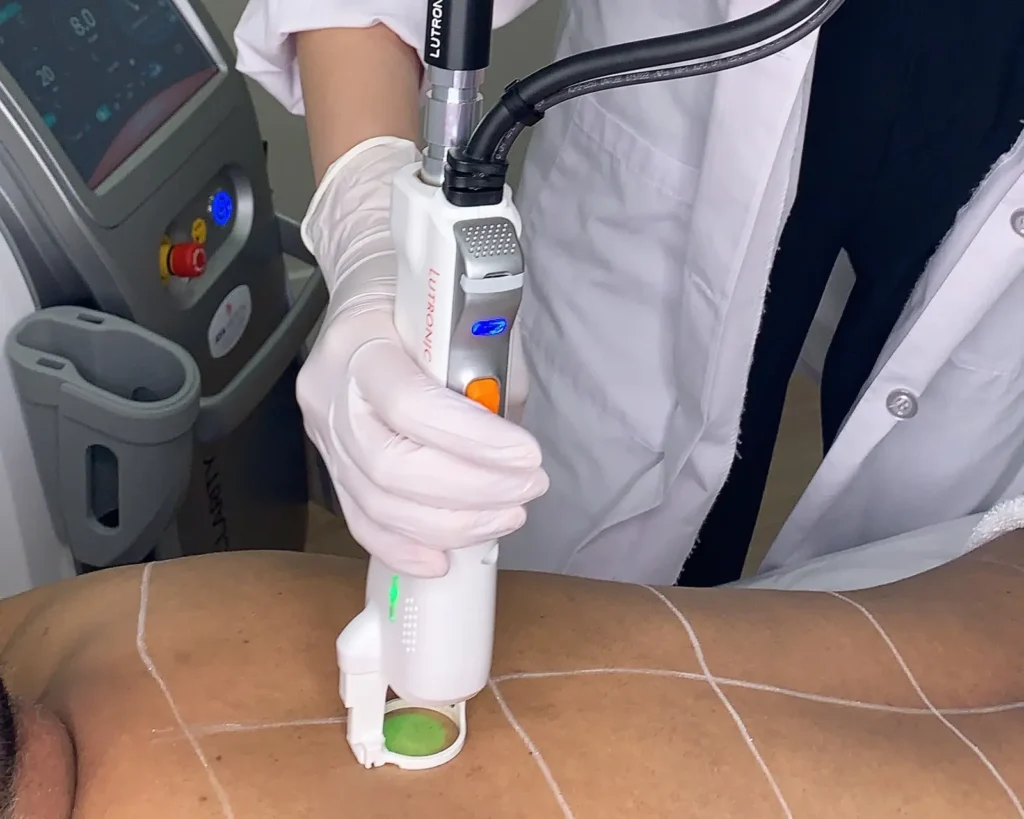
Laser hair removal uses light absorbed by pigment in hair to reduce future growth. For suitable candidates, less hair can mean less need for the close shaving that triggers recurring bumps. It does not extract every existing ingrown hair, treat every cause of inflammation or erase old marks in one session.
Think of hair reduction and the management of existing skin changes as separate parts of a plan. An area can have fewer hairs while some dark marks remain. It can also become less irritated without looking completely different in a photograph. Ask which outcome the practitioner expects to change first.
Hair colour and thickness affect suitability
Coarse dark hair generally gives the laser a more useful pigment target than very fine or pale hair. White, grey and some blonde or red hairs may respond poorly. If your main concern is a few light hairs, ask whether laser is likely to offer enough benefit to justify treatment.
Do not assume that a successful underarm result predicts the same response on the face. Areas differ in hair characteristics and growth patterns. Ask for an assessment of each area you want treated. It is reasonable for a practitioner to recommend treating one area and declining another.
Skin tone and treatment settings matter
Skinholic lists Nd:YAG and Alexandrite laser hair removal in its Surrey menu. Ask which wavelength is proposed for your skin and hair, and why. The device name is only part of the discussion; assessment, settings and experience with similar skin also matter.
Mention past pigment changes, raised scars, recent tanning and reactions to previous treatments. Ask whether a patch test is appropriate and how its result will be reviewed. A treatment should not be described as safe for everyone without qualification. Burns, scarring and lasting changes in skin colour are possible complications.
Consider changes to shaving before committing
Some people find that a gentler routine reduces bumps enough to make laser unnecessary. Dermatology guidance includes avoiding an excessively close shave, using suitable shaving products and following the direction of hair growth. A guarded trimmer may be worth discussing if close shaving repeatedly irritates your skin.
That comparison matters financially as well as practically. You may prefer a manageable trimming routine, or you may decide that long-term reduction is worth the appointments. Neither choice is a failure. Treatment should solve a problem you actually want to address, rather than create a new obligation to remove body hair.
Ask how the course will be reviewed
Hair grows in cycles, so laser is usually planned as a series. Ask about the interval for your area, the expected review point and how the team will judge whether the course is helping. More frequent appointments are not automatically better, and a fixed schedule should not replace reassessment.
Agree on what happens if progress is limited. Will the hair and skin be reassessed? Could the plan be paused? What costs remain if you decide not to continue? Clarifying these points beforehand is more useful than trying to resolve them after paying for sessions you no longer want.
Ask about the routine between visits
You need to be comfortable with the preparation and aftercare as well as the appointment itself. Ask how to manage hair between sessions, what to do if bumps flare, and which products are suitable. Waxing or plucking can interfere with later laser targeting, so get specific guidance rather than alternating methods without a plan.
Discuss travel, outdoor work and activities involving friction or heat. Your schedule needs room for the instructions you are given. If those requirements are difficult right now, postponing may be a better choice than starting a course you cannot prepare for consistently.
Keep marks, scars and active bumps separate
If you have flat dark marks or raised areas left from previous inflammation, show them at consultation. Ask what is being assessed and whether another professional should review it. Do not assume that a hair-removal device is also the right treatment for every change in colour or texture.
Ask about timing before adding peels, brightening products or other procedures to the same area. A simple sequence you can follow is preferable to several overlapping treatments with unclear recovery instructions. Take care not to judge improvement solely by colour when your original goal was fewer painful bumps.
Bring examples of what success means
For example, someone with beard bumps may value comfortable shaving more than a sharply sculpted beard line. Someone treating a bikini area may care most about fewer sore days after hair removal. Tell the practitioner which outcome comes first. That makes the plan easier to review and reduces the chance of paying for a result that misses your main concern.
A useful consultation ends with choices
You should leave knowing whether laser is a reasonable option, what it is expected to improve and what its limits are. Request the price for the exact area, the proposed course and any maintenance discussion in writing. You should also know when a medical opinion is needed before proceeding.
To discuss recurring ingrown hairs, book a free consultation at Skinholic Surrey, 9332 120 St, or call 604-773-7579. There is no obligation to book treatment. Bring your questions and your usual hair-removal routine so the discussion starts with your needs.
General educational information. Results vary. Further reading: Mayo Clinic: ingrown hair treatment, AAD: razor bump remedies and AAD: laser hair removal overview.